Many Ways to Give

Many Ways to Give

As we enter the season of thanks, togetherness, and gift-giving, those of us at RENEW Wisconsin wanted to talk about that last one. As a nonprofit that focuses on policy and legislation that helps to accelerate the clean energy transition, we depend on the kindness of individuals, businesses, and a number of grants to keep the advocacy work moving.

There are several avenues we’ve made available to clean energy advocates to provide financial support (and ideally, a little tax break for you). Below is a quick breakdown of all the ways to give.

A One-Time Donation

The most straightforward way to give! We will gladly take any amount of money that you’re willing to part with to support our mission. At $50/year, you are officially an individual member, which gives you voting privileges during our annual board elections.

Sustaining Membership

Any monthly donation that totals $50/year over 12 months makes you a member. That’s as little as $5 a month — less than most places charge for a cup of coffee these days.

Stock Donations?!

It might sound crazy, but we also accept stocks. Have a junk stock that’s just not performing? Want to reduce your capital gains tax exposure? You can quickly and securely donate your stock to us. And just to be clear, we never touch the stock. When you support us through stock donations, they are immediately sold, and the funds go straight to the bank.

However you choose to give, we appreciate it — and if you can give this time, we understand. Whatever you choose to do, we have one other ask. When you’re talking with family, friends, or neighbors about what you can do to combat climate change, reduce pollution, or support our local economy, consider spreading the word about RENEW and how together we can make the clean energy revolution happen.

With Gratitude,
RENEW Wisconsin

Help Us Reach Our Goal This Giving Tuesday

Help Us Reach Our Goal This Giving Tuesday

It’s that time of year again, the one every nonprofit organization spends many a sleepless night over. Is it out of excitement for an opportunity to reach out to our supporters, dread over how much money we may or may not raise, or both? Regardless, it’s Giving Tuesday, and if you’re in the giving spirit today, we’d like to ask you to help us reach our goal of raising $15,000 in individual donations by the end of the year.

We are certain this is one of many requests you’re getting today, and we know there are many vital missions to support. It is, however, our hope that you believe, like us, that climate change is quite possibly the greatest issue facing our planet today. A donation today helps us combat the climate crisis through advocacy for policy and legislation that will accelerate the clean energy revolution.

Despite the headwinds against us, the renewable energy industry isn’t going anywhere. Nor are we! We’re committed to helping solar installers, utility-scale energy developers, and everyone in between put the pedal to the metal to reach our clean energy goals. With that said, we need support from individuals like yourself to keep RENEW going strong.

With your help, we’ve been able to develop our Net-Zero Roadmap, push renewables-friendly updates to housing codes, draft and support net metering legislation, and help gigawatts of clean energy projects secure state approval. Despite all we’ve achieved together, there’s so much more to be done. We hope you’ll stick with us and see this clean energy revolution through to the end.

Thank you for your support!

Ismaeel Chartier, Executive Director

RENEW Wisconsin Board of Directors Selects Ismaeel Chartier as Executive Director

RENEW Wisconsin Board of Directors Selects Ismaeel Chartier as Executive Director

On November 12, 2025, the RENEW Wisconsin Board of Directors voted to appoint Ismaeel Chartier as the Executive Director of RENEW Wisconsin. Ismaeel steps into this role after three months in the role of Interim Executive Director. Prior to his time leading the organization, he served RENEW as the Business Development Director, having started with the organization in 2023.

Ismaeel came to RENEW with a deep background in the nonprofit sector, having served at a handful of nonprofits over nearly two decades. Some highlights of his career include Executive Director of the Walworth County Alliance for Children and Executive Director of the Impact Advocacy Coalition of Cincinnati.

“I am deeply grateful for the opportunity to serve as Executive Director of RENEW Wisconsin,” Executive Director Ismaeel Chartier said. “This organization has walked through a season of change, and I’m honored by the trust placed in me to lead us into what comes next. The road ahead is demanding and full of big decisions, but I welcome that challenge. Wisconsin’s clean energy future will not build itself; it requires disciplined leadership, strong partnerships, and a team willing to push together. I’m committed to carrying this work forward with humility, resolve, and a steady focus on the long-term impact we can make for communities across our state.”

Ismaeel’s appointment to this position comes at a time of uncertainty for the renewable energy industry and marks the end of a transitional period for RENEW Wisconsin. During his tenure as interim, he steadied our organization and began charting a vision for RENEW’s future. In doing so, he secured the confidence of the organization’s staff and board members.

“Ismaeel’s appointment as Executive Director marks an exciting new chapter for RENEW Wisconsin,” RENEW Wisconsin Board Secretary Isaiah Ness said. “His leadership brings not only the steadiness and stability the organization needs, but also a clear and compelling vision for the future. We are honored to welcome him into this role at such a pivotal moment. Under his guidance, RENEW is poised to deliver greater value to its members, partners, and communities than ever before.”

Staff and board alike congratulate Ismaeel on the removal of interim from his title and are glad he agreed to take on the responsibility of leading our organization. Now, we look ahead to the future and all that we can build together.

Buyer Beware: Solar Tax Credits

Buyer Beware: Solar Tax Credits

Earlier this year, Congress and President Trump pushed the One Big Beautiful Bill through the federal government. The massive budget reconciliation package did many things—one in particular directly impacts the residential solar industry.

After December 31, 2025, homeowners will no longer be eligible for the 30% Residential Clean Energy Credit (Section 25D). This applies to residential solar and a few other clean energy technologies. The tax credit will only be available for projects that are fully installed, operational, and legally interconnected by the December 31 deadline. This is the most conservative interpretation of the requirements. We recommend consulting a tax attorney to get the most up-to-date information.

Many solar installers are booked through the end of the year and even well into 2026. At this point, if you are not already working with an installer, we recommend that you exercise caution about any business that tells you they can complete the project in time for you to get the tax credit.

If you are still in the market for solar, please consider looking through our list of business members to find a reputable company. Some of our members are even offering discounts on installations for 2026 to make up for the loss of the tax credit. When pursuing solar power, we recommend you get multiple quotes and use a local installer. You can review our map of installers here.

PSC Approves Rate Case Settlement with Alliant

PSC Approves Rate Case Settlement with Alliant

Earlier this year, Alliant Energy, Xcel Energy, and Madison Gas and Electric (MGE) filed applications for electric rate increases with the Public Service Commission of Wisconsin (PSC). The rate applications included other changes to utility programs and options like electric vehicle programs, language modifications to rooftop solar programs, changes to Time-of-Use (TOU) programs, and more. The changes proposed by utilities for clean energy programs caused RENEW to request and receive party status to participate in these three rate cases.

RENEW and all other parties to these cases were involved in negotiations with Alliant and MGE. Separately, both utilities were able to reach settlement agreements with all parties in their cases, and subsequently Alliant and MGE asked the PSC to approve the settlements. The settlements, as negotiated by all parties in these cases, would reduce the size of the rate hikes, improve support for customer programs, and improve access to clean energy options.

On November 6, 2025, the three Commissioners at the PSC verbally took up the proposed Alliant rate case settlement, and authorized the full agreement with no modifications. A decision on the MGE case is expected later this November.

RENEW and other parties who regularly intervene in these cases often take the opportunity to discuss contested issues with utility representatives, and work towards compromise where possible. The PSC has a long history of approving most utility proposals, so these settlement opportunities are essential for organizations, like RENEW, to have a seat at the table and directly influence the decision-making process. For RENEW, these opportunities allow us to prioritize policy issues, create new customer options, collaborate on future changes, and have a hand in final design of utility-proposed modifications to ensure clean energy options will remain technically and economically viable.

Alliant Settlement Points

Compromise on the Increase to residential customer charges:

  • Alliant agreed to reduce the increase to residential customer charges as it originally proposed. Alliant originally proposed increases from $15 to $20 in 2026. The settlement reduces the proposed increase, which will increase the customer charge to $16 in 2026 and to $17 in 2027.

Collaboration on Electric Vehicle (EV) Programs:

  • After removing some options for residential EV programs, Alliant agreed to have at least six meetings over the course of 2026 and 2027, with RENEW and interested parties, to discuss the implementation of an EV Program. The objective of these meetings will be to review program participation and performance, and EV program interaction with other Alliant programs, such as the Time of Use (TOU) and residential Distributed Resource (DR) programs.
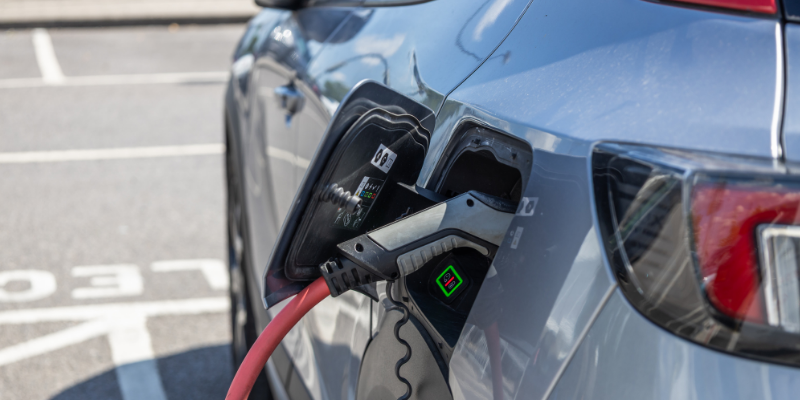
  • EV Residential Program: Alliant Energy will launch a new residential EV program offering a $500 rebate for Level 2 chargers purchased through its online marketplace. Per the settlement agreement, RENEW can collaborate with Alliant to add additional charger models commonly used by installers if they are not currently listed.
  • EV Fleet Program: Alliant will also launch a fleet advisory program with 20 participating businesses and nonprofits. The program helps organizations assess whether transitioning their fleets to electric vehicles makes financial sense and provides guidance on next steps toward electrification.

Collaboration on TOU Outreach Initiative: 

  • Alliant agreed to draft a Time of Use (TOU) branding, marketing, and outreach plan by March 15, 2026, and meet with RENEW and interested parties at least twice during 2026 to consider plan revisions and implementation details.
  • As part of its broader branding, marketing, and outreach plan, Alliant agreed to consider rewards, incentives, or other ways to incentivize those who join the TOU program efforts alongside its new residential Demand Response (DR) program (see details below).
  • Alliant agreed to improve the quality of residential data access, including quick integration into Alliant online tools for residential customers, with spreadsheet downloads that will easily integrate into customer analytical tools. Improved online tools and residential customer options will be available by June 1, 2026.
  • Alliant agreed to have at least two meetings with RENEW and interested parties during 2026 related to improving Alliant’s online platform that supports TOU customers.

Collaboration on Residential DR Program:

  • To support its new program, Alliant agrees to draft a residential DR program branding, marketing, and outreach plan by March 15, 2026, and meet with RENEW and interested parties at least twice during 2026 to consider revisions and implementation details.
  • Beyond PSC reporting, Alliant agreed to provide event reporting on its website, with details on when events are called and customer savings that occurred due to Alliant’s DR program.

Collaboration on PSC 119 Interconnection Issues:

  • Alliant agrees to joint meetings with RENEW and solar installer members at least twice in 2025, along with an additional two meetings in 2026. The purpose of these meetings will be to identify issues that are adding costs and time to solar interconnections in Alliant’s Wisconsin territory, discuss compromises and potential solutions, and discuss agreements that resolve these issues.
PSC Approves New Multifamily Metering Rules

PSC Approves New Multifamily Metering Rules

On December 1, 2025, new rules from the Public Service Commission of Wisconsin (PSC) will take effect, modernizing how electricity is metered in multifamily housing and mobile home parks. This update represents a major win for clean energy and affordable housing advocates as well as for developers across the state.

RENEW Wisconsin, Clean Wisconsin, Elevate, Dane County, the City of Madison, the Wisconsin Local Government Climate Coalition, the Union of Concerned Scientists, and many other advocates and developers submitted comments supporting the change. Together, these groups urged the PSC to update outdated language to make it easier to design affordable, energy-efficient, and renewable-ready multi-family housing.

The rule, originally adopted in 1980 to comply with the Public Utility Regulatory Policies Act (PURPA) of 1978, had not been substantially revised since 2002. It was intended to promote energy conservation by requiring every dwelling in a multi-unit building or mobile home park to have its own electric meter. While well-intentioned, the rule eventually outgrew the technology of its time. It began to restrict new energy-saving methods such as shared solar, geothermal heating, and high-efficiency heat pumps.

The updated PSC 113.0803 rule now establishes clear standards for when individual meters are not required. Multifamily or mobile home park projects can qualify if:

  • High-efficiency equipment: Tenant-controlled systems meet Focus on Energy or federal efficiency standards, and projected energy use per unit is less than half the statewide average, factoring in onsite renewables.
  • High-efficiency design: Newly constructed buildings meeting advanced performance standards through programs like Focus on Energy automatically qualify.
  • Affordable housing participation: Buildings under contract with local, state, or federal affordable housing programs are eligible.

This rule change will open new opportunities for solar, geothermal, and other clean energy technologies, reduce administrative delays, support affordable housing, and expand Wisconsin’s pathway toward clean economic growth. This change opens up new avenues in our all-of-the-above approach to deploying renewables and ensures everyone in the state can benefit from clean, reliable energy.