
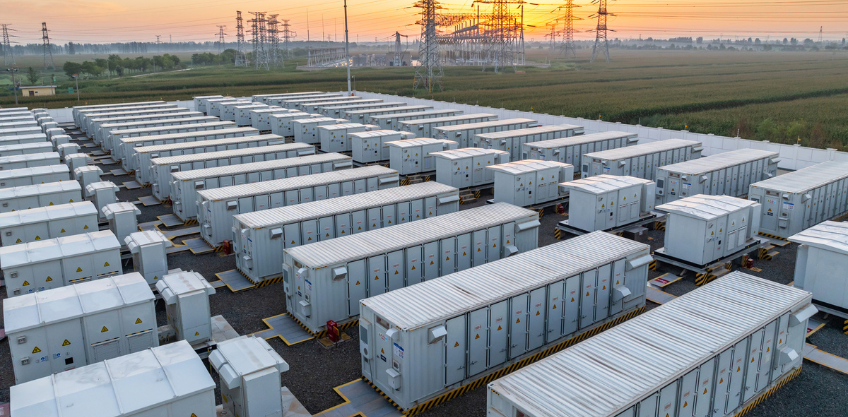
On April 3, 2026, Governor Tony Evers signed a bill that allows counties and municipalities to receive shared revenue payments when a utility-owned battery energy storage system (BESS) is located within their borders. These payments are referred to as utility aid and will amount to $1,000 per megawatt of storage capacity. Local governments also receive utility aid payments for utility-scale renewable energy projects and energy-producing projects.
Utility aid payments are intended to help local governments offset lost property tax revenue and actually provide more funding to municipalities and counties than the property taxes would have. Property owned by a utility company is tax-exempt.
Beginning in 2027, the bill requires the distribution of utility aid payments to local governments for any energy storage facility with a capacity of at least one megawatt. In order for a BESS to qualify for utility aid, it must be used to store a power source that has been converted from another stored energy source. As an example, solar or wind.
It is becoming increasingly common that utility-scale solar is paired with a BESS. Energy storage adds reliability and flexibility to our energy infrastructure, in part by capturing excess power produced by solar installations in the middle of the day and making it available when needed.
Under existing law, when an energy project is located in a city or village, the municipality receives two-thirds of the utility aid, and the county receives one-third. If the project is located in a town, that allocation is reversed. The same will be true for how utility aid payments from a BESS are distributed.
This law was passed with the support of Wisconsin utilities as well as energy developers that are active in the state. This change is a win for communities that host the energy projects that keep our lights on.