
The High Price of Leaving MISO: Wisconsin Cannot Afford to Go It Alone
There is something appealing about Wisconsin taking control of its own energy future. We are an independent-minded state. We believe in self-reliance, local accountability, and keeping decisions close to the people who live with their consequences. These are good instincts. But independence is not the same as isolation, and when it comes to electricity, the difference can be extraordinarily expensive.
Consider what would happen if Wisconsin’s five investor-owned electric utilities and American Transmission Company (ATC) left the Midcontinent Independent System Operator (MISO). The idea might be presented as a way to escape regional bureaucracy, regain control over transmission planning, or reduce costs. Yet before celebrating such a departure, Wisconsin residents should ask: How much is the bill?
The answer is not simple, but the potential costs are substantial.
Leaving Does Not Mean Walking Away from the Bill
MISO is the regional organization that coordinates wholesale electricity markets and transmission operations across much of the Midwest. Its members benefit from access to a broad electricity market, shared reliability resources, and coordinated transmission planning.
They also share financial obligations.
Over the years, MISO has approved major transmission investments intended to strengthen reliability, reduce congestion, and connect electricity generation across state lines. These investments include Multi-Value Projects (MVPs), whose costs are allocated across participating areas under established rules.
Those financial commitments do not necessarily disappear when a transmission owner withdraws.
Under MISO’s federally approved tariff, withdrawing transmission owners can remain responsible for some outstanding obligations. The exact costs would depend on the projects involved, applicable agreements, and regulatory determinations.
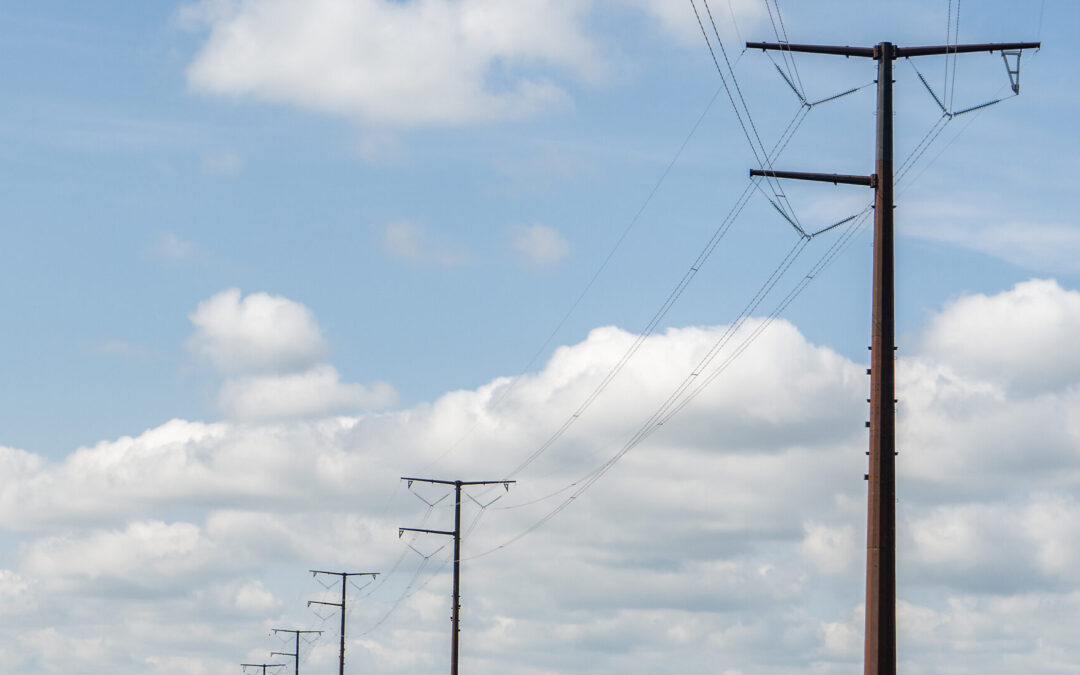
This matters for Wisconsin because ATC owns and operates much of our state’s high-voltage transmission infrastructure. If ATC withdrew alongside Wisconsin’s investor-owned utilities, the financial consequences would extend well beyond ordinary administrative expenses.
For preliminary analysis, policymakers might examine scenarios involving $250 million, $750 million, or $1.5 billion in withdrawal-related obligations. These figures are illustrative stress tests, not actual estimates of what Wisconsin would owe.
The distinction matters. We should not invent an exit penalty simply to make a political argument. We should insist on calculating the actual costs before anyone proposes putting Wisconsinites on the hook.
Who Ultimately Pays?
Utility costs tend to find their way into household and business electricity bills. With this in mind, suppose Wisconsin were to pay $750 million in withdrawal-related obligations. Divided evenly among approximately 2.8 million electric utility customers, that represents roughly $268 per customer.
This is just an illustration, not a prediction of actual bill increases. Real costs would depend on regulatory decisions, financing, customer classes, and the entities legally responsible.
Still, the math shows how significant the financial risk could be. And these costs don’t include the build-out of new services to replace the ones MISO currently provides for our state.
Ultimately, we would pay to leave one system and then pay again to participate in or build another. That alone is not necessarily an argument against every possible withdrawal from MISO. But it is a powerful enough reason to demand evidence that shows how a replacement would actually cost less.
The More Expensive Problem May Come After We Leave
MISO’s greatest economic contribution is not eliminating the cost of operating the electric grid. It is that regional cooperation lets utilities manage those costs across a larger system.
Wisconsin utilities can purchase electricity from generators throughout the region rather than relying exclusively on resources within our borders. Operating reserves can be shared. Transmission investments can be coordinated. Electricity can move more easily to where it is most needed.
These arrangements create economic efficiencies that would be difficult to reproduce on our own.
In its 2025 Value Proposition, MISO estimated that its operations generated approximately $7.6 billion in annual net benefits across its regional footprint. That is MISO’s own systemwide estimate, not a calculation of Wisconsin’s individual savings.
Leaving MISO would not automatically mean losing every regional economic benefit. Another market structure might preserve some or many of them. But Wisconsin would have to demonstrate that its alternative could deliver.
We Cannot Escape the Geography of Electricity
Our transmission lines connect with neighboring states. Our power plants operate within a larger interconnected system. Our industries depend on reliable electricity during periods when weather, demand, or equipment failures can strain available resources.
Regional cooperation becomes particularly valuable as Wisconsin expands renewable energy.
Wind and solar generation vary with weather and time of day. Being a part of a larger market allows electricity production from different locations and technologies to complement one another. Transmission connections help balance these resources.
Wisconsin also faces growing electricity demand from manufacturing, data centers, and other economic development.
Meeting those needs will require careful investment in generation, storage, and transmission. Leaving MISO would make it more difficult for Wisconsin to meet its energy needs.
The Price of Going It Alone
Wisconsin should pursue greater energy security. We should produce more affordable electricity within our borders, expand renewable generation, strengthen our transmission infrastructure, and reduce unnecessary dependence on imported fossil fuels.
But energy independence does not require abandoning regional cooperation.
In fact, a strong regional electricity market can make Wisconsin’s own investments more valuable, our system more resilient, and our energy economy more competitive.
Leaving MISO could expose Wisconsin to substantial outstanding financial obligations, additional transition expenses, and the possibility of higher long-term electricity costs. The precise amounts remain undetermined, which is exactly why an independent analysis must precede any serious proposal.
The common good demands something more practical: an electricity system that serves Wisconsin families, protects businesses, supports economic growth, and delivers reliable power at a reasonable cost.
Until someone can demonstrate that leaving would save money without compromising reliability, walking away would be a gamble Wisconsin has little reason to take.
And as with so many decisions about our energy future, the people who would ultimately bear the consequences are the people least able to afford another unnecessary expense.