
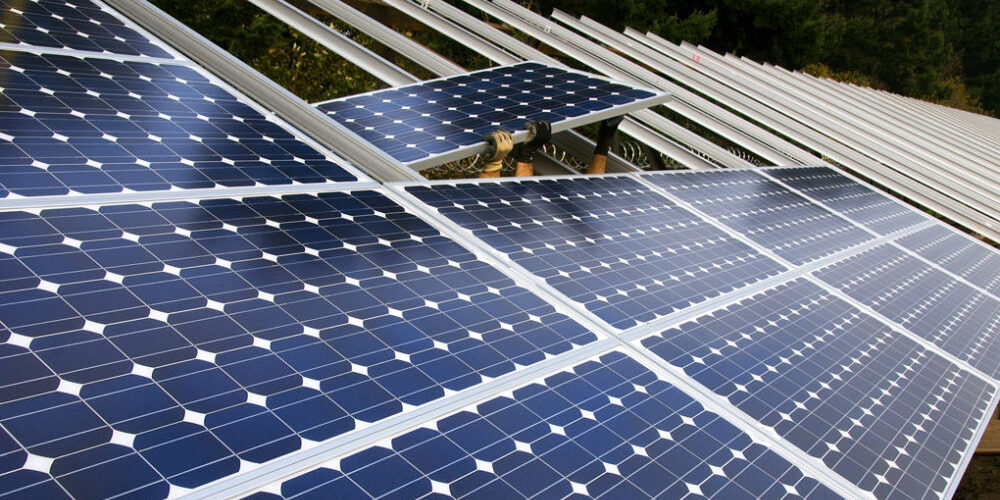
April has been a rough month for much of Wisconsin. Hail, high winds, tornadoes, and heavy rain have rolled through the state, causing real damage. Here in Madison, the storm on April 14 brought baseball-sized hail, almost three inches across!
Other parts of central and southern Wisconsin got even bigger stones. Cars were dented. Roofs were torn up. Siding was cracked. Power poles came down. And yes, some solar panels broke too.
That’s the reality of weather like this. Extreme storms damage what’s in their path, and almost nothing on the outside of a home gets a free pass when hail comes down at that size. If your panels took a hit, they may need to be repaired or replaced. That’s not great news, but it’s also not the end of the world.
If you were thinking about going solar before the storms rolled through, the storms shouldn’t change the math on that decision. The path forward, whether you’re repairing a system or building one for the first time, looks a lot like dealing with any other part of your home.
How to Get Your System Back Up and Running
When panels get damaged in a storm like this, the fix looks a lot like dealing with hail damage to your roof or siding. The process moves through a few clear steps.
Contact Your Homeowner’s Insurance and Your Installer
Both should know what happened as soon as possible. Your installer works directly with the insurance company on your behalf from there. They document the damage, walk the adjuster through what they’re seeing, and handle the repair, replacement, and reinstall. The homeowner isn’t navigating it alone.
Know Your Coverage Before a Storm Hits
Most standard homeowner’s policies cover rooftop solar under the dwelling section, but it’s worth confirming that hail and wind are listed as covered perils and that your coverage limit reflects what your system is actually worth. Some policies in hail-prone areas carry separate wind and hail deductibles, and ground-mounted systems sometimes need a separate rider, so it helps to know what your specific policy says before you need to use it.
The Rest of the System Is Built To Make This Manageable
Manufacturers test their panels to real standards. Installers know how to work with insurance companies. Each part does its job so that when something does go wrong, the path forward is clear.
Your installer can also help you sort out what’s covered by equipment warranties versus insurance, and show you how to use your monitoring app to confirm the system is performing normally after repairs.
What Hail Does to a Panel
Knowing what kind of damage you’re looking at helps you follow along when your installer comes out for an inspection.
- Visible damage is less common than people expect, but also the most obvious when it happens. Cracks, chips, or spiderwebbed glass that you can spot from the ground. The tempered glass on top of a panel is built to take a hit, which is why this kind of damage usually only shows up in the more extreme storms. Worth noting too: when a panel does break, the glass stays contained inside the panel. Solar panels are sealed between layers of plastic and held together by an aluminum frame, so cracks don’t send glass flying across your yard or your neighbor’s.
- Hidden microcracks are the ones experts worry about more. These are microscopic fractures inside the solar cells that might not affect performance right away, but can spread over time the same way a small chip in a windshield can grow into a longer crack. Left unchecked, microcracks can gradually reduce efficiency and create hot spots inside the panel. That’s why post-storm inspections matter even when a system seems to be running fine.
- Cell and busbar damage happens beneath the surface when hail’s impact energy transfers through the glass. The busbars are the thin metal strips that carry electricity across the panel. Modern panels use many ultra-thin busbars or wires per cell, often well into double digits, which helps keep current flowing even if part of a cell takes a hit.
A cracked panel will usually still generate electricity at reduced output. If it needs to be replaced, it should be replaced. If it’s still performing within spec, it can keep running. The key is having someone qualified take a look so you know what you’re working with.
A Quick Note on the Testing
Quality solar panels are built to two main standards that work together.
- IEC 61215 is the performance and durability standard set by the International Electrotechnical Commission. It covers how a panel holds up against weather, including the hail impact testing, where technicians fire ice balls at panels using compressed air cannons. The basic test uses one-inch ice balls at high speeds, and many panels are tested even further against ice balls up to three inches across at speeds up to 88 miles per hour. To pass, the panel has to keep producing power within spec after the impact.
- UL 61730 is the safety standard set by Underwriters Laboratories, which covers electrical safety, fire resistance, and structural integrity. Together, they tell you a panel can take the weather and stay safe doing it.
The Bigger Picture
Everything on the outside of your home already takes a beating from Wisconsin weather. Your roof, your siding, your windows, and the AC unit out back. None of that has stopped anyone from owning a home. You carry insurance for a reason, and when something breaks, you call somebody who knows how to fix it. Solar panels are no different than anything else on your house in that respect.
April has been hard on Wisconsin, no question about it. But the things people depend on after a storm have shown up. Insurance is paying out. Installers are out doing the work. Hail and wind can damage panels. That’s true. What matters is having the right people in your corner and the right coverage in place when it happens. A solid installer and the right insurance policy take care of that.