
On April 23, 2026, the Public Service Commission of Wisconsin (PSC) unanimously approved the Village of Waunakee’s application to establish a Bring Your Own Device (BYOD) demand response program, administered by WPPI Energy on behalf of its member utilities. The decision is a win for Wisconsin customers and a meaningful step forward for demand response across the state’s municipal utility sector.
RENEW Wisconsin submitted public comments in support of the application, and we are excited to see the program move forward.
What the Program Does
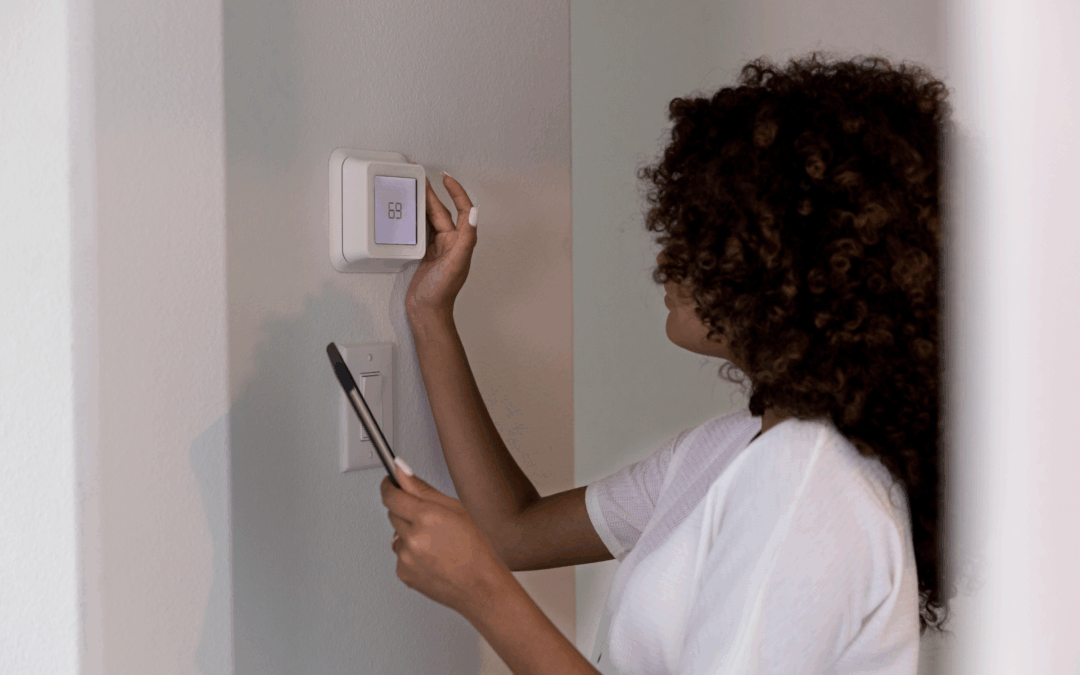
The BYOD program allows residential and general service customers to voluntarily enroll their own smart thermostats and receive a one-time enrollment credit of $25 and an annual participation incentive of $25. During summer peak events, WPPI’s platform provider, EnergyHub, will remotely adjust thermostat settings to reduce air conditioning load.
What the PSC Decided
The commission approved the program as a permanent offering rather than a pilot, a distinction that Commissioner Kristy Nieto walked through carefully during the hearing. The logic is straightforward: this program design is not new. MG&E and We Energies have already been running nearly identical programs successfully in Wisconsin, and putting every new adopter of a proven model through a pilot phase does not serve any particular purpose. RENEW made this same point in our comments, and we are glad the commission agreed.
The PSC also added reporting requirements to track program performance and cost-benefit outcomes, and delegated authority to the Division Administrator to approve future identical applications from other WPPI members without requiring full commission review each time.
A Win for Bill Credits
One of the more substantive conversations at the hearing centered on how customers receive their participation incentives. The application proposed offering either a gift card or a bill credit, with the utility choosing at the start of each season.
In our comments, RENEW made the case for bill credits on two levels: the payment format and its recurrence over time.
On format, RENEW offered that a credit on a customer’s utility bill makes the connection between their participation and their energy costs visible in a way a gift card does not. When someone opens their bill and sees a line item tied to a demand response event, it reinforces what the program is doing and what they contributed. A gift card can feel entirely disconnected from the energy of the relationship.
On structure, RENEW recommended that WPPI look beyond the current flat annual payment toward a continuous monthly bill credit as the program matures. A one-time $25 credit is easy to forget by the time the season ends. A credit that shows up month after month keeps the connection alive and creates a natural incentive to stay enrolled on the days the program needs participants most. We are already seeing this approach work: both We Energies’ EV program and Alliant Energy’s demand response program have monthly bill-credit structures that generate strong interest precisely because customers can see and track what they receive.
RENEW also raised a longer-term question about whether a flat $25 annual payment actually reflects what customers are contributing. If a customer reduces their energy use on the hottest, most stressful days of the year when the grid needs it most, that contribution has real value, and the incentive structure should eventually reflect that. Alliant Energy’s residential demand response program offers a useful model. Instead of a flat annual payment, customers earn a credit for every kilowatt-hour they reduce during a peak event, and they receive a follow-up email showing exactly how much they cut and how much they earned. That kind of structure, where your credit reflects what you actually contributed rather than just the fact that you enrolled, is where RENEW would like to see programs like this head over time.
That argument resonated with the commission. Commissioner Hawkins specifically cited RENEW’s comments, noting that the visible connection between a customer’s actions and their bill is what makes a program like this meaningful. The commission required bill credits as the default, with a narrow exception if a utility can demonstrate they are not technically feasible, with a requirement to notify the commission in that event.
The approved incentive structure maintains the current $25 annual payment for now, which RENEW understands to be a practical starting point for a program that is new to WPPI and its members. The bigger takeaway is that the commission is aligned on the principle that customers should be able to see the value of their participation directly on their bill.
Step One of Something Larger
RENEW is enthusiastic about this program, however, it is not the ceiling of what is possible. EnergyHub’s platform already supports thermostats, batteries, electric vehicles, and commercial and industrial loads within a single system. WPPI is starting this pilot with a vendor that is already built for where demand response is heading.
In our comments, we encouraged WPPI to treat this program as the foundation for something more ambitious over time: virtual power plant-style programs that aggregate distributed energy resources across a broader customer base, bill credits tied to actual measured demand reduction rather than flat annual payments, and eventually vehicle-to-grid and vehicle-to-load participation as EV adoption grows in Wisconsin.
Wisconsin has significant untapped demand response potential, and this program is a real step toward unlocking it. We look forward to seeing what WPPI and its member utilities build from here.