
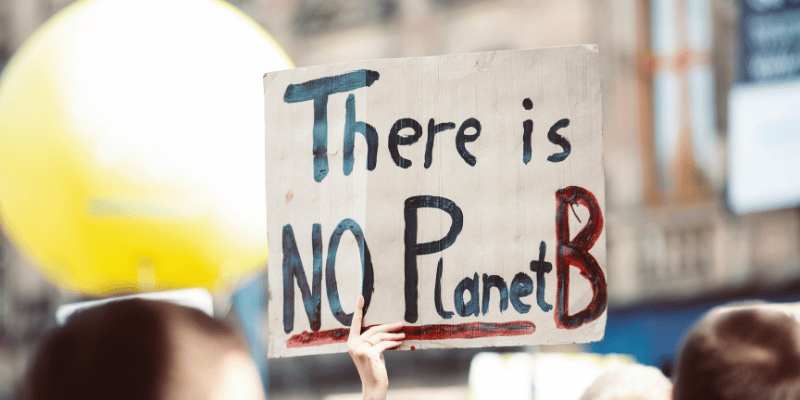
Across the country, youth impacted by climate change have sued state governments on the theory that inaction in the face of the climate crisis violates their fundamental constitutional rights.
In one highly publicized case, Held v. State, 16 kids sued the State of Montana over environmental laws that shielded companies developing fossil fuel projects, forbidding the state from reviewing the full impacts of the projects’ greenhouse gas (GHG) emissions.
The youth litigants won a decisive court victory, striking down that provision of the Montana Environmental Policy Act and securing a declaration of their constitutional right to a “stable climate system.”
More recently, the Montana plaintiffs are back in court in 2026 seeking to reinforce their win and ensure Montana’s energy and environmental policy actually complies with the established right to a stable climate.
Wisconsin’s Youth Climate Case
Here in Wisconsin, the nonprofit legal advocacy group Our Children’s Trust teamed up with Midwest Environmental Advocates (MEA) to sue the state’s Public Service Commission (PSC) and the state legislature in 2025 in Dunn v. Wisconsin Public Service Commission.
In their complaint, the young plaintiffs — ranging from age 8 to 17 at the time the case was filed — challenged aspects of Wisconsin energy law that allow utilities to continue building fossil-fuel infrastructure despite the climate crisis.
The youth plaintiffs hail from a wide range of backgrounds, but they all share one tragic bond: climate change is making their lives measurably worse.
The climate crisis has forced some of their families to move, rendered many Wisconsin rivers and lakes degraded and unfit for swimming, fishing, and boating, robbed them of opportunities to engage in cultural activities like tapping maple trees for maple syrup, exposed them to a heightened risk of Lyme disease, exacerbated health issues like asthma, and led to a decline in their mental health.
Driven by these cultural, health, and economic impacts, many of these kids and young adults have dedicated themselves to climate education and activism.
But they can’t do it alone — they will need help from engaged Wisconsinites to push our legislators and courts to consider the true costs of continuing to develop more fossil fuel infrastructure when renewable energy alternatives are readily available.
The Youths’ Argument
In court, plaintiffs argued that the law prohibiting the PSC from considering the impacts of air pollution in issuing Certificates of Public Convenience and Necessity (CPCNs) to large energy projects is unconstitutional, allowing the continued development of fossil fuel projects without considering their full costs to society.
Second, the youth argued that Wisconsin’s Renewable Portfolio Standard (RPS) is unconstitutional, effectively putting a ceiling on the PSC’s ability to push utilities to supply more renewable energy.
In 2005, Wisconsin amended Act 9, setting an initial goal of 10 percent renewable energy by 2015. That goal was first met back in 2013, two years ahead of schedule. Since then, the PSC has been unable to require more renewable energy to support our statewide climate goal, or even accurately track the renewable energy portfolio of Wisconsin’s utilities. This shortcoming has led Wisconsin to fall behind in the adoption of renewable energy.
Without the ability to mandate that utilities develop more renewable energy, Wisconsin will struggle to meet the long-range 2050 goal of 100% carbon-free energy set by Governor Evers.
The plaintiffs argue that these maladies in Wisconsin law are violating their foundational rights to life and liberty, which rest on a stable climate system.
They also argue that the defendant’s inadequate response to climate change was violating Wisconsin’s Public Trust Doctrine and depriving plaintiffs of the ability to use and enjoy Wisconsin’s bountiful water resources: our many public rivers and lakes. Sadly, Wisconsin’s public waterways are increasingly degraded by extreme heat and algal blooms closely linked to climate change.
The Lower Court’s Ruling
Despite a load of evidence, the plaintiffs’ case was dismissed by the court. While the judge sympathized with the youth, acknowledging that the plaintiffs showed clear harm from climate change, they decided that this case is not fit for resolution in a courtroom.
Instead, the court said the plaintiffs’ cause is an energy policy issue that would be better addressed in the state legislature.
However, the plaintiffs are appealing that decision and fighting to bring awareness to the human impacts of the climate crisis, and to push Wisconsin to take meaningful action to mitigate climate change and protect the future of all Wisconsinites.
The High Cost of Fossil Fuels
The natural gas plants that Wisconsin utilities and power producers are currently building and proposing will operate for 30 or more years, producing a wide range of serious, negative environmental health impacts for Wisconsinites.
Natural gas and coal plants struggle to compete with solar and wind power on costs, and that’s not including the often-ignored economic and health costs of fossil fuel projects, which include dirtier air, a slew of health risks, and early death.
In 2025, WE Energies received PSC approval for two massive natural gas plants, Oak Creek and the Paris Generation Project.
While some have touted natural gas as a cleaner “bridge” fuel, analysis conducted by Healthy Climate Wisconsin and the Union of Concerned Scientists predicts that the plants will cost more than $5 billion in health impacts from particulate, sulfur, and other forms of toxic pollution over their three-decade lifespan, with impacts in Wisconsin and neighboring states like Michigan.
These new plants will particularly harm people with existing heart or respiratory issues, as well as communities that have already borne the hefty costs of fossil fuel development.
Overall, Wisconsinites will be less healthy as a result of these natural gas projects, in addition to the broader impact on climate change from burning methane — a greenhouse gas far more potent than carbon dioxide.
The roughly $2 billion WE Energies is spending developing the Oak Creek and Paris projects could have been used to build large-scale solar or wind farms that would have provided clean, reliable energy.
Wisconsin’s Clean Energy Future
With the technology we have available, there is no need for more outdated, dirty fossil fuel infrastructure in Wisconsin.
RENEW Wisconsin is fighting to put solar and wind on level ground with fossil fuels — because solar and wind power prevail when they are given a fair chance to compete in the energy market.
A brighter and attainable Wisconsin energy future powered by renewable energy would produce reliable power, create jobs, and lessen air pollution, leading to a healthier and wealthier Badger State.
A combination of rooftop, community solar, large-scale solar, energy conservation, smart demand reduction programs, and battery storage can meet all of Wisconsin’s energy needs, even with the projected increase in energy demand from data centers.
That is the future RENEW Wisconsin is fighting for.

Brian Wagenaar, a Twin Cities native, is one of RENEW’s 2026 summer law clerks. He is currently a student at the University of Wisconsin Law School and starts his second year in the program this fall. Prior to his time at UW’s Law School, Brian earned his bachelor’s in environmental policy from UW-Green Bay.