
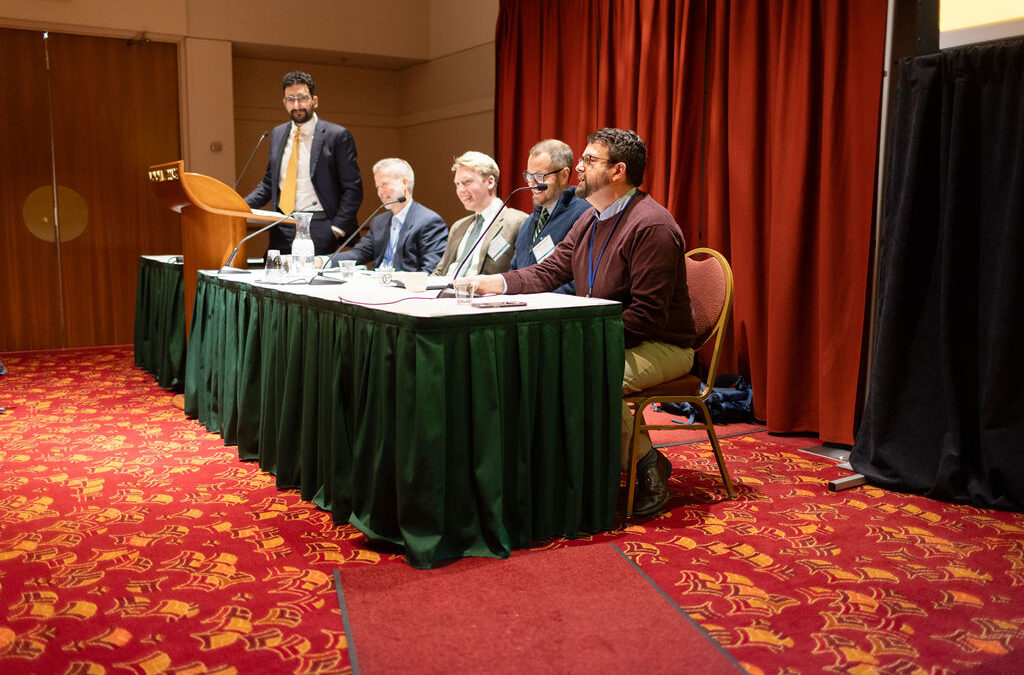
Communities across Wisconsin continue to grapple with how renewable energy projects get sited and permitted. At our 2026 RENEW Wisconsin Summit RENEW Wisconsin hosted a panel that brought together expert voices on state and local siting and permitting authority. The conversation is worth a revisit, as the industry continues to navigate this important topic.
Eric Callisto, a former Chair of the Public Service Commission of Wisconsin (PSC) and private-sector renewable energy attorney, made a clear case for why state-level oversight of large projects matters: projects that serve the regional grid are matters of statewide concern, and an independent expert agency is better positioned to evaluate energy projects than individual town boards. He was candid that without that independent oversight, the “NIMBY element” would prevent many worthy projects from being built.
Orrie Walsvik, an associate attorney at Michael Best, walked through what he called the “inverted pyramid” of clean energy regulation, from baseline zoning to the case-by-case requirements of § 66.0401 to the PSC’s comprehensive authority over 100+ Megawatt projects. His core point: local governments have been delegated administrative authority to help Wisconsin implement its renewable energy policy, not the legislative authority to decide whether that policy is welcome in their jurisdiction.
Isaac Uitenbroek, a zoning administrator with direct experience drafting and implementing solar regulations, provided an honest window into what local government staff navigate: constituent pressure, tight timelines, and the balancing act of building ordinances that meet legal requirements while giving elected officials a process they can use to address community concerns. He advised developers and applicants to communicate early, communicate often, and leave no information vacuum. His perspective reflected real experience with what happens when communities feel blindsided.
David Jakubiak, Senior Vice President of Aileron and expert on renewable energy communications, reinforced that community engagement is not a compliance checkbox but a prerequisite for project success. He pushed back on drone footage, cookie-cutter community meetings, and out-of-state project representatives and witnesses. David made the practical case for finding local champions and showing people what renewable energy actually looks like from the road, not from the sky.
The common thread of the panel discussion and audience question was a recognition that Wisconsin is navigating a genuine policy contest, one requiring developers, lawyers, and local governments to work together to find a workable path that recognizes community concerns and appreciates the local benefits of renewable energy development.