by jboullion | Nov 22, 2010 | Uncategorized
From an article by Pat Eggert in The Dunn County News:
A lot is going on in sustainability here, and 50 local residents gathered Thursday at the First Congregational UCC Church in Menomonie to learn more about what is happening.
Linda Walsh, member of the steering committee of Sustainable Dunn, introduced panelists from the city, county and UW-Stout who reported on recent efforts.
“I think that sustainability is the most important area in which we participate,” Dunn County Board chair Steve Rasmussen told the group. “The County Board endorses sustainability, engages in it and tasked our staff to come up with a sustainability action plan. It was one of my priorities when I was first elected chair.”
“We’re very fortunate that the County Board has supported us,” Dunn County Planner Bob Colson told the group.
Plan of action
Some of the elements of the county plan are an eco-county resolution, a sustainability action plan charter, and a sustainability action plan, Colson said. The county approach has been to complete an internal process first.
An action plan, adopted in February of 2010, covers purchasing, energy, education and public policies.
by jboullion | Nov 22, 2010 | Uncategorized
From a news release issued by the Public Service Commission:
MADISON — The Public Service Commission of Wisconsin (Commission) will hold public hearings in Rothschild on Wisconsin Electric Power Company’s (WEPCO, doing business as We Energies) application to construct a Biomass-Fired, Cogeneration Facility in the village of Rothschild, Marathon County, Wisconsin. The public hearings will be held Tuesday, November 30, 2010, at 1 p.m. and 6 p.m. at the Holiday Inn Hotel and Suites, Crystal 1 Room at 1000 Imperial Avenue in Rothschild. Administrative Law Judge Michael Newmark will preside over the hearings.
We Energies filed an application with the Commission on March 10, 2010 for approval to build and operate a 50 megawatt, Biomass-Fired, Cogeneration Facility in the Village of Rothschild.
Prior to acting on the application, the Commission will seek and consider public comments.
Public comments offered at the public hearings on the proposed biomass plant will be included in the record the Commission will review to make a decision. Attendees at each hearing will be able to provide testimony to the Administrative Law Judge presiding at the hearing. Citizens are encouraged to attend. If you cannot attend the public hearings, but would like to provide comments, you can do so on the PSC’s website through November 30, 2010. Click on the Public Comments button on the PSC’s homepage and click on the case title.
by jboullion | Nov 22, 2010 | Uncategorized
From an article by Tom Daykin in the Milwaukee Journal Sentinel:
About 200 people attended a Saturday rally at Milwaukee’s Amtrak-Greyhound station, asking Governor-elect Scott Walker to back off his pledge to cancel contracts for a planned Milwaukee-to-Madison passenger rail line.
Rally speakers said the rail service would create badly need jobs, provide a more environmentally friendly alternative to driving, and link Milwaukee and Madison to a national rail network that includes Chicago – and eventually Minneapolis.
Without that link, said state Sen. Spencer Coggs (D-Milwaukee), Wisconsin “will be isolated from the rest of the national rail network.”
The rally, organized by the Sierra Club and other groups, was part of a statewide action that included rallies in Madison, Eau Claire, La Crosse, Oshkosh and Watertown.
Milwaukee rally organizers asked the crowd to write or call Walker.
Walker says the estimated annual costs to state taxpayers of operating the train, $7.5 million once fare revenue is subtracted, would be too high for an underused and unneeded service.
by jboullion | Nov 22, 2010 | Uncategorized
From an article by Kevin Murphy in the Telegraph Herald, Dubuque, Iowa:
PLATTEVILLE, Wis. — Pioneer Farm at University of Wisconsin-Platteville touts itself as a state-of-the-art agricultural research facility. However, it’s been lacking renewable energy systems that have become an increasing area of importance in agribusiness.
That changed Wednesday when the State Building Commission approved a $1.18 million bio-energy project that will produce about 7.5 percent of the campus’ electricity needs from the university’s 160-head dairy herd.
Anaerobic digesters, which turn manure into methane used to generate electrical power, typically need 600 cows to reach a break-even point. The Pioneer Farm digester will show that process can be economically feasible on a much smaller scale.
The farm will test other organic material in the digester such as cheese whey, food waste and byproducts from biodiesel processing to determine if they adequately supplement manure in the production of biogas.
Pioneer Farm currently buys all its energy from local utilities, but its master plan considers using power from renewable sources, including wind and solar. However, the intent of the digester project is to install a system compatible with the farm it serves.
“A unique aspect of the project is demonstrating a renewable energy system that is highly integrated into the current farming system with little modification to current livestock cropping and manure management practices,” according to the information supplied to the commission.
The system should save the farm $73,400 in annual energy costs and have a 14-year payback period. That is within the state’s energy-efficiency program that seeks a 16- to 20-year payback period for major projects.
by jboullion | Nov 19, 2010 | Uncategorized
From a post by Wallace White, principal and CEO of Milwaukee’s W2EXCEL LLC, on the BizTimes blog:
Here are my reasons for supporting high speed rail for Wisconsin:
$810 million of work for our engineering firms and contractors and some of our minority and women owned companies. For example, Norris and Associates, a Milwaukee based African-American engineering firm, had won a subconsultant contract with a HSR engineering company. He had just hired 3 engineers and now has had to lay them off. The same is true for all the other companies who had just started to work on HSR contracts.
The returned money may not just go to Illinois or New York where there are Democratic governors. Other Republican governors would love to have the money. Gov. Rick Perry and the Republican administration of the state of Texas is seeking HSR funds to run trains between Dallas, Austin, San Antonio and Houston. The Republican administration of the state of South Carolina has applied for HSR funding to connect Savannah, Charleston, Florence and parts of North Carolina. The Republican administration of Minnesota has joined the Democratic administration of Wisconsin to study HSR between Minneapolis & Madison. They have received $1 million of planning money from the federal government.
The United States is in competition with the rest of the world for economic survival. Transportation is a large part of this global effort – we are competing with Japan, China, Brazil and Europe – all of which have already committed to some form of HSR to expand their economy, reduce pollution, provide service to rural areas and to the poor. Wisconsin Governor-elect Scott Walker should understand – this is part of a bigger picture. . . .
by jboullion | Nov 19, 2010 | Uncategorized
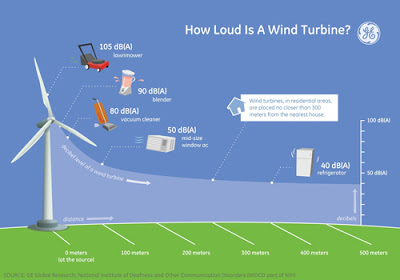
From GE Reports, a blog that is sponsored by GE but created by a group of tech bloggers and editors. The content covers topics from aviation to alternative energy to healthcare — virtually everything in the “innovative technology” space.
by jboullion | Nov 18, 2010 | Uncategorized
From an article in the La Crosse Tribune:
Wisconsin Gov.-elect Scott Walker has said he will halt the state’s participation in the high-speed rail project.
But open houses for the environmental impact study on the proposed Milwaukee-Twin Cities high-speed passenger rail corridor remain set for Nov. 30 in La Crosse, Nov. 29 in St. Paul, Minn., and Dec. 6 in Rochester, Minn., the Minnesota Department of Transportation said Wednesday.
The study, which began in March, will analyze all possible routes for high-speed passenger rail between Milwaukee and the Twin Cities, MnDOT said. La Crosse- and Winona-area leaders have sought to have the high-speed corridor follow Amtrak’s Empire Builder route through the region.
The Wisconsin DOT will host the La Crosse open house from 5 to 7 p.m., with a brief presentation at 5:30 p.m. Nov. 30 at the Best Western Riverfront Hotel, 1835 Rose St. Public comments will be accepted at the open houses and through the Minnesota DOT’s website beginning Nov. 29.
by jboullion | Nov 17, 2010 | Uncategorized
From a presentation by RENEW executive director Michael Vickerman at the November 15-16, 2010, in St. Paul, MN:
•Understand that demographics matter – there is a deep cultural divide between farm households and commuter households
•Developers who operate in a transparent, above-board, even-handed manner will eventually earn the community’s trust
•Maintain an active presence in the community – figure out a way to support youth groups and local charities
•How one responds to complaints in the first year of project operation will make a lasting impression
•While it not possible to please all the people all the time, strive to stay on the good side of the most influential residents
•Eventually, wind turbines will become an accepted part of the landscape
•Good neighbor payments are helpful, but they’re no panacea
45 dBa sound thresholds are here to stay
•Sensitivities to environmental impacts vary widely – how individuals may respond to environmental changes can’t be predicted accurately
•Opposition to wind energy capture is as old as Don Quixote
•Some individuals are intrinsically put off by tall structures and continuous motion
•Public acceptance of WI’s smallest projects has been very high
by jboullion | Nov 17, 2010 | Uncategorized
Join us as we tell Scott Walker that Wisconsin can’t afford to say NO over $800 million dollars in federal grant funds for this project, 9,570 permanent jobs, and increased property values.
When: Saturday, November 20th, 12:00 – 12:45 p.m
Where: Milwaukee Intermodal Station, 433 West St. Paul Ave
Who: Congresswoman Gwen Moore (invited); Sen. Spencer Coggs, SD 6; Robert Craig, Citizen Action; Rosemary Wehnes, Sierra Club; Phil Neuenfeldt, AFL CIO (invited), and You. More details.
If we want to save this train, we need to speak up now! Join us as we tell Scott Walker that Wisconsin can’t afford to say NO over $800 million dollars in federal grant funds for this project, 9,570 permanent jobs, and increased property values. Let’s extend the popular Hiawatha service connecting Chicago and Milwaukee. Let’s create a safe, convenient efficient way to travel throughout the Midwest. We can make a difference, IF we stand together. Please attend and bring a friend!
by jboullion | Nov 17, 2010 | Uncategorized
Join us as we tell Scott Walker that Wisconsin can’t afford to say NO over $800 million dollars in federal grant funds for this project, 9,570 permanent jobs, and increased property values.
When: Saturday, November 20th, 12:00-12:45 p.m
Where: La Crosse Amtrak Station, 610 St. Andrews St
Who: Representative Jennifer Shilling, AD 95; Jennifer Dausey, UW La Crosse / Sierra Student Coalition; Marilyn Pedretti, Sierra Club – Coulee Region Group (invited)and You. More details.
If we want to save this train, we need to speak up now! Join us as we tell Scott Walker that Wisconsin can’t afford to say NO over $800 million dollars in federal grant funds for this project, 9,570 permanent jobs, and increased property values. Let’s extend the popular Hiawatha service connecting Chicago and Milwaukee. Let’s create a safe, convenient efficient way to travel throughout the Midwest. We can make a difference, IF we stand together. Please attend and bring a friend!