by jboullion | Feb 18, 2010 | Uncategorized
From a letter to State Rep. Spencer Black and State Sen. Mark Miller from RENEW Wisconsin:
RENEW is pleased to provide the enclosed copy of the narrative and appendix of tables from an economic analysis that we commissioned.
The analysis concludes that special buyback rates (sometimes called Advanced Renewable Tariffs) designed to stimulate small-scale renewable energy installations would have negligible impact on residential utility bills, averaging about $10 a year. That’s less a dollar a month for the typical customer. And it’s less than a household’s cost of purchasing the smallest block of green power from Madison Gas and Electric, for instance.
Compared with other forms of economic stimulus, promoting small-scale renewables through utility buyback rates would deliver a substantial and long-lasting economic punch with minimal impact on the Wisconsin citizen’s pocketbook.
Prepared by Spring Green-based L&S Technical Associates, the study modeled rate impacts from the legislation’s provisions for ARTs on the state’s five largest utilities. The modeling predicts cost impacts ranging from a low of $8.12 a year for a residential customer of Wisconsin Public Service to as high as $11.07 for a Wisconsin Power and Light (Alliant) customer. The projected impact would amount to $8.81 a year for a We Energies customer, $9.71 for a Madison Gas and Electric customer, and $10.11 for an Xcel Energy customer.
The projections assume that when each utility reaches its maximum threshold of 1.5 percent of total retail sales. In the aggregate, this percentage equates to 1/70th of total annual sales. That’s one billion kilowatt-hours a year, out of total annual sales of 70 billion kilowatt-hour.
Though the principals of L&S Technical Associates serve on RENEW’s board of directors, they have prepared numerous renewable energy studies for other clients, including the U.S. Department of Energy, Energy Center of Wisconsin, and the Wisconsin Department of Natural Resources. L&S has also co-authored renewable energy potential studies in response to requests from the Wisconsin Public Service Commission.
The bill’s renewable energy buyback provisions would unleash a steady flow of investment that would lead to new economic activity and jobs while moving us toward energy independence – exactly what we all hope to accomplish by passage of the Clean Energy Jobs Act legislation.
by jboullion | Feb 18, 2010 | Uncategorized
From an article by Sean Ryan in The Daily Reporter:
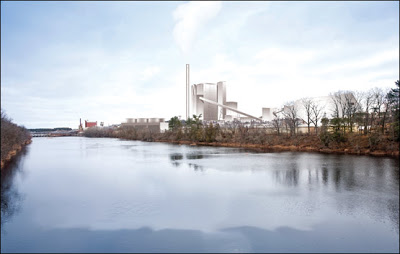
People in Rothschild have a lot of questions about how We Energies’ proposed $250 million biomass plant project will affect their neighborhood.
The community has not heard much about the project since representatives from the state and We Energies visited Rothschild in September to announce plans to build a 50-megawatt biomass plant next to Domtar Corp.’s paper mill, said Village President Neil Torney, who said the plant’s burner would be built 1,400 feet from his house.
“There’s a few concerned citizens who live near the plant who would, naturally, have a bunch of questions,” he said. Torney said his list of questions is seven pages.
We Energies is sending people to knock on doors within a mile of the project to share information and gather comments, said spokesman Brian Manthey. On Saturday, the utility will hold its first project open house in Rothschild, he said.
We Energies planners, Manthey said, want to hear concerns before applying for Public Service Commission of Wisconsin approval in March or April so the designs can be changed to alleviate problems.
The project will supply jobs to the community and other economic benefits, Manthey said.
“Those are all good things, and those are real good community benefits,” he said. “And we want to make sure that we are out there as well to address any issues.”
Artist’s sketch courtesy of We Energies
by jboullion | Feb 17, 2010 | Uncategorized
From a letter to State Rep. Spencer Black and State Sen. Mark Miller:
RENEW is pleased to provide the enclosed copy of the narrative and appendix of tables from an economic analysis that we commissioned.
The analysis concludes that special buyback rates (sometimes called Advanced Renewable Tariffs) designed to stimulate small-scale renewable energy installations would have negligible impact on residential utility bills, averaging about $10 a year. That’s less a dollar a month for the typical customer. And it’s less than a household’s cost of purchasing the smallest block of green power from Madison Gas and Electric, for instance.
Compared with other forms of economic stimulus, promoting small-scale renewables through utility buyback rates would deliver a substantial and long-lasting economic punch with minimal impact on the Wisconsin citizen’s pocketbook.
Prepared by Spring Green-based L&S Technical Associates, the study modeled rate impacts from the legislation’s provisions for ARTs on the state’s five largest utilities. The modeling predicts cost impacts ranging from a low of $8.12 a year for a residential customer of Wisconsin Public Service to as high as $11.07 for a Wisconsin Power and Light (Alliant) customer. The projected impact would amount to $8.81 a year for a We Energies customer, $9.71 for a Madison Gas and Electric customer, and $10.11 for an Xcel Energy customer.
The projections assume that when each utility reaches its maximum threshold of 1.5 percent of total retail sales. In the aggregate, this percentage equates to 1/70th of total annual sales. That’s one billion kilowatt-hours a year, out of total annual sales of 70 billion kilowatt-hour.
Though the principals of L&S Technical Associates serve on RENEW’s board of directors, they have prepared numerous renewable energy studies for other clients, including the U.S. Department of Energy, Energy Center of Wisconsin, and the Wisconsin Department of Natural Resources. L&S has also co-authored renewable energy potential studies in response to requests from the Wisconsin Public Service Commission.
The bill’s renewable energy buyback provisions would unleash a steady flow of investment that would lead to new economic activity and jobs while moving us toward energy independence – exactly what we all hope to accomplish by passage of the Clean Energy Jobs Act legislation.
by jboullion | Feb 17, 2010 | Uncategorized
From a news release issued by UW-Stout:
The University of Wisconsin-Stout, in partnership with Veolia Environmental Services in Eau Claire, is composting all food waste from its two dining halls.
Since Jan. 25, kitchen food waste not served to customers as well as post-consumer food waste in Price Commons and Jeter-Tainter-Callahan dining facilities has been picked up twice a week and transported to Veolia’s composting site at Seven Mile Creek Landfill, east of Eau Claire. Also included is kitchen food waste from the Memorial Student Center.
At the landfill, food waste is dumped and layered with yard waste in long piles, or windrows, and turned periodically so that air and moisture can circulate. As the piles heat up, food and yard waste break down and become nutrient-rich soil.
Veolia will provide UW-Stout with a record of food waste collected. The amount is expected to reach 2 to 2½ tons a week.
“This is just the first step in the university’s composting efforts,” said Ann Thies, director of University Dining. “We have plans for more of the post-consumer food waste to be included in the future. Other post-consumer items are carry-out items and customer waste in our retail dining areas.”
Last fall, the university switched most carry-out containers to compostable packaging and began working on a plan to compost food waste.
by jboullion | Feb 17, 2010 | Uncategorized
From a blog post on BizTimes.com by Steve Jagler, executive editor of BizTimes Milwaukee:
. . . BizTimes Milwaukee broke the story that Milwaukee was one of three finalists to be the North American headquarters of a Spanish alternative energy company.
As we now know, that company turned out to be Ingeteam, a Spanish wind turbine company that confirmed Tuesday it will construct a $15 million, 100,000-square-foot facility in Milwaukee’s Menomonee River Valley. The complex will span about 8.1 acres at 3757 W. Milwaukee Road.
Ingeteam, headquartered in Bilbao, Spain, will employ about 275 workers in Milwaukee by 2015.
Milwaukee was chosen to be the site of the new plant after a coordinated recruitment effort that included officials from the Milwaukee 7 economic development team, We Energies, Marcoux and Wisconsin Commerce Secretary Richard “Dick” Leinenkugel, who went to Spain to seal the deal.
“The Menomonee Valley was once Wisconsin’s largest brownfield,” said Milwaukee Mayor Tom Barrett. “Now, the valley is home to businesses that employ thousands of people.”
The deal was made possible by $1.6 million in tax credits through the federal stimulus program, up to $4.5 million in state tax credits and another $500,000 forgivable loan from the state.
“After carefully analyzing our company’s needs, we selected Milwaukee for our new production facility because the city is conveniently located for distribution of our products and has a solid industrial base from which Ingeteam can source materials,” said Ander Gandiaga, Ingeteam’s corporate director for international development.
“Milwaukee also has a labor pool experienced in electrical manufacturing. In addition, the area boasts prestigious universities with some of the highest-ranked engineering departments in the country that offer specific courses in renewable energy, which will be very useful when it comes to finding specialized staff,” said Aitor Sotes, chief executive officer of Ingeteam Inc., Ingeteam’s subsidiary in the United States.
Gandiaga also said the Wisconsin team “made an impressive effort to sell Ingeteam on the virtues of locating in this community. The Ingeteam project perfectly fits the model of the clean energy economy and job creation goals that the city and state are pursuing.”
Ingeteam considered more than 80 sites before selecting Milwaukee as the North American home for its company.
“They could have located this $15 million facility anywhere in the nation. Believe me, Michigan tried very hard,” Leinenkugel said. . . .
The doomsday naysayers who perpetually beat the drum that Wisconsin is a horrible place to do business again had to take a holiday Tuesday. I love when that happens.
by jboullion | Feb 17, 2010 | Uncategorized
From an article by in the Wisconsin Ag Connection:
As the University of Wisconsin-Platteville continues to explore renewable and sustainable energy sources on campus, one opportunity has more to do with the local bovine community than anything else. Tim Zauche, UWP professor and chair of the chemistry and engineering physics department, along with Chris Baxter, UWP assistant professor of agronomy, are leading a project team exploring the possibility of having an anaerobic digester on campus and another in the Platteville community.
An anaerobic digester uses bacteria to break down organic waste to produce methane, much like a cow’s stomach. One by-product of the bacteria digesting this waste is methane, also known as natural gas, which is used to heat homes and generate electricity.
“We need to mix the waste because, like our bodies, the bacteria can’t survive on sugar alone. We need to provide them with a balanced diet, so to speak,” said Zauche. “By using the same bacteria that produces gas in a cow’s stomach, we can turn waste into energy that can provide electricity or heat for homes. The material from four cows can provide the electricity for one home for a year and one digester could provide seven percent of UWP’s annual power consumption.”
Once used, the waste from the digester will be filtered into liquid and solid forms of fertilizer ready for direct field application and other forms of fertilizer use.
by jboullion | Feb 17, 2010 | Uncategorized
February 12, 2010
Senator Mark Miller
State Capitol, Room 317 East
Madison, WI 53707
Representative Spencer Black
State Capitol, Room 210 North
Madison, WI 53708
Dear Senator Miller and Representative Black:
RENEW Wisconsin and our members appreciate the opportunities you created for public input into the Legislature’s deliberations on the Clean Energy Jobs Act legislation. Certainly, the more we can ground public discussion in fact, the better the final outcome.
To that end, RENEW is pleased to provide the enclosed copy of the narrative and appendix of tables from an economic analysis that we commissioned.
The analysis concludes that special buyback rates (sometimes called Advanced Renewable Tariffs) designed to stimulate small-scale renewable energy installations would have negligible impact on residential utility bills, averaging about $10 a year. That’s less a dollar a month for the typical customer. And it’s less than a household’s cost of purchasing the smallest block of green power from Madison Gas and Electric, for instance.
Compared with other forms of economic stimulus, promoting small-scale renewables through utility buyback rates would deliver a substantial and long-lasting economic punch with minimal impact on the Wisconsin citizen’s pocketbook.
Prepared by Spring Green-based L&S Technical Associates, the study modeled rate impacts from the legislation’s provisions for ARTs on the state’s five largest utilities. The modeling predicts cost impacts ranging from a low of $8.12 a year for a residential customer of Wisconsin Public Service to as high as $11.07 for a Wisconsin Power and Light (Alliant) customer. The projected impact would amount to $8.81 a year for a We Energies customer, $9.71 for a Madison Gas and Electric customer, and $10.11 for an Xcel Energy customer.
The projections assume that when each utility reaches its maximum threshold of 1.5 percent of total retail sales. In the aggregate, this percentage equates to 1/70th of total annual sales. That’s one billion kilowatt-hours a year, out of total annual sales of 70 billion kilowatt-hour.
Though the principals of L&S Technical Associates serve on RENEW’s board of directors, they have prepared numerous renewable energy studies for other clients, including the U.S. Department of Energy, Energy Center of Wisconsin, and the Wisconsin Department of Natural Resources. L&S has also co-authored renewable energy potential studies in response to requests from the Wisconsin Public Service Commission.
The bill’s renewable energy buyback provisions would unleash a steady flow of investment that would lead to new economic activity and jobs while moving us toward energy independence – exactly what we all hope to accomplish by passage of the Clean Energy Jobs Act legislation.
Sincerely,
Michael Vickerman
Executive Director
by jboullion | Feb 17, 2010 | Uncategorized
A Commentary
by Michael Vickerman, RENEW Wisconsin
February 15, 2010
In the next six weeks the Legislature will make a truly momentous decision on the state’s energy future. Either it can embrace an ambitious 15-year commitment to invigorate the state’s economy through sustained investments in clean energy or decide to coast along on current energy policies until they lapse and lose their force and effect.
Arguably the most innovative feature in the Clean Energy Jobs Act, as it’s now called, is a proposed requirement on larger electric providers to acquire locally produced renewable electricity with Advanced Renewable Tariffs (ARTs). These are technology-specific buyback rates that provide a fixed purchase price for the electricity produced over a period of 10 to 20 years, set at levels sufficient to recover installation costs along with a modest profit. Now available in more than a dozen nations in Europe as well as the Province of Ontario, ARTs have proven to be singularly effective in stimulating considerable growth in small-scale production of distributed renewable electricity.
From what we’ve observed, Focus on Energy and federal incentives (the current mix of financial support) are not sufficient to drive significant installation activity when utility buyback rates are pegged to the cost of operating 40-year-old coal plants. It’s unrealistic to assume that a brand-new farm-sized renewable energy system, regardless of the resource used, can compete head-to-head with central station power plants that have been fully amortized.
However, when existing incentives and tax credits are supplemented with an additional source of financial support, such as higher buyback rates, installation activity picks up noticeably.
Consider the much-vaunted Dane County Cow Power Project, which should be operational before the end of the year. Using anaerobic digestion technology, this Waunakee-area installation will treat manure from three nearby dairy farms and produce biogas that will fuel a two-megawatt generator. This community digester project, the first of its kind in Wisconsin, will be built with private capital and a State of Wisconsin award to support a technology that reduces the flow of phosphorus into the Yahara Lakes. A second digester project is also planned for Dane County.
The key element that makes the financing of this project work is the special biogas buyback rate that Alliant Energy, the local utility, voluntarily put in place a year ago. With the higher rate, the project’s return on investment was sufficient to interest outside investors.
Unfortunately, once this initiative reached its predetermined capacity limit, Alliant discontinued the special biogas rate. This complicates matters for future digester installations, in that the other utilities that serve Dane County, including Madison Gas & Electric, do not offer special buyback rates to customers who generate electricity from biogas.
While voluntary initiatives are laudable, they are too small and sporadic in nature to make much of a dent in converting Wisconsin’s organic wastes into energy. Indeed, unless a policy is adopted statewide that requires utilities to increase their purchases of locally generated renewable electricity, there is no guarantee that Dane County will see a second digester project built.
If we are serious about neutralizing the algae blooms that turn the Yahara lakes green each year, we’ll need to adopt a clean energy policy, including ARTs, that facilitates the development of biodigesters in farm country.
Please communicate your support for this bill by writing letters to your state legislators and to your local newspaper. But time is of the essence — we have only a few more weeks left in this legislative session.
Michael Vickerman is the executive director of RENEW Wisconsin, a sustainable energy advocacy organization headquartered in Madison.
by jboullion | Feb 16, 2010 | Uncategorized
From a news release issued by the UW-Madison:
Wide-ranging efforts to nurture a Wisconsin biomass market supplying fuel to the soon-to-be-renovated Charter Street Heating Plant at the University of Wisconsin-Madison are under way, as officials begin identifying potential suppliers for the cutting-edge facility.
State and UW-Madison officials are asking interested Wisconsin farmers, businesses and landowners to respond to a simple “request for information” that will help pinpoint likely suppliers of the 250,000 tons of biomass that the plant will consume each year.
“We want to build reliable partnerships, help foster an emerging industry and meet the environmental goals of powering a cleaner, coal-free facility,” says Troy Runge, director of the Wisconsin Bioenergy Initiative, a UW-Madison-based coalition that helps Wisconsin create, commercialize and promote bioenergy solutions.
Runge, who chairs a multiagency panel charged with creating a biomass market to serve the plant, says the request was designed to be simple to encourage broad participation. It will be followed in coming months by a request for more detailed information and proposals from potential biomass fuel suppliers and aggregators.
“We want to cast the broadest possible net to eventually develop a network of suppliers who are capable of providing long-term, sustainable and environmentally responsible fuel supplies,” says Runge.
The request seeks information on the type of fuel being offered, location, pricing, capacity, storage and transportation. It can be found at http://www.wbi.wisc.edu/charter-street-biomass-heating-plant.
by jboullion | Feb 16, 2010 | Uncategorized
From a news release issued by the UW-Madison:
Wide-ranging efforts to nurture a Wisconsin biomass market supplying fuel to the soon-to-be-renovated Charter Street Heating Plant at the University of Wisconsin-Madison are under way, as officials begin identifying potential suppliers for the cutting-edge facility.
State and UW-Madison officials are asking interested Wisconsin farmers, businesses and landowners to respond to a simple “request for information” that will help pinpoint likely suppliers of the 250,000 tons of biomass that the plant will consume each year.
“We want to build reliable partnerships, help foster an emerging industry and meet the environmental goals of powering a cleaner, coal-free facility,” says Troy Runge, director of the Wisconsin Bioenergy Initiative, a UW-Madison-based coalition that helps Wisconsin create, commercialize and promote bioenergy solutions.
Runge, who chairs a multiagency panel charged with creating a biomass market to serve the plant, says the request was designed to be simple to encourage broad participation. It will be followed in coming months by a request for more detailed information and proposals from potential biomass fuel suppliers and aggregators.
“We want to cast the broadest possible net to eventually develop a network of suppliers who are capable of providing long-term, sustainable and environmentally responsible fuel supplies,” says Runge.
The request seeks information on the type of fuel being offered, location, pricing, capacity, storage and transportation. It can be found at http://www.wbi.wisc.edu/charter-street-biomass-heating-plant.