by jboullion | Mar 16, 2009 | Uncategorized
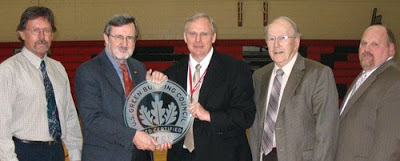
From left: Steve Rubenzer of SDS Architect, Congressman David Obey, District Administrator Rick Palmer and School Board President Robert Clifton of Luck School District, Charlie Schneider of Focus on Energy
From a news release issued by Focus on Energy:
Focus on Energy, Wisconsin’s energy efficiency and renewable energy initiative, presented Luck School District in Luck, Wis. with a plaque in recognition of earning the United States Green Building Council’s Leadership in Energy and Environmental Design (LEED) certification on Friday, March 13. U.S. Congressman David Obey was on-hand during the presentation.
Luck School District is the second school in Wisconsin to receive a LEED certification and achieve this prestigious green building standard on an existing building. LEED standards address whole building maintenance issues including chemicals, energy and water efficiency performance, indoor air quality and recycling programs, among others standards to maximize operational efficiency and minimize environmental impacts.
“These efforts have saved money, reduced energy use and created a cleaner environment,” said Congressman Obey. “I applaud Luck School District for providing the best education that comes from leading by example.”
With the help of Focus on Energy’s expertise and more than $120,000 in cash incentives, Luck School District has saved more than 495,000 kilowatt-hours of electricity and 25,000 therms of natural gas-enough energy to power 75 homes for a year. The district will also save more than $77,000 in energy costs annually. Luck School District’s numerous accomplishments to earn LEED certification include:
+ A $2.1 million upgrade to its heating and cooling system.
+ Received a Department of Natural Resources grant to help implement an advanced recycling program.
+ Started a “green cleaning” program.
+ Provided continuing education to teachers though the Focus sponsored K-12 Energy Education Program (KEEP).
+ Kept students and teachers from the K-12 district actively involved with projects and monitoring success.
by jboullion | Mar 16, 2009 | Uncategorized
From an article by Jim Massey in The Country Today:
PLATTEVILLE – Tim Zauche believes a community manure digester could be a win-win situation for UW-Platteville and dairy farmers near the city.
The UW-Platteville chemistry and engineering-physics professor is studying the feasibility of building an anaerobic digester on campus or at the university’s farm to convert manure into a variety of energy sources. Area farmers have expressed interest in the concept, he said.
“The reason I got into this is I want to help farmers become more profitable and help the environment,” Zauche said. “If we’re not going to help the farmers’ bottom line, why even do it?”
Zauche met with about 25 Platteville-area dairy farmers earlier this year to discuss the project.
“They were like, ‘Hey, milk prices are down, we’re strapped for capital. We don’t want to own (the digester), but we can see the benefits of using it,’ ” Zauche said.
Zauche said he’s not sure who would own the digester. It could be set up as a farmer cooperative, owned and operated by the university, or leased to a private firm that would operate it.
He estimated it would cost $1.5 million to $2 million for a digester that would process manure from 1,200 cows. About a dozen farmers are seriously interested in the project, Zauche said.
One of those farmers is Steve Weigel, who operates a 100-cow dairy farm about a mile north of Platteville. He said he would like to discontinue hauling his manure daily and haul to a digester instead.
by jboullion | Mar 16, 2009 | Uncategorized
From an article by Rick Barrett in the Milwaukee Journal Sentinel:
Todd Nelson, owner of the Kalahari Resort, fires off in staccato fashion the belt-tightening measures taken at his Wisconsin Dells water park.
• Seventy employee cell phones eliminated. Saving: $4,500 a month.
• Wristbands for water park customers changed to a cheaper model. Saving: $60,000 a year.
• A new laundry water recycling system: $70,000 a year.
• Six company cars sold, saving thousands of dollars in fuel, insurance and maintenance.
• More than 100 employee e-mail addresses canceled. Saving: $8,000 annually in account fees.
• Employees attending trade shows now stay at cheaper hotels rather than the convention hotel.
“They can drive an extra three miles to a Comfort Inn,” Nelson said.
For most companies, cost-cutting is key to surviving this recession. Layoffs and job reductions have been the most painful measures, but other less dramatic steps also can result in significant saving and can help a company’s long-term health. . . .
Some companies have found huge savings through energy conservation.
The Kalahari installed a 103-panel solar hot water system that heats 60% of the water in the resort’s laundry room.
Low-flow shower heads were installed in guest rooms, reducing water consumption by 2.46 million gallons per year.
The resort has a goal of cutting its electric bill by 30%, using dozens of measures such as motion-sensor lights in public areas.
by jboullion | Mar 16, 2009 | Uncategorized
From an editorial in the Eau Claire Leader-Telegram:
The issue: A proposed program would allow Xcel Energy customers to voluntarily pay extra for renewable power.
Our view: Bills would rise, but the program would give all of us a role in weaning our nation from fossil fuels.
In these days of economic uncertainty, paying more than you have to on a monthly bill seems like the equivalent of letting money go up in smoke.
But when it comes to utility costs, the opposite actually is true.
Xcel Energy’s Wisconsin customers may soon have the option of paying a bit extra for their electricity to spur the production of more energy from “green” sources such as wind, solar and biomass. Boosting the use of renewable energy reduces reliance on nonrenewable sources, especially greenhouse-gas-producing coal. The price of renewable energy may be higher now, but spending more in the short term means less of our money will be converted into smoke – or at least carbon dioxide – in the long run. . . .
As noted earlier, customers who worry about the size of their existing bills may be skeptical of voluntarily paying more. That’s understandable, and Xcel estimates only 3 to 5 percent of its Wisconsin customers will enroll. However, the higher the participation, the less costly renewable power becomes: Ten percent of Madison Gas and Electric’s customers are enrolled in a similar program, and the premium they pay for wind power dropped from $2.67 to $1 per 100 kilowatts between 1999 and 2008.
Like any complex problem, weaning ourselves from fossil fuels – and the environmental havoc they bring – will take a concerted effort on many fronts. Big players such as utility companies, businesses and government regulators all have roles – but so does anyone who flips a light switch.
by jboullion | Mar 13, 2009 | Uncategorized
Wisconsin Wind Energy Supply Chain Seminar
Appleton, Wisconsin
March 31, 2009
Wisconsin Wind Energy Supply Chain Seminar will focus on wind turbine manufacturing challenges and opportunities in the state of Wisconsin. Over 8,000 components and parts are used in the construction of utility-scale wind turbines, offering opportunities for a wide range of manufacturers and service providers in Wisconsin. The existing manufacturing and service industries, as well as academic and other institutions in Wisconsin makes it an ideal state to benefit from the growth of the wind energy industry.
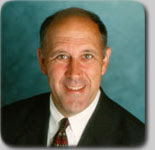
Hear from The Honorable Jim Doyle Governor of Wisconsin
Tuesday, March 31, 1:30 PM – 2:00 PM
Governor Jim Doyle is focused on creating opportunity for all of Wisconsin’s people and is building upon current efforts to create jobs, make America energy independent, and address the global climate crisis.
Complete program. Register online.
by jboullion | Mar 13, 2009 | Uncategorized
Wisconsin Wind Energy Supply Chain Seminar
Appleton, Wisconsin
March 31, 2009
Wisconsin Wind Energy Supply Chain Seminar will focus on wind turbine manufacturing challenges and opportunities in the state of Wisconsin. Over 8,000 components and parts are used in the construction of utility-scale wind turbines, offering opportunities for a wide range of manufacturers and service providers in Wisconsin. The existing manufacturing and service industries, as well as academic and other institutions in Wisconsin makes it an ideal state to benefit from the growth of the wind energy industry.
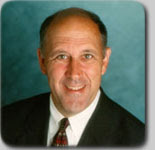
Hear from The Honorable Jim Doyle Governor of Wisconsin
Tuesday, March 31, 1:30 PM – 2:00 PM
Governor Jim Doyle is focused on creating opportunity for all of Wisconsin’s people and is building upon current efforts to create jobs, make America energy independent, and address the global climate crisis.
Complete program. Register online.
by jboullion | Mar 13, 2009 | Uncategorized
Wisconsin Wind Energy Supply Chain Seminar
Appleton, Wisconsin
March 31, 2009
Wisconsin Wind Energy Supply Chain Seminar will focus on wind turbine manufacturing challenges and opportunities in the state of Wisconsin. Over 8,000 components and parts are used in the construction of utility-scale wind turbines, offering opportunities for a wide range of manufacturers and service providers in Wisconsin. The existing manufacturing and service industries, as well as academic and other institutions in Wisconsin makes it an ideal state to benefit from the growth of the wind energy industry.
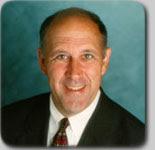
Hear from The Honorable Jim Doyle Governor of Wisconsin
Tuesday, March 31, 1:30 PM – 2:00 PM
Governor Jim Doyle is focused on creating opportunity for all of Wisconsin’s people and is building upon current efforts to create jobs, make America energy independent, and address the global climate crisis.
Complete program. Register online.
by jboullion | Mar 13, 2009 | Uncategorized
From an article in the Beaver Dam Daily Citizen:
Wisconsin Power & Light is poised to boost its investment in wind power – if state regulators approve the Madison utility company’s plan to develop the Bent Tree wind farm in southeastern Minnesota.
WPL has an agreement with NextEra Energy Resources, a Juno Beach, Fla., subsidiary of FPL Group, to buy power from NextEra’s wind farm in Crystal Lake, Iowa. It calls for 100 megawatts a year for 25 years with an additional 100 megawatts from the same location for one year.
As part of the deal, WPL could obtain rights from NextEra to build a wind farm in Green Lake, about 70 miles northeast of Madison.
“We don’t have any plans, at this point, when or if or how we would develop that site,” said Rob Crain, spokesman for WPL parent, Alliant Energy. “But certainly, we view it as a quality site … that provides us with flexibility down the line.”
NextEra had objected to WPL’s Bent Tree proposal, saying WPL should instead buy power from Crystal Lake. “As the case proceeded, we (decided) it didn’t have to be an either/or scenario,” Crain said.
He said the agreement with NextEra could be one piece of WPL’s alternative to a proposed power plant at Cassville.
The state Public Service Commission rejected plans in late 2008 for the 300-megawatt, mostly coal-fired generator with up to 20 percent of its fuel from waste agricultural products, saying the proposal was too costly and would create too much pollution.
WPL also is considering small, biomass-only power plants, Crain said, as well as turning a natural gas-fired power plant used now just for peak times into a combined-cycle plant that uses waste heat to create additional energy.
by jboullion | Mar 12, 2009 | Uncategorized
From an article in The Capital Times:
Wisconsin will receive almost $200 million from the economic stimulus package in weatherization and energy funding, according to an announcement Thursday by Gov. Jim Doyle.
The $196,990,133 in funding includes $141,502,133 for the Weatherization Assistance Program and another $55,488,000 for the State Energy Program.
Doyle also announced Department of Energy Secretary Steven Chu will be in Wisconsin on Friday. While in Wisconsin, the two will meet with local energy, business, and labor leaders and help weatherize a Milwaukee home.
“This important funding puts hardworking Wisconsin families to work and puts our state and country on a path towards energy independence,” Doyle said. “I look forward to partnering with Secretary Chu and the Obama administration in charting a cleaner and brighter future for generations to come.”
Almost $8 billion from the American Recovery and Reinvestment Act will go to weatherization of homes, including adding more insulation, sealing leaks and modernizing heating and air conditioning equipment, which is expected to pay for itself many times over.
The Weatherization Assistance Program will allow an average investment of up to $6,500 per home in energy efficiency upgrades and will be available for families making up to 200 percent of the federal poverty level, or about $44,000 a year for a family of four.
For more information on energy assistance or weatherization needs for qualified residential households, call 866-432-8947.
by jboullion | Mar 12, 2009 | Uncategorized
From a news release issued by Focus on Energy:
With potato-processing plants around the world, McCain Foods has a total production capacity to make more than one million pounds of french fries an hour. In fact, the company makes one-third of all frozen french fries in the world. Despite the high performance required by its plants, saving energy is no small potatoes for McCain Foods.
With the help of Focus on Energy, Wisconsin’s energy efficiency and renewable energy initiative, McCain Foods’ plants in Appleton, Fort Atkinson, Plover and Rice Lake, Wis. have reduced energy consumption by 4 million kilowatt-hours of electricity and 647,688 therms of natural gas annually – enough energy to power 1,070 homes for a year. The company will also save $875,000 on its energy bills each year.
“Focus on Energy was an invaluable asset to help us find energy saving solutions,” said Andrew Green, plant engineering manager at McCain Foods. “Their technical expertise and assistance have assured us that we’ll see a strong return on investment for our projects.”
Since 2008, McCain Foods has received $485,000 in cash incentives from Focus on Energy to boost its efforts toward becoming more energy efficient. Together, the company’s four Wisconsin plants have completed many energy saving projects, including plant-wide lighting upgrades, heating and cooling system improvements, updates to compressed-air systems, the installation of a variable-speed drive on a wastewater-treatment system and more.
But the biggest energy saver is an innovative heat recovery system installed at the Plover plant last month. The system captures “waste” heat from the plant’s three exhaust stacks and uses it to preheat water for the boiler system. Reusing this heat enables the plant to significantly reduce its natural gas use and saves $594,000 a year. Focus awarded a $300,000 incentive to help get the project off the ground.