by jboullion | Jul 9, 2008 | Uncategorized
From a request for proposals issued for Habitat for Humanity homes:
Habitat for Humanity, Focus on Energy, the Midwest Renewable Energy Association and We Energies are accepting proposals for a market provider to perform the following work:
Installation of up to three (3) systems on new Habitat for Humanity homes in Milwaukee. There will be six (6) total installations completed; two of the installations will be installed flush with the roof line on North/South running roofs. One will be installed flush with the roof line on East/West running roofs and three will be installed on tilted frames on East/West running roofs (these are suggestions – there is room for recommendations). We are also requesting that two of the systems be installed as drain-back systems – where if you apply to install three (3) systems you must include one drain-back system installation (please see the chart for additional details). Homes will be built “solar ready” with appropriately sized joists and interior plumbing runs. . . .
Proposals should be sent to:
We Energies
Attn: Jessica Thibodo-Johnson
231 W Michigan St – P318
Milwaukee, WI 53202
Or electronically to: Jessica.thibodo-johnson@we-energies.com
by jboullion | Jul 8, 2008 | Uncategorized
From Focus on Energy’s Information Center:
Focus on Energy’s Information Center is your ultimate resource for energy efficiency and renewable energy tips and information. Enjoy free access to a library of product and equipment data, fact sheets, case studies, technology updates, industry best practices and more.
Let Focus on Energy give you the information you need to make more informed energy efficiency and renewable energy decisions.
by jboullion | Jul 7, 2008 | Uncategorized
From an article by Tom Content in the Milwaukee Journal Sentinel:
Consumers should expect energy price sticker shock to continue well past the summer driving season, as pain at the pump is poised to give way to furnace frustration next winter.
The price of gasoline, above $4 for the past month, is on people’s minds — and it’s visible at nearly every major intersection. But another energy jolt may be coming as the price of natural gas, the primary fuel used to heat Wisconsin homes, is at historic highs for this time of year.
Natural gas futures have jumped 82% since the start of the year. Heating oil and propane prices are also soaring.
The increased natural gas prices already have resulted in electricity bills jumping twice since March for customers of Milwaukee-based We Energies and Green Bay-based Wisconsin Public Service Corp. Including increases authorized for three other state utilities, customers of the state’s five investor-owned utilities have seen rates rise by $210 million since the start of the year.
Spokesmen for the state’s large natural gas utilities said it’s too early to predict what customers may pay this winter. The futures price of natural gas, which finished last week at its highest point in more than 2 1/2 years, could still fall below its current, abnormal high, they said.
“Prices right now are in the scary range,” said Kerry Spees, spokesman for Wisconsin Public Service, an electric and natural gas utility. “It makes you look toward the winter with a little trepidation.”
by jboullion | Jul 3, 2008 | Uncategorized

From an article by Steve Kokette, signit2@hotmail.com, creator of the “Buy Products From Renewable Energy” bumper sticker and author of Money Saving Conservation Products and Projects for the Homeowner.
Recently Governor Doyle suggested Wisconsin could become the Saudi Arabia of renewable energy. Doing so would be extremely beneficial for the state in many ways, even if you’re not a believer in global warming. Seventy percent of the U.S. economy is consumer driven, and if consumers started consciously spending their money on the thousands of products made with renewable energy, it could help clean the air, and the water.
It feels strange living in an era when life often seems to be regressing in the very places it started. When I was young, the DNR did not recommend limiting your intake of Wisconsin caught fish. Then in the late 60s, a short stretch of the Fox River polluted by paper mills was so polluted the DNR recommended people eat a limited number of fish from these waters. Since the late 60s the number of Wisconsin waters with DNR fish consumption limitations slowly grew over the years, until a few years ago the DNR recommended fish consumption limitations for fish caught in all Wisconsin lakes, rivers, ponds, and streams. This is not progress.
If you want to reduce acid rain, when you buy products, try to buy products made from renewable energy. If you want to reduce mercury pollution, buy products made from renewables. If you want to reduce particulate matter in the air, buy products made from renewables. If you want to help those with respiratory problems, which might include yourself and/or people you know, buy products made from renewables.
Every person who renews a membership or joins RENEW will get a free bumper sticker!
by jboullion | Jul 2, 2008 | Uncategorized
From a media release issued by Focus on Energy:
On Dec. 31, 2007 Focus on Energy, Wisconsin’s energy efficiency and renewable energy initiative, launched a contest to find a Milwaukee area family with a home in need of energy efficient improvements. The contest, named Home Energy Makeover, was sponsored by Focus on Energy in partnership with WITI-TV FOX 6 and awarded one lucky winner with energy efficient improvements for their home, including insulation and air sealing, ENERGY STAR® qualified appliances and a new furnace, air conditioner and tankless water heater. . . .
John and Corinne Kangas of Waukesha, Wis., were named the winners of the contest, valued at approximately $20,000, on Feb. 3, 2008 during halftime of the Super Bowl telecast. It wasn’t long after the announcement that the Kangas home began its energy transformation.
“We found out we had won the contest when we saw the TV commercial announcing the winner during the Super Bowl. My family was jumping up and down – we were so excited,” said Corinne Kangas. “Our home is older, so knowing we won’t have to worry about things like the furnace or the air conditioner gives us great peace of mind. Plus, we couldn’t wait to learn about the process of making our home more energy efficient.”
For several weeks, FOX 6 joined the homeowners on their journey to energy efficiency, covering such details as the energy evaluation of the home, the advantages of ENERGY STAR qualified appliances and the installation of a tankless water heater. Through each step, FOX 6 viewers learned how they could benefit from the same improvements to their homes.
“By identifying what the home needed and then making the necessary improvements, the Kangas family can expect to save approximately 30 percent on their energy bills,” said Rich Marshall, Focus on Energy Project Manager. “More importantly, if other homeowners made just a few of the improvements the Kangas family received they could save significantly too.”
by jboullion | Jul 1, 2008 | Uncategorized
From an article in The Business Journal:
Ball Corp. said Monday it intends to reduce its greenhouse gas emissions by 16 percent in the next four years.
The Broomfield, Colo.-based manufacturer of beverage cans and bottles (NYSE: BLL) said the goal for cutting emissions is based on a 2002 baseline and will occur through improved energy efficiencies. The firm operates metal beverage and metal food packaging plants in Milwaukee.
Ball disclosed the goal for 2012 in a report titled “Toward a Sustainable Future,” which identifies areas where the company is trying to reduce its environmental impact.
Ball said its primary focus is to make lightweight, recyclable packaging when feasible. Using lighter cans means less material is needed, fewer greenhouse gases are produced and less energy is needed for shipping.
Ball said the weight of its products has been reduced substantially through the years. Aluminum cans are 40 percent lighter than they were in 1969, and the steel cans are 50 percent lighter than in 1970.
By turning more to recycled materials, Ball said it can cut 95 percent of the energy used to make aluminum cans from virgin material and 74 percent of the energy required to make steel cans.
The company also is working with the metal industry to determine the carbon footprint of its metal cans. . . .
The company’s Ball Metal Beverage Container has a contract with Miller Brewing Co. to serve as the sole supplier of cans for the Milwaukee brewer through 2015.
by jboullion | Jun 30, 2008 | Uncategorized
From a column in The Daily Reporter by Jennifer L. Guslick, marketing coordinator for Hunzinger Construction, Brookfield:
Four years ago the supplies and processes I used to do my job as a marketing professional were based on attributes like color, texture, cost, benefits, functionality, quality and necessity. Then my employer, Hunzinger Construction, shifted toward sustainability.
I began looking for ways to perform my job that would create the least environmental impact — from the supplies and tools I choose to the processes I use to perform my job.
One of the first things I looked at was paper. We switched to post-consumer-content recycled paper produced by wind mills and began utilizing Forest Stewardship Certified paper.
We also looked to The Marek Group for much of our printing needs. The Marek Group uses soy-based inks and is an FSC-certified printer.
“We went through the FSC certification process so we would be able to provide our clients with an environmentally sound option for their printed material,” said Marek Vice President Ben Rocco. “We feel it is all of our responsibility to do our part to manage our natural resources.”
by jboullion | Jun 27, 2008 | Uncategorized
Articles in the Renewable Renewable Quarterly, Spring 2008:
+ RENEW Battles Local Opposition to Wind
+ Starting a Renewable Energy Business
+ Renewable Profiles: Wes Slaymaker
+ Solar Hot Water from the Garden
+ Reviving a Classic Wind Machine
+ Calendar
Click here
by jboullion | Jun 27, 2008 | Uncategorized
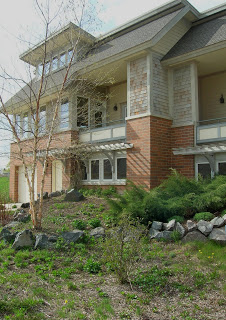
From a media release issued by Fields Neighborhood:
Interested in finding out what it would be like to life the green life you have imagined? Come experience living green at Fields Neighborhood’s Live a Green Life Day on Saturday, July 19, 11:00 a.m. -3:00 p.m.
All are welcome to tour Fields Neighborhood’s award-winning green built housing and other innovative environmental solutions while talking with the visionary founder and architects.
Come dwell in possibility as you walk the miles of nature preserve trails, enjoy the open expanse of land on a hayride or tour the farm at neighboring Michael Fields Agricultural Institute, where you can pick your own flowers or produce. Discover straw bale building as demonstrated by renowned straw bale expert Michael Morgan and learn about biodynamic gardening with veteran garden expert Janet Gamble.
Come to relax. Come to breathe. Located at the corner of South and West Streets, this vibrant farming community in East Troy, Wisconsin, is nestled in the rolling hills of Southeast Wisconsin 30 minutes from Milwaukee and 90 minutes from Chicago.
“When we saw the destructive nature of most suburban sprawl, we wanted to introduce people to a type of community and way of living that was in tune with nature. This community serves as a model and educational reference on sustainability with award-winning green built cluster housing, community gardens, natural tranquility and open spaces in permanent land trusts,” said Fields Neighborhood visionary Christopher Mann.
by jboullion | Jun 25, 2008 | Uncategorized
From an Associated Press story on Channel 7 WSAW:
MILWAUKEE (AP) — Amtrak says its passenger train service between Milwaukee and Chicago continues to set ridership records.
It says more than 64,000 passengers used the trains in May, another all-time monthly record.
For the first five months of the year, the seven daily Hiawatha Service round trips carried more than 281,000 passengers. Amtrak says that’s a 24 percent increase over last year.


.JPG)