by RENEW Wisconsin | Jun 7, 2022 | Community, Electric Vehicles, RENEW Wisconsin
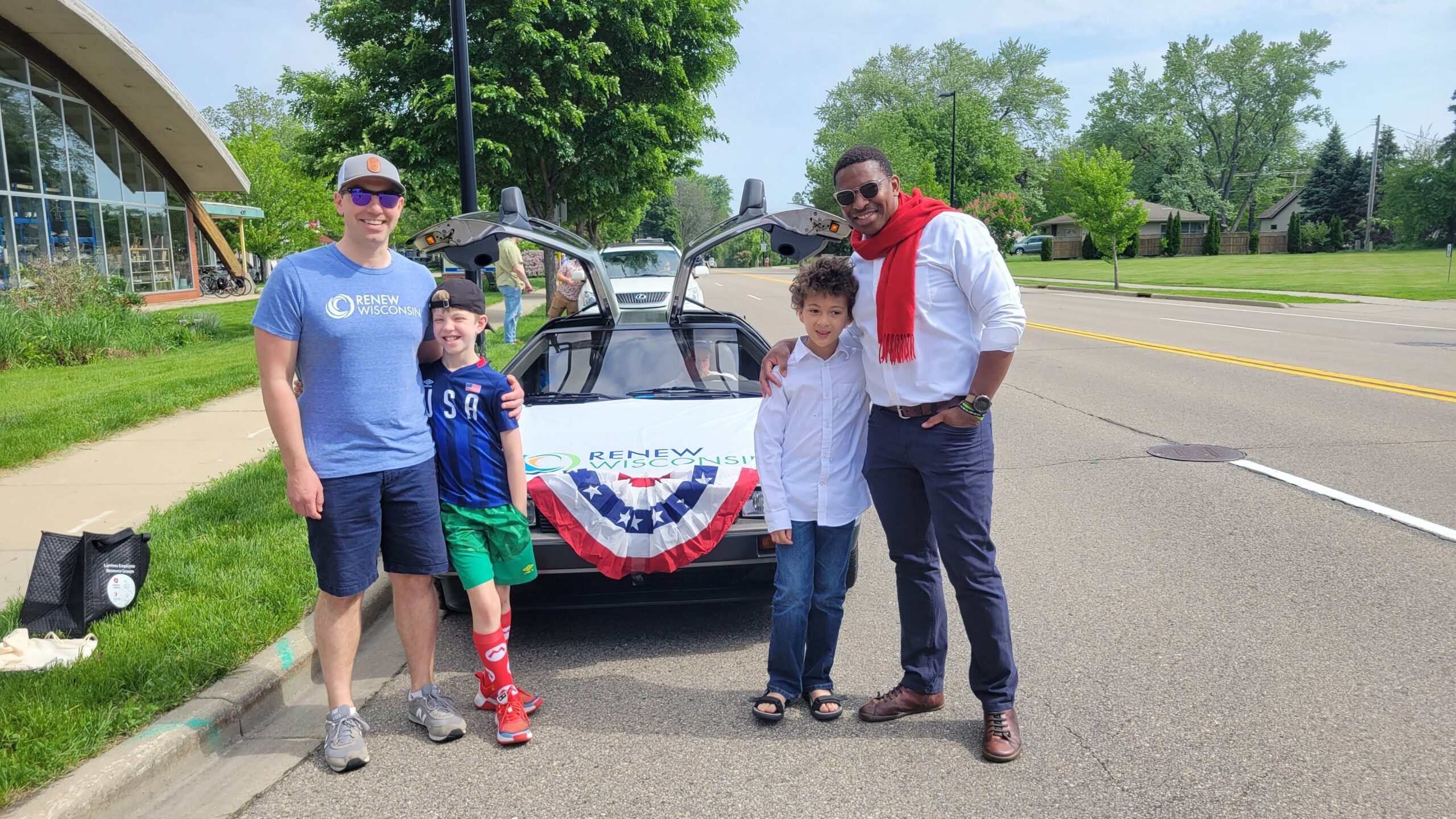
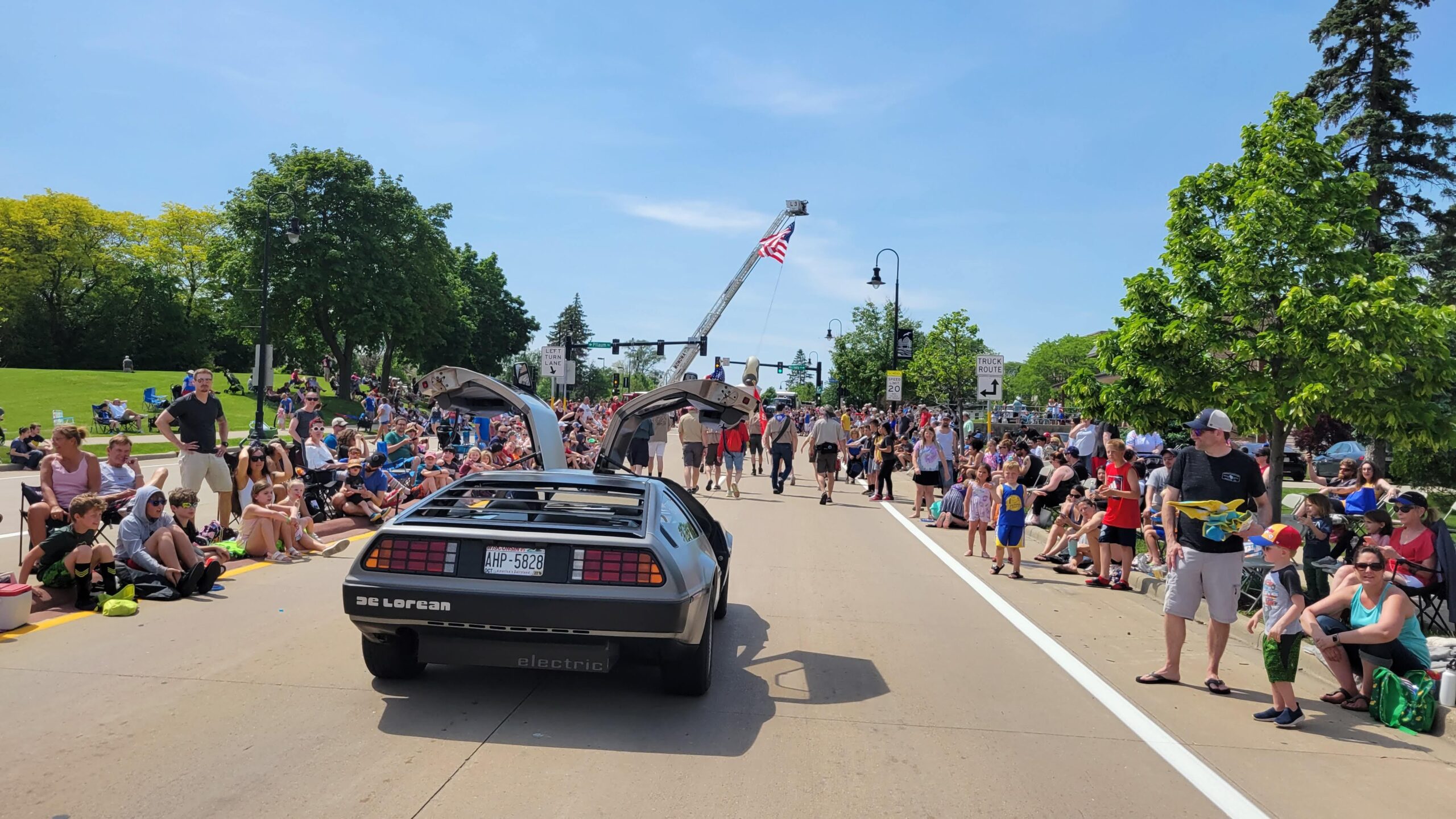
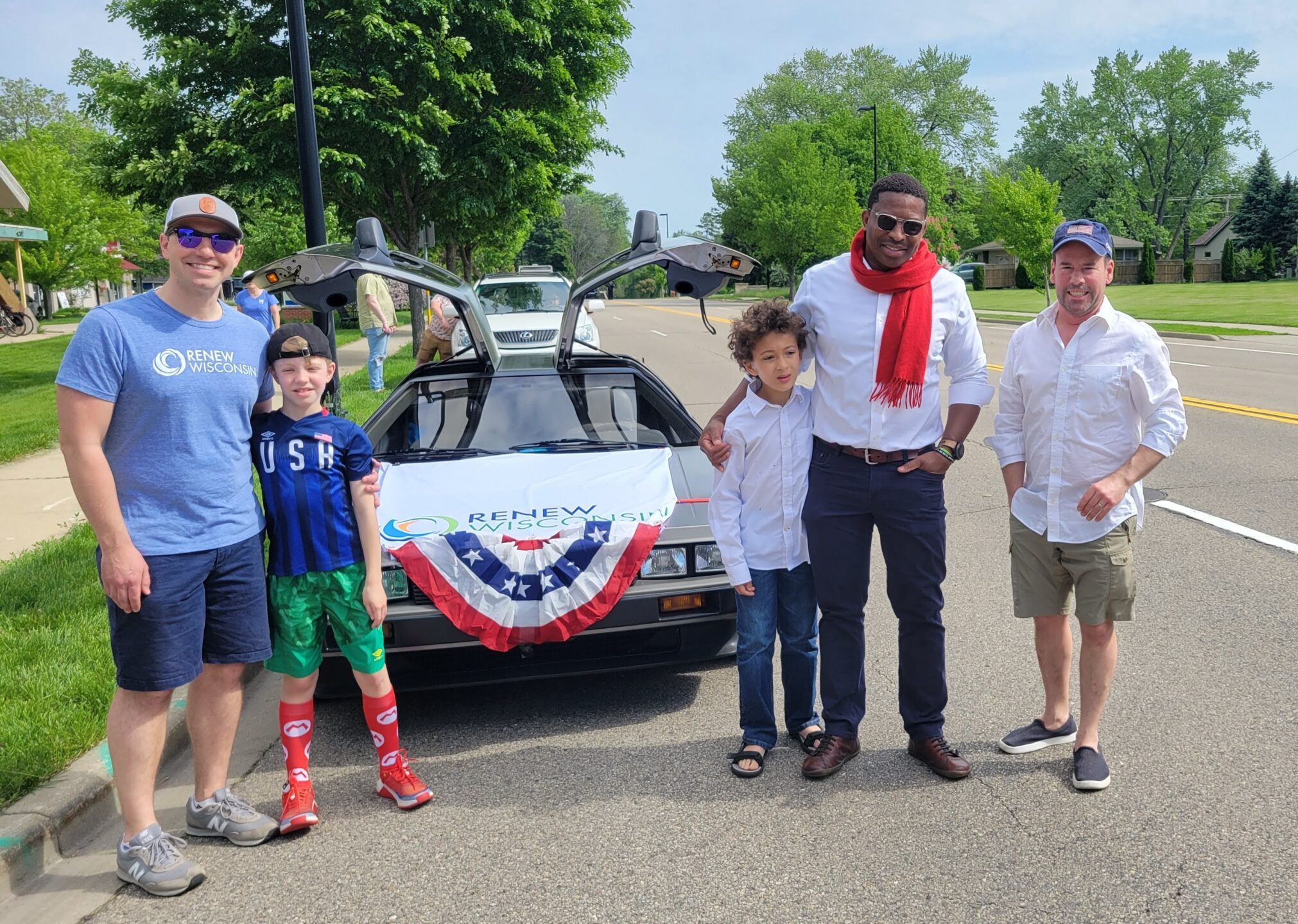
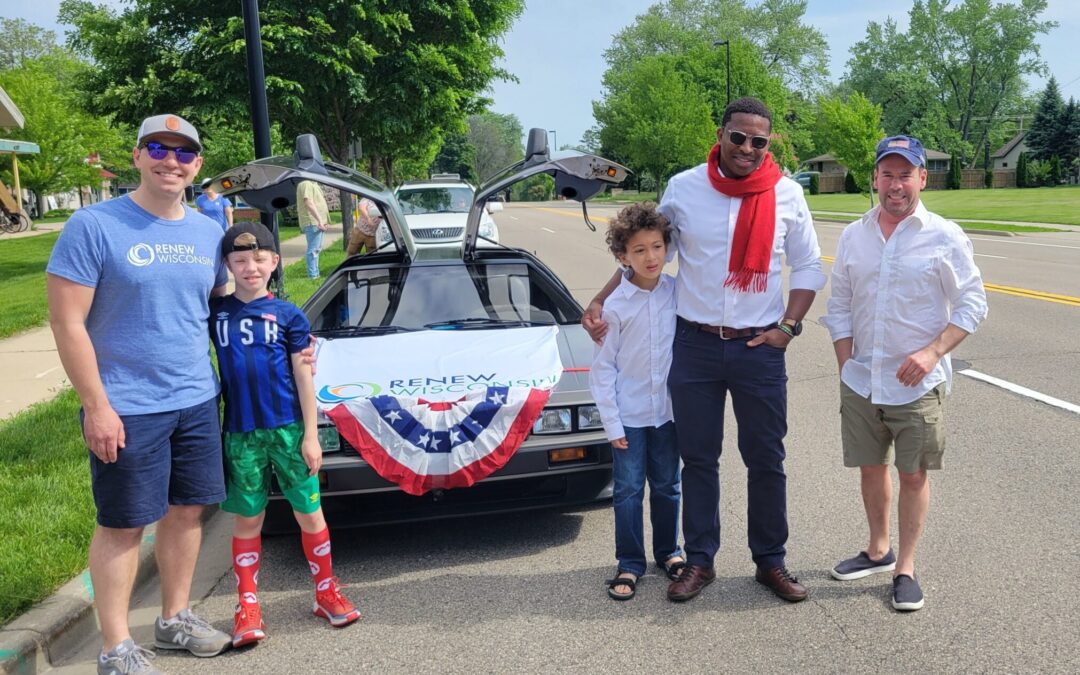
On Monday, May 30th, RENEW Wisconsin was honored to be able to participate in the Monona (WI) Memorial Day parade. Emerging Technology Director Francisco Sayu and Distributed Resources Director Sam Dunaiski were in attendance with their family members and a few large bags of candy.
The parade offered staff members a chance to get out and meet with members of the community and honor those Americans who gave their lives for their country.
“The parade was a good reminder of the sacrifices made to protect our people and our collective capacity for accomplishing great things,” said Sayu. “A simple – but meaningful – example of our ability to come together to celebrate our progress and envision a bright future – despite our differences.”
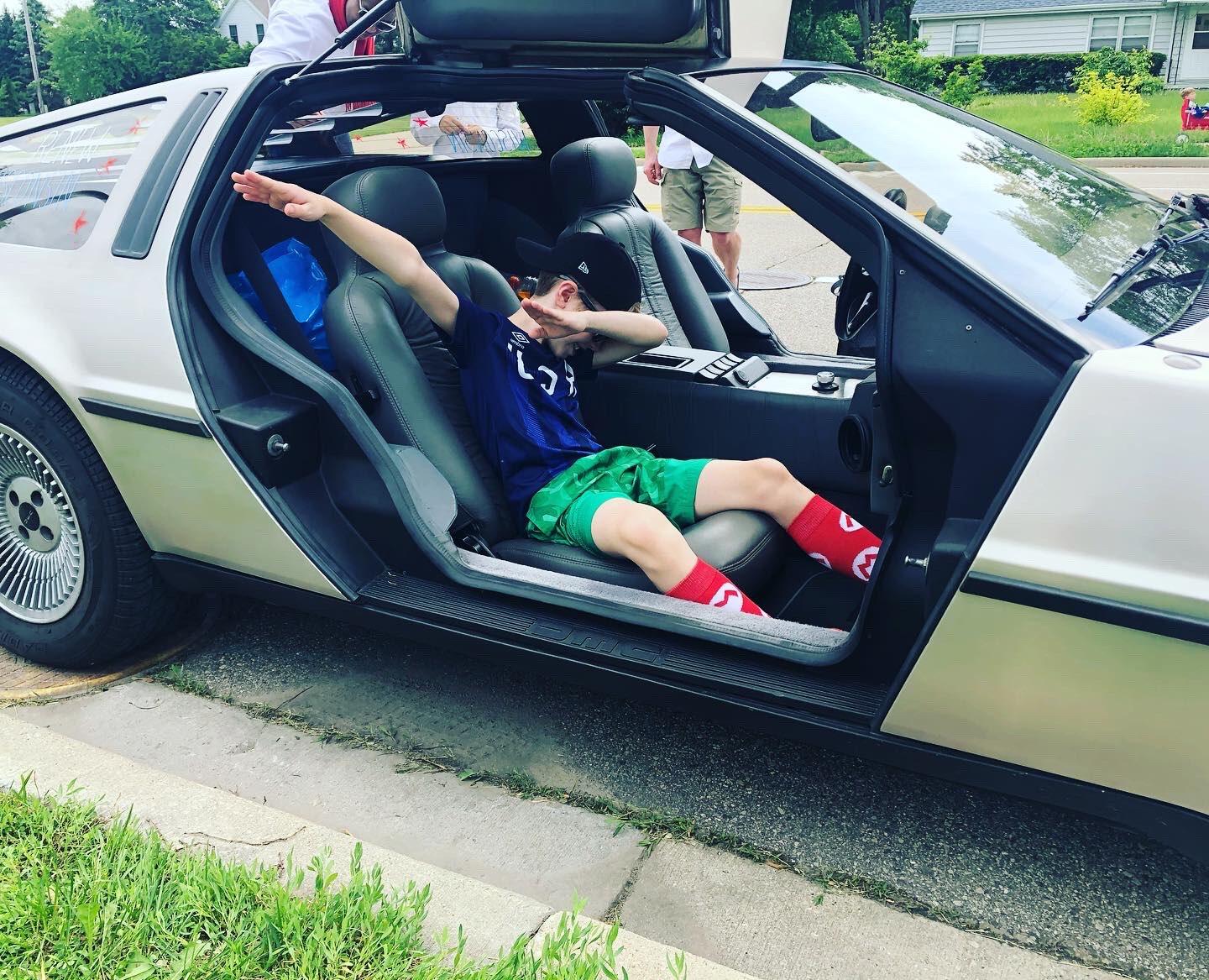
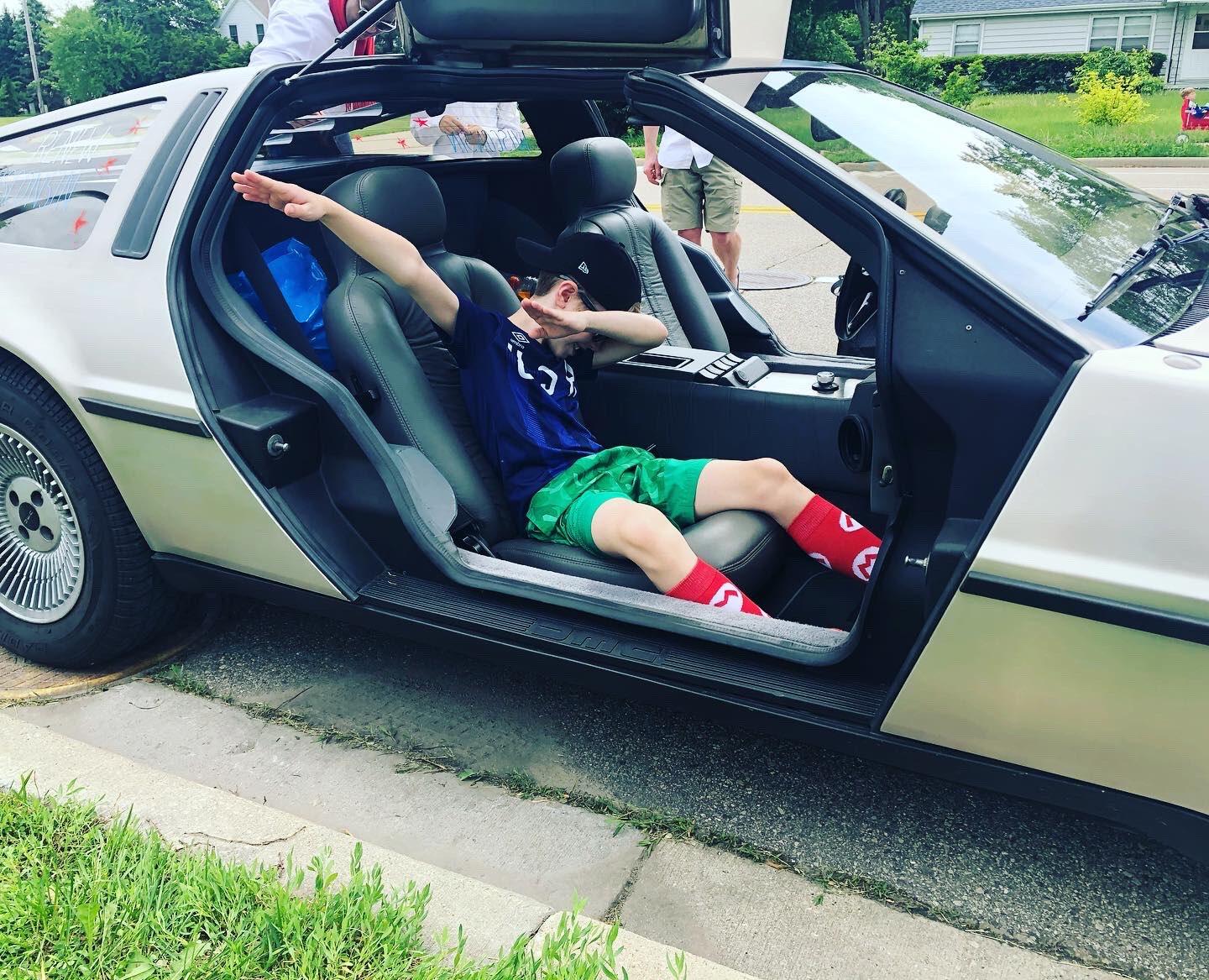
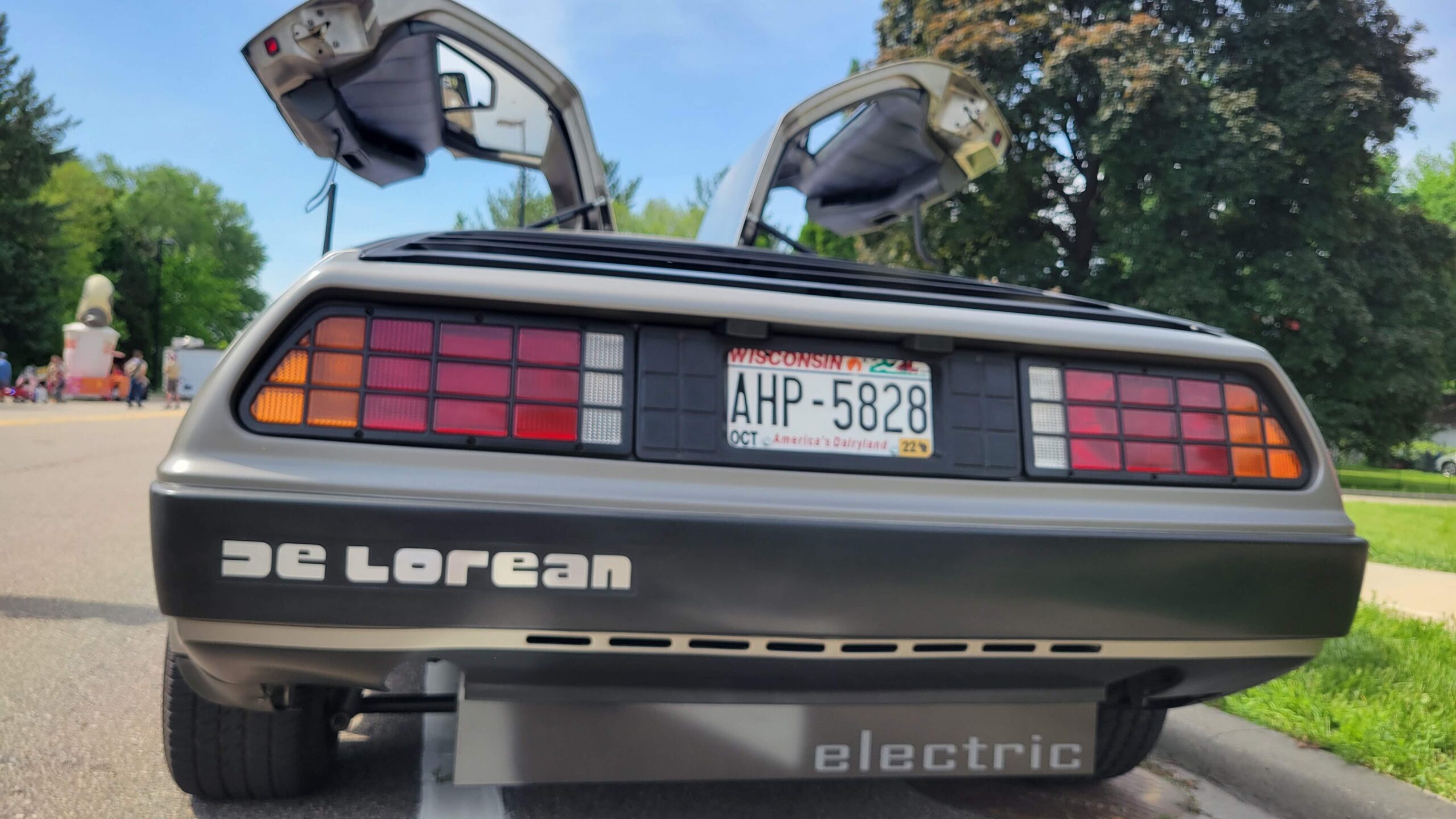
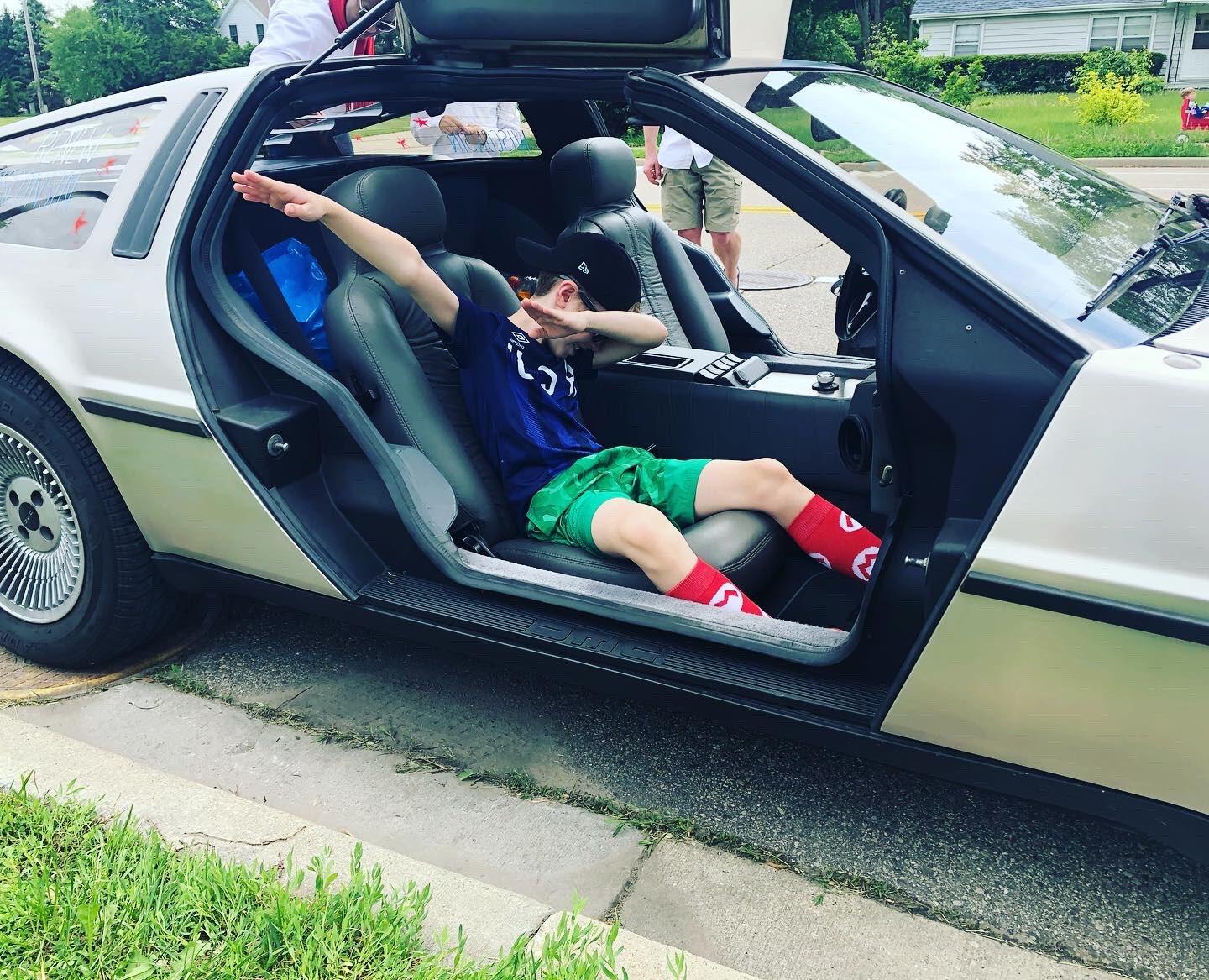
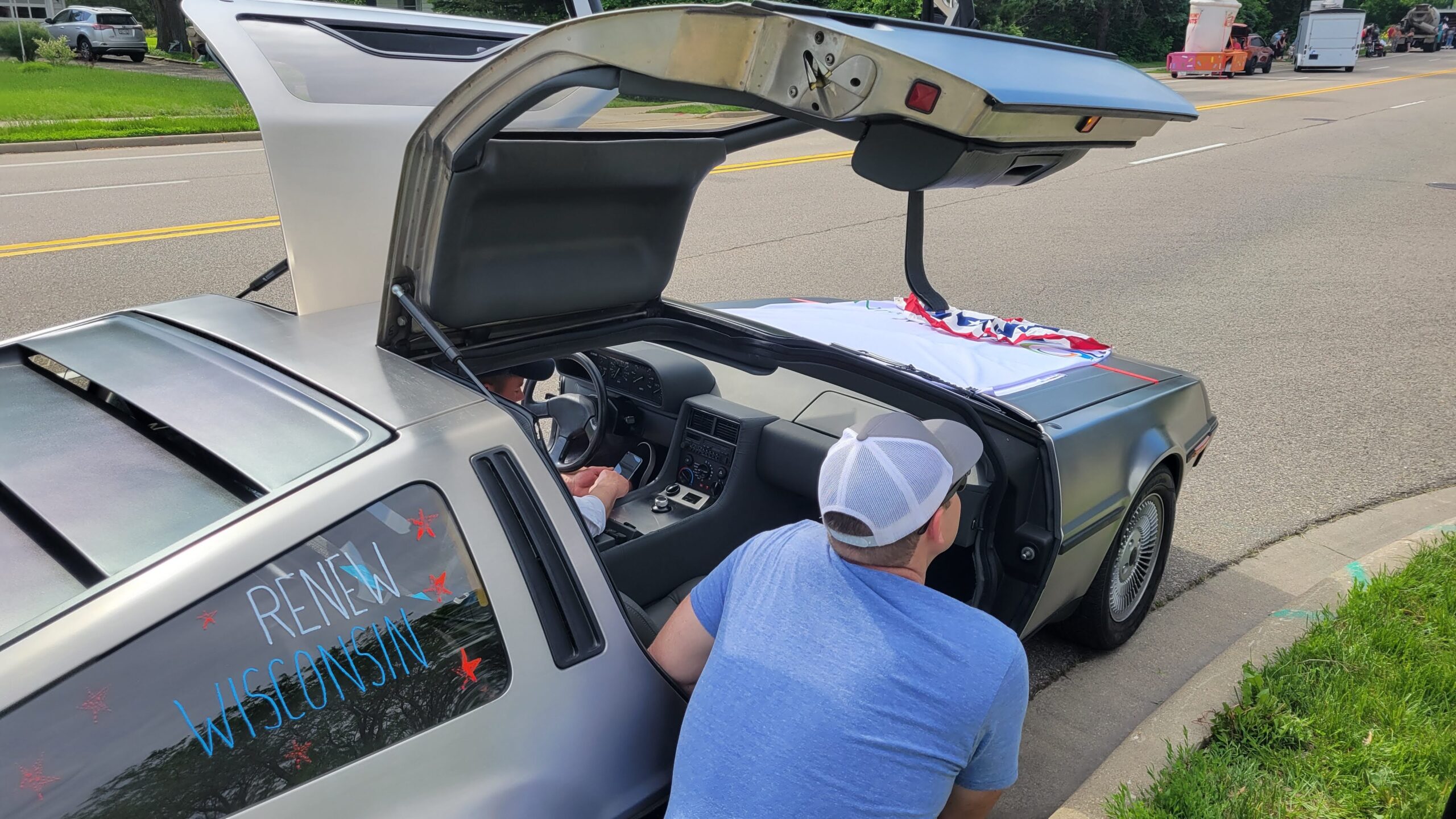
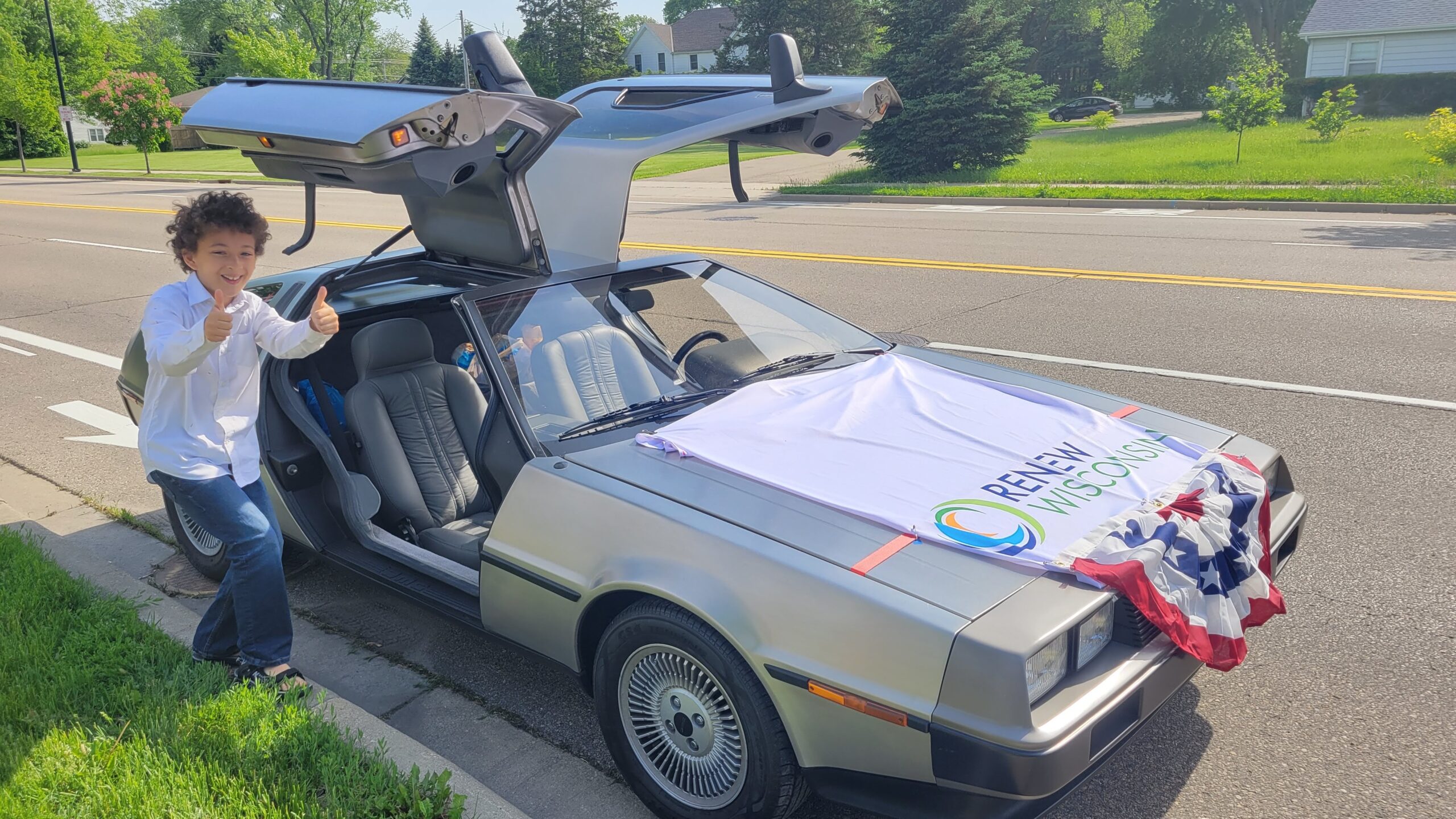
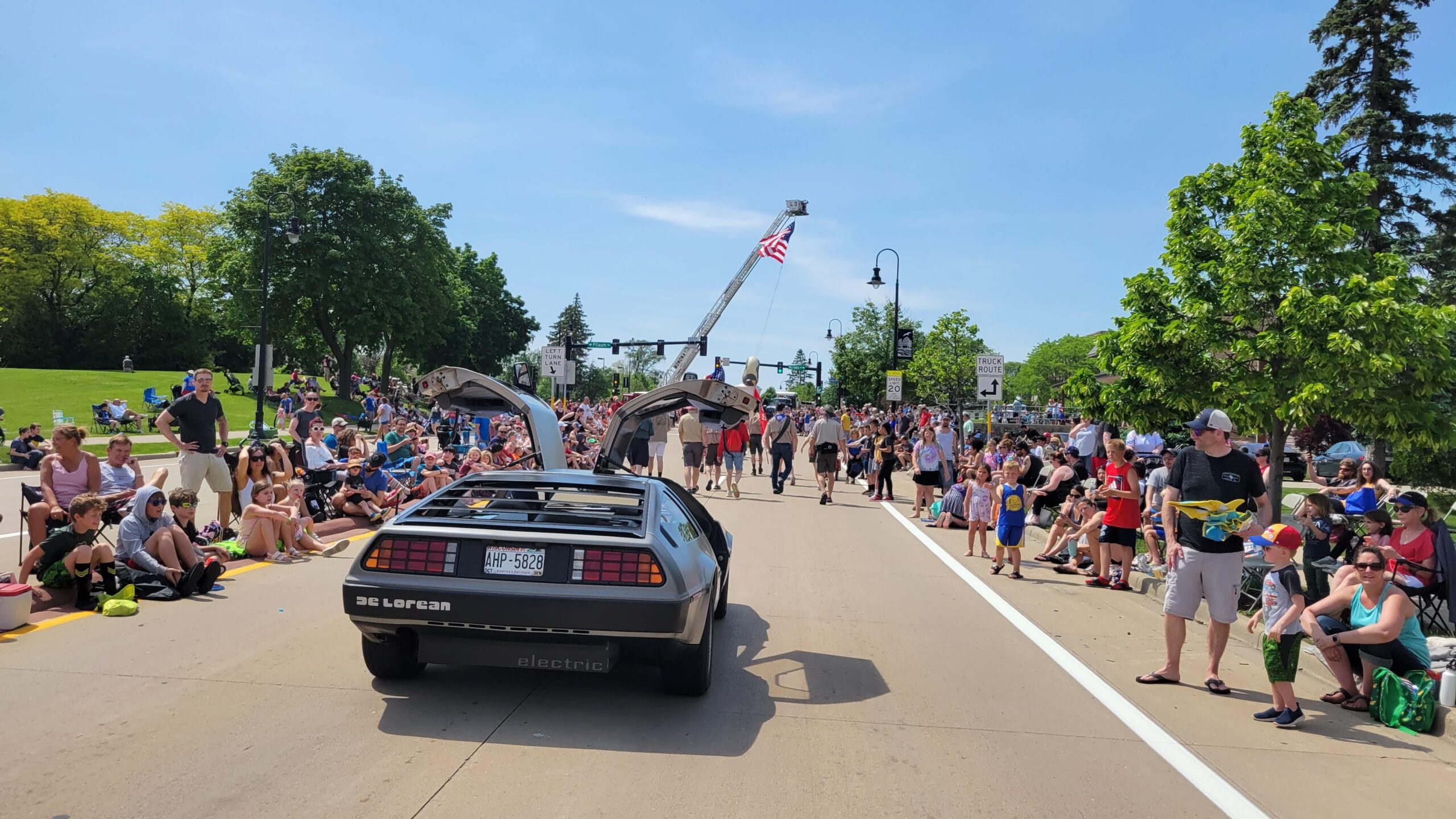
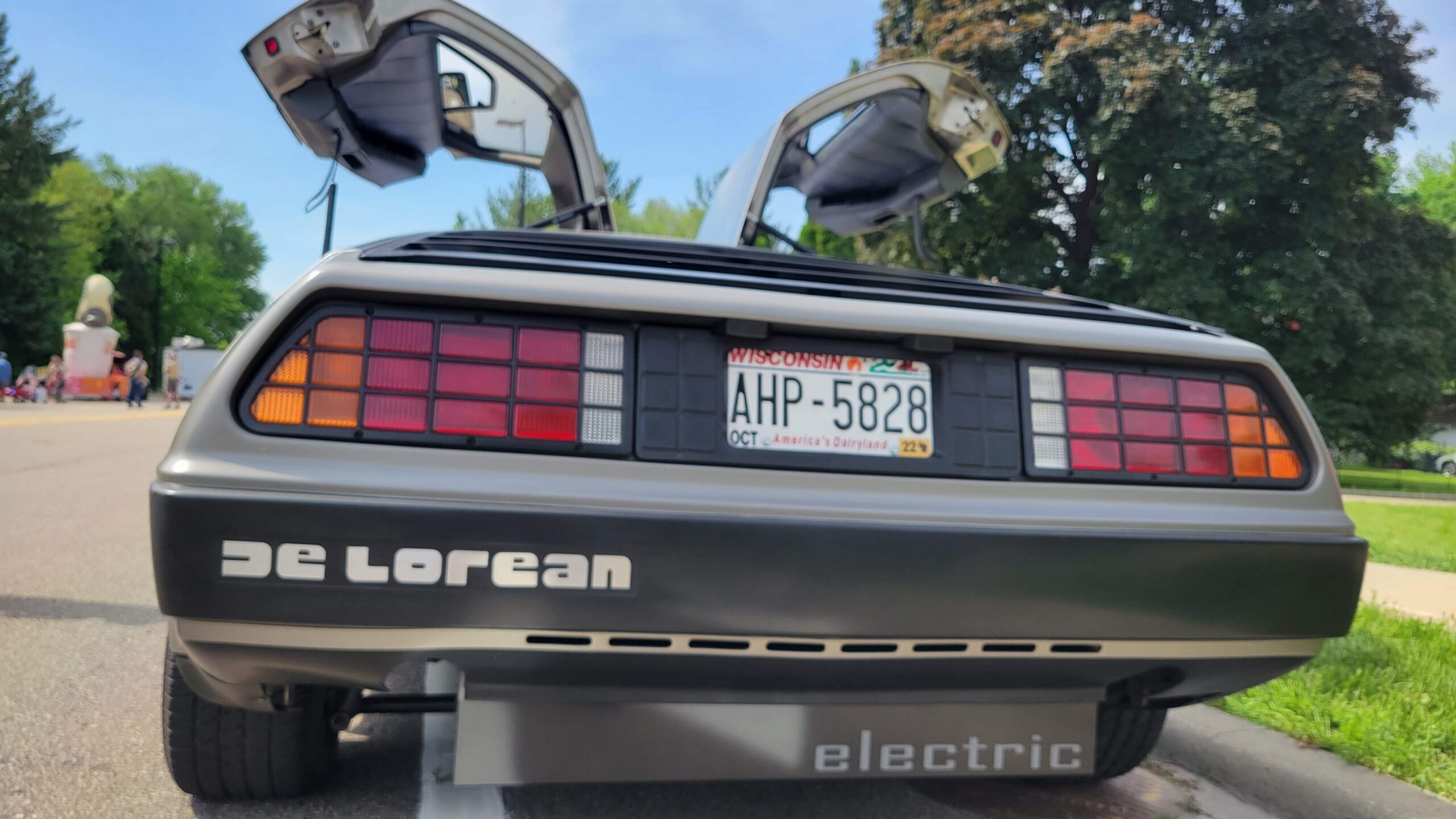
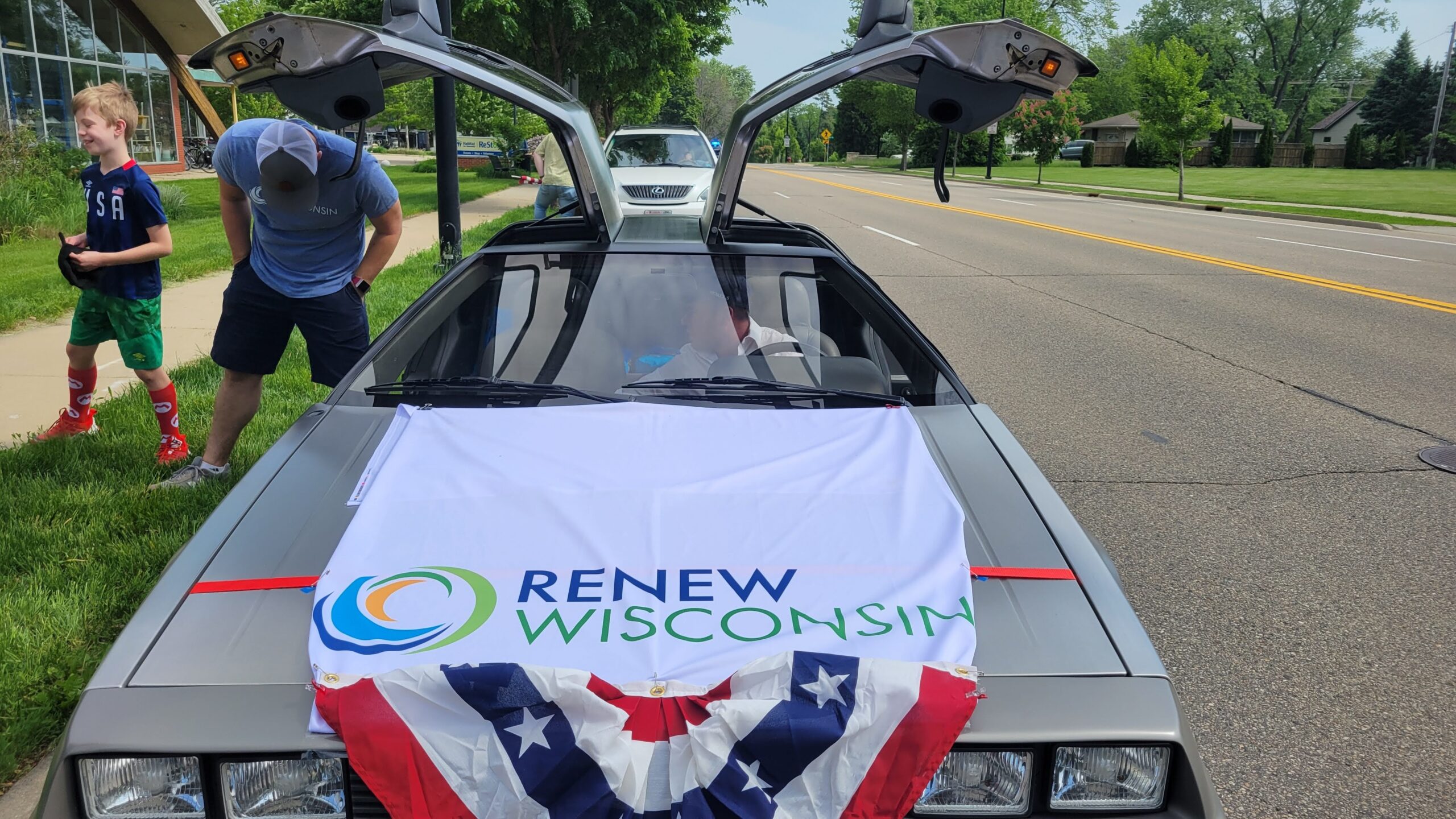
Friend of the organization, Geoff Hoffman, owner of Hoffman Manufacturing, offered his custom-redesigned, all-electric DeLorean to use as the RENEW vehicle for the parade. The car was an instant hit with many parade-goers, even before many realized it was an electric vehicle (EV).
“It was great to attend the parade again after a two-year COVID hiatus,” stated Hoffman. “This event is all about honoring the folks that have served and sacrificed for us.”
RENEW staff answered dozens of questions from the public about EVs and how using renewable energy for EV charging could help us achieve deep decarbonization of our transportation sector. More importantly, the parade offered an opportunity for staff to illustrate the benefits of a decarbonized economy for Wisconsinites.
“We need more opportunities to find common ground,” continued Sayu. “I enjoyed seeing so many different families coming together to share this experience.”
RENEW staff had a fantastic time at the parade and are incredibly grateful for the opportunity to participate. We hope we opened a few minds to renewable energy and electric vehicles, and we had a great time doing it!

by Francisco Sayu | May 24, 2022 | Community, Electric Vehicles, Electrification, Local Government, Local Initiatives
The Infrastructure Investment and Jobs Act (IIJA), also known as the Bipartisan Infrastructure Law (BIL), was signed last November. It provides $5 billion to replace existing school buses with clean and zero-emission (ZE) school buses. This funding administered by the Environmental Protection Agency (EPA) can benefit school districts in Wisconsin by providing up to 100% of the cost of electric school buses, reducing transportation costs by 60%, and improving air quality throughout Wisconsin communities.
Why Clean School Buses?
School buses collectively travel over three billion miles each year, providing the safest transportation to and from school for more than 25 million American children every day. Exhaust from these buses harms human health, especially for children who have faster breathing rates than adults and whose lungs are not yet fully developed. The Clean School Bus Rebates (CSB Rebates) will fund the replacement of existing diesel and gas-powered buses with cleaner buses that result in better air quality, bus loading areas, and the community in general.
Cleaner buses such as those powered with electricity (electric buses) get the equivalent of 17 miles per gallon (MPG) compared to 6 MPG for diesel buses, providing average fuel and maintenance savings of $170,000 across the lifecycle of the bus. Wisconsin’s electric grid is increasingly powered by renewable energy sources like solar and wind. Transitioning away from diesel and gasoline to local – homegrown energy – will reduce air pollution and strengthen local economies.
2022 Clean School Bus Rebates Overview
The first $500 million of the Clean School Bus Program will be awarded as lottery rebates. The lottery will prioritize applications from low-income, rural, tribal, and/or high-needs school districts. Nearly 200 Wisconsin school districts are on the priority list. School Districts can receive up to $375,000 rebate per school bus (up to 25 buses per district) and $20,000 for EV chargers. The deadline to apply for this year’s rebate program is August 19, 2022.
Important Dates
| Activity |
Date |
| Online application. Submissions here |
May 20, August 19, 2022 |
| EPA reviews applications and begins the selection process |
September 2022 |
| EPA notifies applicants of selection and posts selectees online. Selectees can proceed with purchasing new buses and eligible infrastructure. |
October 2022 |
| Selectees submit Payment Request Forms with purchase orders |
October 2022 – April 2023 |
| Deadline to receive new buses, install EV chargers, replace old buses, and submit final documentation. |
October 2024 |
Eligible Applicants
The following entities are eligible to apply for EPA school bus rebates:
- State and local governmental entities provide bus services, such as public school districts, including charter schools, with an NCES District ID.
- Eligible contractors such as for-profit or nonprofit entities that can sell or finance clean or ZE school buses or related charging infrastructure to school bus owners.
- Nonprofit school transportation associations
- Indian tribes, tribal organizations, or tribally controlled schools are responsible for purchasing school buses or providing school bus service for a Bureau of Indian Affairs (BIA) funded school.
To be eligible for replacement, old school buses must:
- Have a Gross Vehicle Weight Rating (GVWR) of 10,001 lbs. or more
- Be operational at the time of application submission – Able to start, move in all directions, and have all operational parts
- Have provided bus service to a public school district for at least three days/week on average during the 2021/2022 school year at the time of applying, excluding COVID-related school closures
- If selected for replacement, a fleet can either:
- Scrap 2010 or older internal combustion engine buses; or
- Scrap, sell or donate 2011 or newer internal combustion engine buses.
Eligible replacement buses must meet the following criteria:
- Have a battery-electric, CNG, or propane drivetrain
- Be EPA certified vehicle model year 2021 or newer
- Have a Gross Vehicle Weight Rating (GVWR) of 10,001 lbs. or more
- Not be ordered before receiving official notification of selection for EPA funding
- Be purchased, not leased or leased-to-own
- Serve the school district listed on the application for at least five years from delivery.
For questions about eligibility, please contact cleanschoolbus@epa.gov.
Selection Process and Prioritization
The Clean School Bus Program prioritizes high-need school districts. Applicants that serve a prioritized school district will be offered more funding per bus and receive preference in the selection process.
Here is a list of prioritized school districts in Wisconsin.
Schools may also contact RENEW at info@renewwisconsin.org, for more information.

by Guest Blog | May 23, 2022 | Community, Community Solar, Solar
Cory Neeley
Director, SolarShare WI Cooperative
This year’s theme for Earth Day was “Invest In Our Planet.” There are many ways to invest in our planet, and I’m excited to announce a brand-new opportunity created in part by RENEW that allows everyday people to invest in Wisconsin’s clean energy economy.
SolarShare WI Cooperative is an innovative cooperative model that helps Wisconsin residents and businesses invest in solar cooperative farms. Working together, our members pool money to invest in solar farms located in Wisconsin, reducing our reliance on imported fossil fuels and strengthening our economy with stable, affordable, renewable energy for our local utilities.
How does SolarShare WI Cooperative Work?
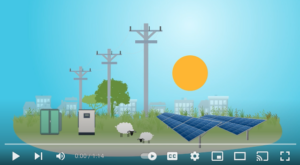
SolarShare WI Cooperative works with Wisconsin-based member contractors to finance, build, operate and maintain the cooperative solar farms, creating family-supporting jobs in Wisconsin and reducing our reliance on energy from outside the state. Profits from the sale of our clean energy are returned to members as dividends, multiplying the economic benefit of our projects.
Cooperative action is woven into the fabric of rural Wisconsin and allows small groups of people to achieve great things. Whether pooling dairy or providing electricity, cooperatives play crucial roles in Wisconsin communities.
Wisconsin imports 14 billion dollars’ worth of non-renewable energy each year. We can keep more of our energy dollars in Wisconsin by working together to invest in local renewable energy.
We plan to build solar farms across the state, partnering with local communities and utilities to provide cost-effective renewable energy while providing financial opportunities to Wisconsin citizens and ratepayers. The investment we make in cooperative solar farms is an investment in our state and, ultimately, our planet.
Please join us at SolarShare WI Cooperative for more information.
by Jodi Jean Amble | May 17, 2022 | Advocacy, Community, Electric Vehicles, Jobs, Local Initiatives, Renewables, Solar, Wind
RENEW Wisconsin has launched two state-wide communications campaigns to promote the benefits of clean energy investments in Wisconsin. The two campaigns, “Clean Energy Works for Wisconsin” and “Clean Energy is Made in Wisconsin,” include print and digital ads and shareable communications assets for partners and clean energy advocates.
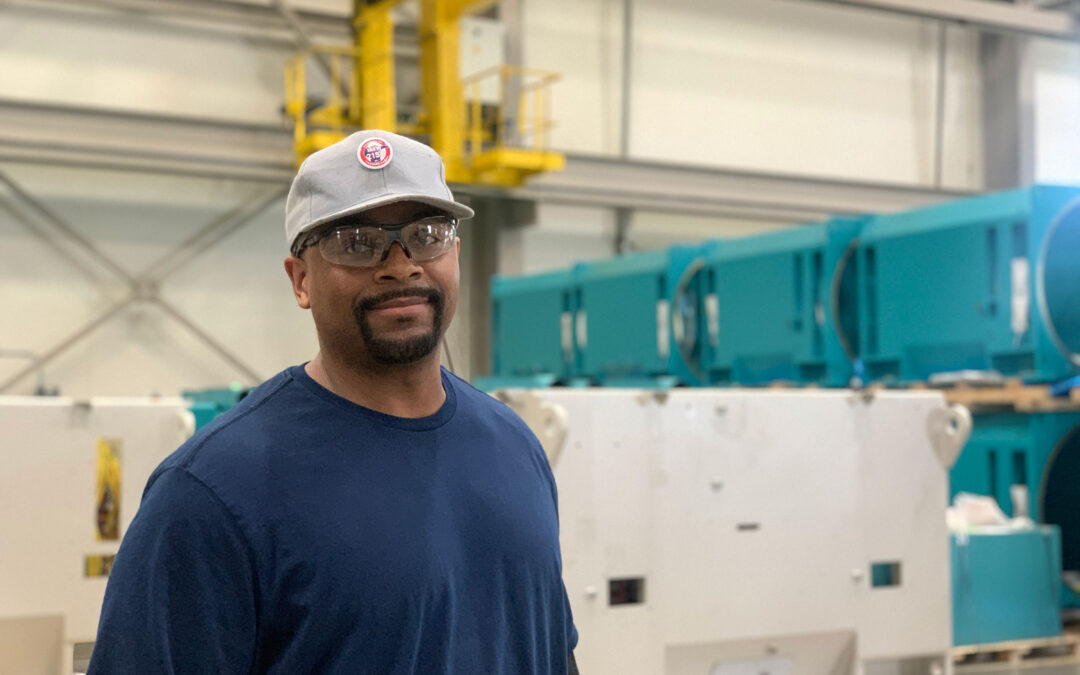
Wisconsin’s clean energy workforce is 70,000 strong, with good-paying local jobs like installing solar and electric vehicle charging stations, manufacturing energy storage systems, servicing wind turbines, and retrofitting buildings. Clean energy job growth is gaining momentum from state and federal clean energy and electric transportation commitments, federal funds to support these goals, and an increased interest in clean energy investments from the public sector. The “Clean Energy Works for Wisconsin” campaign highlights the job potential of continued investment in electric transportation and Wisconsin clean energy.
“Over the next five years, Wisconsin can expect to receive $79 million in federal funds from the bipartisan infrastructure law,” said Francisco Sayu, Emerging Technologies Director at RENEW Wisconsin. “Wisconsin will also have the opportunity to apply for $2.5 billion in competitive grant funding dedicated to electric vehicle corridors and community charging. Building a network of electric vehicle charging stations will reduce emissions, improve air quality, and create thousands of good-paying jobs and is a tremendous opportunity for Wisconsin residents.”
In 2019, Governor Evers set a goal that all electricity consumed in the state will be 100% carbon-free by 2050, and in 2022 introduced Wisconsin’s first-ever Clean Energy Plan. Currently, renewable energy only accounts for 13% of all electricity sold in Wisconsin. According to the U.S. Energy Information Administration, Wisconsin consumes almost six times as much energy as it produces and spends billions on coal, oil, and natural gas every year. The “Clean Energy is Made in Wisconsin” campaign presents a vision of keeping more energy dollars in-state by investing in homegrown renewable energy.
“State and federal investments are moving us toward our clean energy goals, but we need to maximize the benefits of this energy transition for Wisconsin residents,” said Heather Allen, Executive Director at RENEW Wisconsin. “We will need an ‘all of the above’ and ‘all hands on deck’ approach to shape our clean energy future. This means smart investments in homegrown renewable energy and clean transportation.”
Print and digital ads are already circulating in media outlets across the state. To learn more and help amplify Wisconsin’s clean energy opportunities, please visit the “Clean Energy Works for Wisconsin” and “Clean Energy is Made in Wisconsin” landing pages.
by Francisco Sayu | Apr 11, 2022 | Community, Electric Vehicles, Events, Local Initiatives
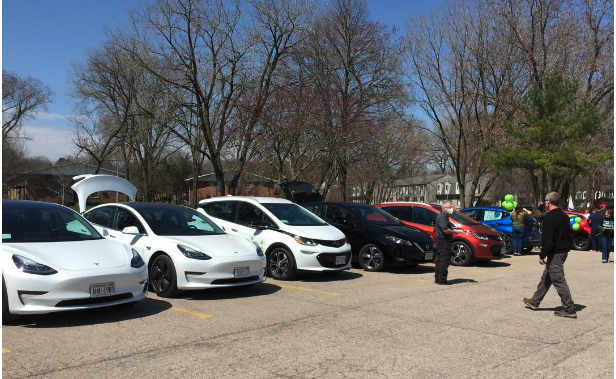
On Friday, April 22, 2022, Drive Electric Wisconsin, RENEW Wisconsin, Slipstream, Wisconsin Clean Cities and the Dane County Office of Energy and Climate Change will be hosting an Earth Day Electric Vehicle (EV) Parade in Madison.
A variety of electric vehicles will converge at Demetral Park at 1:00 pm. The parade will depart the park at 2 pm, drive through downtown, make two loops around Capitol Square, and return to Demetral Park. Spectators are encouraged to attend at Demetral Park, Capitol Square, or along the parade route.
All battery electric vehicles (BEVs), plug-in hybrid electric vehicles (PHEVs), electric trucks, and electric motorcycles are welcome to join the parade. For more information and registering for the event, please visit Earth Day EV Parade.
In the Wisconsin transportation sector, GHG emissions are the second-largest source of emissions; EVs currently present the most substantial potential to significantly reduce GHG emissions in the transportation sector, primarily when electricity is generated with low-carbon resources. EVs provide many benefits, including lower maintenance costs, lower fuel costs, zero local emissions, quieter operation, and faster acceleration. As Wisconsin continues to transition to clean energy, the environmental benefits of “driving electric” will continue to increase.
Local residents Carol and Andy Phelps organized Madison’s first Earth Day EV Parade in 2020 as a way to celebrate EVs and Earth Day amid the pandemic. In 2021, more than sixty vehicles joined, RENEW Wisconsin, Slipstream and Dane County Office of Energy and Climate Change for the second Earth Day EV Parade. Many EVs and electric motorcycles are expected at this year’s parade, including Ford, Volkswagen, GM, Tesla, Nissan, Hyundai, Kia, Toyota, Audi, Porsche, BMW, Mercedes-Benz, and Harley Davidson.
by Guest Blog | Nov 24, 2021 | Community, Focus on Energy, Home, Renewables, Solar, Sustainability
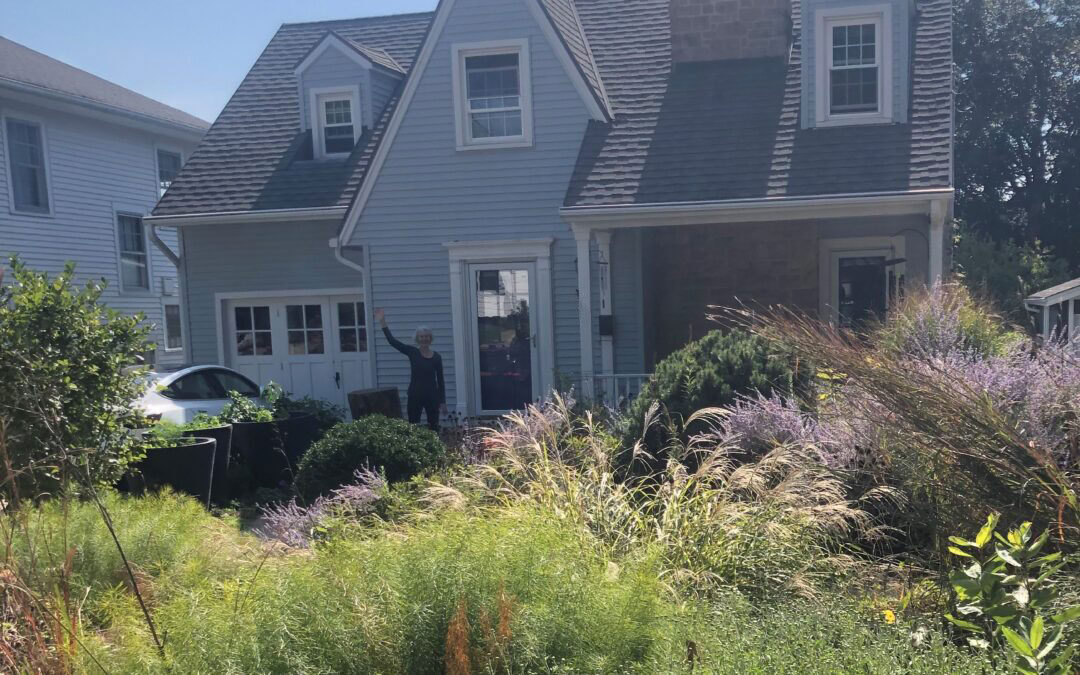
Beneficial electrification discussions often revolve around transportation electrification, specifically how electrifying vehicles can reduce emissions and offer cost savings for consumers. However, an under-discussed and equally important part of beneficial electrification is the building sector. At 24% direct emissions, the building sector comprises the largest end-use emissions in Wisconsin. Read further to learn about Susan Millar’s journey towards electrifying her home, including her installation of an air-source heat pump for greater heating and cooling energy efficiency.
The companies, technologies, and programs endorsed in this blog are not necessarily recommended or endorsed by RENEW Wisconsin. The following information and personal experience is illustrative of the process to electrify a residential property in Wisconsin.
Are you wondering how to convert an older single-family home with a forced hot-air heating system, a gas water heater, and a gas stovetop from gas and electric to electric-only? I have done that with a 90-year old house on the near west side of Madison. And because it took a fair amount of time, I am sharing the process I used. Before describing this process, I provide important context.
Context for Transitioning to All-Electric
- “Natural” gas is fossil gas. It must, and will, be phased out over time as our society gets more serious about reducing climate-warming emissions. In some municipalities, bans on gas in new construction are already in place.
- Air source heat pumps (ASHPs) are the energy-efficient electric-powered alternative to gas heating systems. ASHPs both heat and cool your house (no separate AC device needed). They have a high coefficient of performance, so while they use electricity, the amount is much less than, say, what an electric space heater or traditional AC unit uses. See, for example, this video description of ASHPs.
- Air source water heaters (also called “hybrid” water heaters) work the same way as ASHPs except they exchange air with your basement instead of the air outside. They are far more efficient than traditional electric water heaters.
- Our state’s Focus on Energy program provides rebates for air-source air and water handling systems. The installers handle this process. (I am not sure of the size of these rebates.)
- MG&E’s monthly (gas) service charge is $22. If you stop your gas service and start it again, they will bill you for monthly service charges for up to 12 months prior to the time you start again. That is, you cannot stop your gas service except for, say, the month of January without paying for up to 12 months of service.
- If you have not yet, or cannot install, solar panels on your roof, you can sign up for MGE’s shared solar program.
- If you have an EV and are willing to charge it and also run your dishwasher, etc during MG&E’s low-rate (off-peak) period (from 9 pm to 10 am on weekdays, and during weekends and holidays), you can substantially reduce your electricity bill. To do this, call MG&E and ask them to add you to their ‘Time Of Use’ program.
- Yes, you have to lay out money ahead of time to transition from gas, and I am aware that many people cannot do this. The financial payoff comes over time. For example, while paying both gas and electric service charges, and charging my EV at home, my MG&E bill this summer was between $20 -30 per month. This is largely due to having rooftop solar and Time Of Use electricity rates. While my utility bills will be higher this winter, they will be reduced by the $22 monthly gas service charge and will be substantially less than prior winters. For me, another major advantage is that I am emitting essentially no carbon dioxide to run my home and car.
Steps for Transitioning to All-Electric (used by an early adopter)
- Get an energy efficiency analysis. This is very important because if you switch from a furnace powered by an unlimited amount of gas to an ASHP, it’s important that your house holds its temperature (in winter or summer) as effectively as possible. I used a local energy efficiency consultant. He did a superb job.
- Improve your insulation. If your energy efficiency analysis indicates that your house needs insulation, then arrange to get it. I used a small local company that treated my home as if it was their own. I felt the difference immediately, even in summer.
- Replace your gas stovetop (both to get off of gas and because much new research indicates respiratory health problems are caused by gas stovetops). As I have a unit with an electric oven and gas stove, I purchased two Cuisinart’s Double Induction Cooktops (not expensive), which I placed over the gas burner area on my stove and just plugged in. (Induction stovetops work great, and are much easier to keep clean.)
- While doing steps 1 & 2, get contracts with the HVAC and plumbing company you will use. I started with the local HVAC company that I was used to. They proposed an ASHP system that would heat my house to +14F degrees and required that I retain my gas furnace for backup in the winter. As I want to eliminate the year-round monthly gas service charge, I turned them down. I tried 3 other local companies. Same response. I looked wider and found a company located near Milwaukee. In light of the energy efficiency and size of my house, they proposed to replace my gas furnace and AC units with a Mitsubishi P system that will efficiently heat my house to -14F, and then shift to an electric element (low efficiency) backup system for super cold snaps. Their price? Same as the local HVAC folks who proposed installing a +14F system with gas back-up. I accepted Midwest’s proposal. Moreover, they agreed to install my (still effective and efficient) gas and AC units in the home of a friend who has very inefficient HVAC systems – so the embedded carbon in those devices is not immediately trashed. (FYI, I informed the local HVAC companies of my decision – they lost my business to a more cutting-edge, non-local competitor.)
- Meanwhile, after checking different local plumbers, most of whom do not install hybrid water heaters, I found a small local plumbing company that proposed to install one of these at a very decent price. I happily accepted his bid.
- Both the HVAC and plumbing companies I signed with encountered installation delays because ASAP and hybrid water heater manufacturers are having sourcing issues. These problems are either due to Covid shipping issues or because the manufacturers are sending their stock to states that are ahead of us on installing these systems. Demand pushes the market.
- Both the hybrid water heater and the ASHP have easy controls and work superbly. For the mid-October to mid-November billing period, the first during which I used electricity to heat water, heat the house, and charge my EV, I used 664 kWh. My MG&E bill was $54. In round numbers, they charged me $42 for connection and distribution services, $15 for contributions to their Shared Solar, Green Power, and Low-Income Assistance programs, and $37 for electricity used at variable rates. (I have “Time of Use.” Most of my use was at the very lowest rate.) They credited me $39 for “net energy exported at variable rates” (kWhs from my solar panels), and $2 for “fuel cost.” All that suggests that I paid $-2 for electricity provided by MG&E.
- If you would like cost or contact information for the energy efficiency, insulation, HVAC, plumbing, and electrician contractors I used, just email me at sbmillar@gmail.com.
Susan Millar, September 2021