by jboullion | Mar 20, 2009 | Uncategorized
From a news release issued by the Public Service Commission of Wisconsin:
MADISON – How long will you ignore that drip in the shower? How about the leaky spigot outside the house, or that running toilet? Household leaks waste both valuable water resources and money. According to the Environmental Protection Agency (EPA) the average household can leak up to 11,000 gallons of water per year—enough to fill a backyard swimming pool!
That’s why the Public Service Commission of Wisconsin (PSC) is promoting “Fix a Leak Week” during March 16 to 20 to remind homeowners to check their plumbing fixtures and irrigation systems for leaks. Common types of leaks found in the home include leaking toilet flappers, dripping faucets, and other leaking valves. Fixing easily corrected household water leaks can save homeowners more than 10 percent on their water bills.
PSC Chairperson Eric Callisto noted, “Leaky faucets and toilets waste our precious water resources, and fixing leaks is one of the cheapest and easiest ways to conserve water and save energy.”
To check for leaks in your home, first determine whether you’re wasting water, then identify the source of the leak. Check your water meter before and after a two-hour period when no water is being used. If the meter changes at all, you probably have a leak.
In addition, leaks waste the electricity used to pump the water.
For more information on conserving water, visit the PSC web site or the Fix a Leak Week site.
by jboullion | Mar 18, 2009 | Uncategorized
From a news release issued by Focus on Energy:
(March 18, 2009) – In 2008 Focus on Energy, Wisconsin’s energy efficiency and renewable energy initiative, awarded financial incentives totaling more than $2.5 million to help businesses statewide finance the installation of renewable energy systems. And in 2009, even more businesses will have the opportunity to become energy independent as Focus on Energy is offering special opportunity grants for up to $500,000 to support large renewable energy systems.
These grants, combined with the tax credits and other funding opportunities in the new American Recovery and Reinvestment Act, which was signed into law Feb. 17, 2009, should help to make significant renewable energy projects a reality for hundreds of Wisconsin businesses.
“We believe there is an emerging demand for renewable energy systems at a larger level,” said Don Wichert, renewable energy program director. “As concerns over the effects of fossil fuel based energy use, pollution and America’s dependence on energy from overseas increase, it is our hope Wisconsin businesses will take advantage of these grants – and the new federal incentives – to take control over their energy use.”
Eligible businesses must submit grant proposals to Focus on Energy by May 27, 2009. Funds will be awarded for the following technologies:
Solar Electric
Solar energy can be converted directly to electricity with photovoltaic (PV) cells. As light strikes the PV cell, it creates an electrical potential that generates a current of electricity. To implement solar electricity, businesses can use this grant for the installation of solar electric systems larger than 50 kilowatts (kW). The grant will award a maximum of $250,000.
Solar Water Heating
The sun’s energy can be used to heat water for commercial and industrial applications. Businesses interested in implementing solar water heating can use this grant for the installation of solar water heating systems that offset more than 15,000 therms per year. The grant will award a maximum of $250,000.
Wind Energy
The energy present in wind can be converted into electricity with a wind turbine. Wind passing over the turbine creates a rotary motion that turns an electric generator and creates electricity. This grant will provide financial support for the installation of commercially available wind energy systems larger than 100 kW. This grant will award a maximum of $250,000.
Biogas/Landfill Gas/Biomass/Hydro
This grant will provide financial support for the installation of industrial/municipal and farm anaerobic digestion, landfill gas, biomass combustion and hydroelectric projects that generally cost $2 million to $5 million. These systems can help supply space heating, process heating, cooling and electricity. The grant will award a maximum of $500,000.
by jboullion | Mar 16, 2009 | Uncategorized
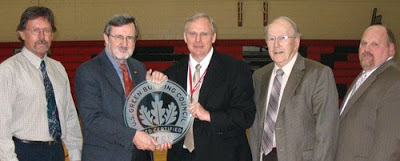
From left: Steve Rubenzer of SDS Architect, Congressman David Obey, District Administrator Rick Palmer and School Board President Robert Clifton of Luck School District, Charlie Schneider of Focus on Energy
From a news release issued by Focus on Energy:
Focus on Energy, Wisconsin’s energy efficiency and renewable energy initiative, presented Luck School District in Luck, Wis. with a plaque in recognition of earning the United States Green Building Council’s Leadership in Energy and Environmental Design (LEED) certification on Friday, March 13. U.S. Congressman David Obey was on-hand during the presentation.
Luck School District is the second school in Wisconsin to receive a LEED certification and achieve this prestigious green building standard on an existing building. LEED standards address whole building maintenance issues including chemicals, energy and water efficiency performance, indoor air quality and recycling programs, among others standards to maximize operational efficiency and minimize environmental impacts.
“These efforts have saved money, reduced energy use and created a cleaner environment,” said Congressman Obey. “I applaud Luck School District for providing the best education that comes from leading by example.”
With the help of Focus on Energy’s expertise and more than $120,000 in cash incentives, Luck School District has saved more than 495,000 kilowatt-hours of electricity and 25,000 therms of natural gas-enough energy to power 75 homes for a year. The district will also save more than $77,000 in energy costs annually. Luck School District’s numerous accomplishments to earn LEED certification include:
+ A $2.1 million upgrade to its heating and cooling system.
+ Received a Department of Natural Resources grant to help implement an advanced recycling program.
+ Started a “green cleaning” program.
+ Provided continuing education to teachers though the Focus sponsored K-12 Energy Education Program (KEEP).
+ Kept students and teachers from the K-12 district actively involved with projects and monitoring success.
by jboullion | Mar 16, 2009 | Uncategorized
From an editorial in the Eau Claire Leader-Telegram:
The issue: A proposed program would allow Xcel Energy customers to voluntarily pay extra for renewable power.
Our view: Bills would rise, but the program would give all of us a role in weaning our nation from fossil fuels.
In these days of economic uncertainty, paying more than you have to on a monthly bill seems like the equivalent of letting money go up in smoke.
But when it comes to utility costs, the opposite actually is true.
Xcel Energy’s Wisconsin customers may soon have the option of paying a bit extra for their electricity to spur the production of more energy from “green” sources such as wind, solar and biomass. Boosting the use of renewable energy reduces reliance on nonrenewable sources, especially greenhouse-gas-producing coal. The price of renewable energy may be higher now, but spending more in the short term means less of our money will be converted into smoke – or at least carbon dioxide – in the long run. . . .
As noted earlier, customers who worry about the size of their existing bills may be skeptical of voluntarily paying more. That’s understandable, and Xcel estimates only 3 to 5 percent of its Wisconsin customers will enroll. However, the higher the participation, the less costly renewable power becomes: Ten percent of Madison Gas and Electric’s customers are enrolled in a similar program, and the premium they pay for wind power dropped from $2.67 to $1 per 100 kilowatts between 1999 and 2008.
Like any complex problem, weaning ourselves from fossil fuels – and the environmental havoc they bring – will take a concerted effort on many fronts. Big players such as utility companies, businesses and government regulators all have roles – but so does anyone who flips a light switch.
by jboullion | Mar 13, 2009 | Uncategorized
Wisconsin Wind Energy Supply Chain Seminar
Appleton, Wisconsin
March 31, 2009
Wisconsin Wind Energy Supply Chain Seminar will focus on wind turbine manufacturing challenges and opportunities in the state of Wisconsin. Over 8,000 components and parts are used in the construction of utility-scale wind turbines, offering opportunities for a wide range of manufacturers and service providers in Wisconsin. The existing manufacturing and service industries, as well as academic and other institutions in Wisconsin makes it an ideal state to benefit from the growth of the wind energy industry.
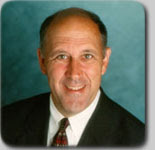
Hear from The Honorable Jim Doyle Governor of Wisconsin
Tuesday, March 31, 1:30 PM – 2:00 PM
Governor Jim Doyle is focused on creating opportunity for all of Wisconsin’s people and is building upon current efforts to create jobs, make America energy independent, and address the global climate crisis.
Complete program. Register online.