
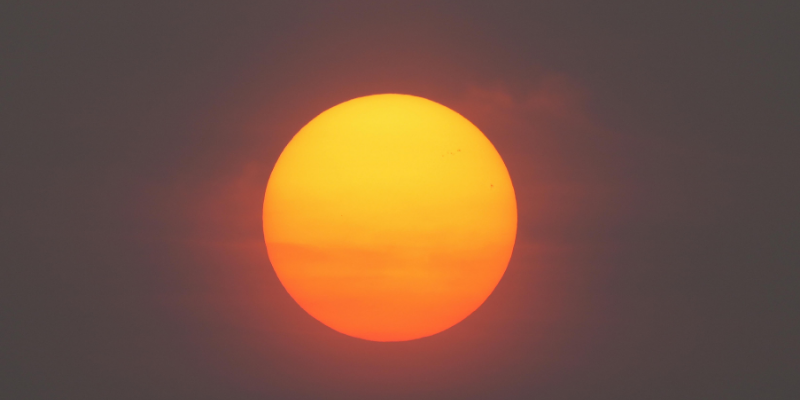
Over the past week, millions of people across the Midwest and East Coast have stepped outside to hazy skies, smelled smoke in the air, and checked their weather apps—not for rain, but for the Air Quality Index (AQI).
For many communities, the AQI has climbed from “Unhealthy for Sensitive Groups” to “Unhealthy” and even “hazardous” categories because of wildfire smoke drifting south from Canada.
The culprit is PM2.5—fine particulate matter measuring 2.5 micrometers or smaller. These particles are so small that they can travel deep into your lungs and even enter your bloodstream. They’re associated with increased asthma attacks, heart disease, strokes, respiratory illness, and other serious health concerns.
We often talk about building an economy and a clean energy future we can afford, focusing on the cost of producing energy and the size of people’s energy bills. In this case, the discussion shifts to what we can’t afford. We can’t afford to keep making the choices that have turned these smoky summer days into a new normal.
Those decisions have not only brought us to this moment, but have been producing the same type of pollution driving today’s air quality alerts. PM2.5 is also one of the primary pollutants produced when coal is burned to generate electricity. Coal-fired power plants also emit sulfur dioxide (SO₂) and nitrogen oxides (NOₓ), which can react in the atmosphere to create even more fine particulate pollution.
To be clear, not every wildfire is directly caused by climate change, but our choice to rely on fuel sources like coal and natural gas makes it more common. What’s worse is that our continued reliance on coal plants continues to regularly expose nearby residents to fine particulate pollution that can harm our health. The same kind of air pollution that much of the country is being exposed to right now.
Every time smoke fills our skies, we change our behavior. We keep our children indoors, cancel outdoor events, run air purifiers, and hope the wind shifts. Unfortunately, those who live near coal plants don’t have the benefit of waiting for the winds to change.
It reminds us of something we often take for granted: Clean air matters.
That is why RENEW Wisconsin works every day to expand renewable energy across our state.
Every new solar array, every wind project, every battery installation, every clean energy policy we advance is about more than electricity. It’s about protecting the air we breathe, strengthening our economy, creating jobs in Wisconsin, and building an energy system that doesn’t rely on harmful combustion to keep the lights on.
This work doesn’t happen by accident.
It happens because people like you believe Wisconsin deserves a cleaner, healthier, and more resilient energy future.
If you’ve ever wondered whether your support makes a difference, it does.
Your donation helps RENEW Wisconsin:
- Advocate for clean energy policies at the Capitol and before state agencies.
- Support the responsible development of wind, solar, and energy storage.
- Expand access to renewable energy for schools, nonprofits, and communities.
- Educate the public with trusted, fact-based information.
- Build a healthier energy future for every Wisconsin family.
The next time you look outside and see a hazy sky, remember that while we can’t stop every wildfire, we can choose how we generate the electricity that powers our lives and build the future we want to see.
If you believe, like us, that we can’t afford to continue to rely on the energy sources that got us into this mess, I invite you to support RENEW Wisconsin today.
Together, we can build a state where clean air isn’t something we hope for—it’s something we protect.
Donate today and help power Wisconsin’s clean energy future.
Ismaeel Chartier
Executive Director, RENEW Wisconsin