by jboullion | Nov 5, 2012 | Uncategorized
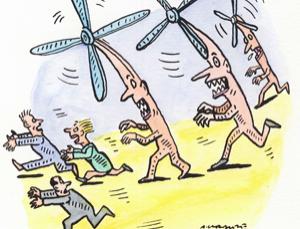
Hilltop turbines are being blamed for myriad maladies. What is the truth behind these outlandish claims? Simon Chapman debunks these claims in this article from the New Scientist.
NEW technology has long attracted “modern health worries”. Microwave ovens, television and computer screens and even early telephony all caused anxiety in their time. More recently, cellphones and towers, Wi-Fi and smart electricity meters have followed suit.
Another is gathering attention; the very modern malaise known as wind turbine syndrome. I set out to collect the conditions attributed to wind farm exposure. Within hours, I’d found 50 often florid assertions about different illnesses. Today my total sits at 198, with a range redolent of Old Testament plagues.
The list includes “deaths, yes, many deaths”, none of which have ever come to the attention of a coroner, cancers, congenital malformations, and every manner of psychiatric problem. But mostly, it includes common health problems found in all communities, with wind turbines or not. These include greying hair, energy loss, concentration lapses, weight gain and all the problems of ageing. Sleep problems are mentioned most, but insomnia is incredibly common. Animals get a look in. Chickens won’t lay; earthworms vanish; hundreds of cattle and goats die horrible deaths from “stray electricity”.
In a 35-year career in public health, I have never encountered anything quite so apocalyptic. I’ve visited wind farms and compared their gentle swoosh to the noises that all city dwellers live with daily. Quickly, this phenomenon began to tick psychogenic boxes.
There are several reasons to suspect that the unrecognized entity of wind turbine syndrome is psychogenic: a “communicated” disease spread by anti-wind interest groups, sometimes with connections to fossil fuel interests. People can worry themselves sick.
Firstly, there are the temporal problems. Wind farms appeared some 20 years ago in the US. There are now just shy of 200,000 turbines globally. But the first recorded claims that they caused disease came a decade later. Two rural doctors, one in the UK and the other in Australia, made claims repeated widely in newspapers but never published in any journal. Turbines have come to be blamed for chronic conditions like (amazingly) lung and skin cancer, diabetes, multiple sclerosis and stroke. But importantly also acute symptoms, that according to Australia’s high priestess of wind turbine syndrome, Sarah Laurie, an unregistered doctor, can commence within 20 minutes of exposure. If true, what happened in the early complaint-free years?
Then there’s the issue of clustering. The European wind industry sees the phenomenon as largely anglophone, and even then, only in particular regions and around certain farms. Many sites have run for years without complaint. Others, legendary for their vocal opponents even before start up, are hot beds of disease claims. So if turbines were inherently noxious, why do they cut such a selective path? Why do citizens of community-owned turbines in Germany and Denmark rarely complain? Why are complaints rare in western Australia, but rife in several eastern Australian communities?
Opponents readily concede that only a minority of those exposed report being ill but explain this via the analogy of motion sickness: it only happens to those who are susceptible. How then to explain that whole regions and indeed nations, have no susceptible people? The key factor seems to be the presence or absence of anti-wind activists, generally from outside the area.
It is clear the presence of these anti-wind “vectors” is required. Communities which have for years accepted the farms can erupt when activists arrive, spreading alarm and listing health problems. Prominent among these in Australia are wealthy conservative landowners appalled by the very visible presence of the tall green-energy totems, a constant reminder of bucolic decay and the “upstairs-downstairs” disdain they have for those needing income from their often hilly, poorer quality land.
The fact that money seems to be a magic antidote to these ailments further undermines the claims. Health complaints are as rare as rocking horse excrement among turbine hosts. Complaints are rare from those financially benefiting from communal ownership arrangements. It tends to be neighbours of those hosting turbines who make the link with illness. They see the turbines, dislike them and dwell on their misfortune. The perceived injustice can eat away at some, fomented by organised groups.
Wind companies also report residents approaching them with extensive renovation wish lists. One told me of a request for a house to be moved to a lake shore. In rural Australia, residential buy-outs by mining companies are common. Word spreads about shack owners who got lucky. So when a cashed-up company appears, it is understandable that some may see their ticket out via protracted complaints.
Opponents also claim that confidentiality clauses are used to gag hosts, so they can’t speak up about illnesses. I’ve seen several contracts and, predictably, none involve signing away common law rights to claims of negligence.
Finally, there are the apocryphal tales about many families having to abandon their homes. Mysteriously, address lists are never produced. Abandoning unsaleable properties is a sad part of rural decay, a fact which seems to escape fly-in, fly-out climate change denialists.
Previous modern health worries dissipated when the predicted health mayhem never emerged and the feared exotic agents became thoroughly familiar. Hysteria about cellphone towers had its heyday in the late 1990s, at least in Australia, but is rare today. With 17 reviews of the evidence on harm caused by wind farms consistent in their assessment of insignificant risk, how long can this one last?
Simon Chapman is professor in public health at the University of Sydney, Australia. Find the original article here.
by jboullion | Nov 5, 2012 | Uncategorized
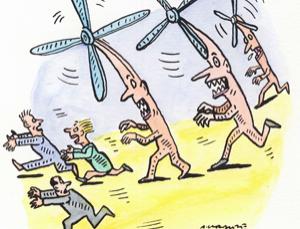
Hilltop turbines are being blamed for myriad maladies. What is the truth behind these outlandish claims? Simon Chapman debunks these claims in this article from the New Scientist.
NEW technology has long attracted “modern health worries”. Microwave ovens, television and computer screens and even early telephony all caused anxiety in their time. More recently, cellphones and towers, Wi-Fi and smart electricity meters have followed suit.
Another is gathering attention; the very modern malaise known as wind turbine syndrome. I set out to collect the conditions attributed to wind farm exposure. Within hours, I’d found 50 often florid assertions about different illnesses. Today my total sits at 198, with a range redolent of Old Testament plagues.
The list includes “deaths, yes, many deaths”, none of which have ever come to the attention of a coroner, cancers, congenital malformations, and every manner of psychiatric problem. But mostly, it includes common health problems found in all communities, with wind turbines or not. These include greying hair, energy loss, concentration lapses, weight gain and all the problems of ageing. Sleep problems are mentioned most, but insomnia is incredibly common. Animals get a look in. Chickens won’t lay; earthworms vanish; hundreds of cattle and goats die horrible deaths from “stray electricity”.
In a 35-year career in public health, I have never encountered anything quite so apocalyptic. I’ve visited wind farms and compared their gentle swoosh to the noises that all city dwellers live with daily. Quickly, this phenomenon began to tick psychogenic boxes.
There are several reasons to suspect that the unrecognised entity of wind turbine syndrome is psychogenic: a “communicated” disease spread by anti-wind interest groups, sometimes with connections to fossil fuel interests. People can worry themselves sick.
Firstly, there are the temporal problems. Wind farms appeared some 20 years ago in the US. There are now just shy of 200,000 turbines globally. But the first recorded claims that they caused disease came a decade later. Two rural doctors, one in the UK and the other in Australia, made claims repeated widely in newspapers but never published in any journal. Turbines have come to be blamed for chronic conditions like (amazingly) lung and skin cancer, diabetes, multiple sclerosis and stroke. But importantly also acute symptoms, that according to Australia’s high priestess of wind turbine syndrome, Sarah Laurie, an unregistered doctor, can commence within 20 minutes of exposure. If true, what happened in the early complaint-free years?
Then there’s the issue of clustering. The European wind industry sees the phenomenon as largely anglophone, and even then, only in particular regions and around certain farms. Many sites have run for years without complaint. Others, legendary for their vocal opponents even before start up, are hot beds of disease claims. So if turbines were inherently noxious, why do they cut such a selective path? Why do citizens of community-owned turbines in Germany and Denmark rarely complain? Why are complaints rare in western Australia, but rife in several eastern Australian communities?
Opponents readily concede that only a minority of those exposed report being ill but explain this via the analogy of motion sickness: it only happens to those who are susceptible. How then to explain that whole regions and indeed nations, have no susceptible people? The key factor seems to be the presence or absence of anti-wind activists, generally from outside the area.
It is clear the presence of these anti-wind “vectors” is required. Communities which have for years accepted the farms can erupt when activists arrive, spreading alarm and listing health problems. Prominent among these in Australia are wealthy conservative landowners appalled by the very visible presence of the tall green-energy totems, a constant reminder of bucolic decay and the “upstairs-downstairs” disdain they have for those needing income from their often hilly, poorer quality land.
The fact that money seems to be a magic antidote to these ailments further undermines the claims. Health complaints are as rare as rocking horse excrement among turbine hosts. Complaints are rare from those financially benefitting from communal ownership arrangements. It tends to be neighbours of those hosting turbines who make the link with illness. They see the turbines, dislike them and dwell on their misfortune. The perceived injustice can eat away at some, fomented by organised groups.
Wind companies also report residents approaching them with extensive renovation wish lists. One told me of a request for a house to be moved to a lake shore. In rural Australia, residential buy-outs by mining companies are common. Word spreads about shack owners who got lucky. So when a cashed-up company appears, it is understandable that some may see their ticket out via protracted complaints.
Opponents also claim that confidentiality clauses are used to gag hosts, so they can’t speak up about illnesses. I’ve seen several contracts and, predictably, none involve signing away common law rights to claims of negligence.
Finally, there are the apocryphal tales about many families having to abandon their homes. Mysteriously, address lists are never produced. Abandoning unsaleable properties is a sad part of rural decay, a fact which seems to escape fly-in, fly-out climate change denialists.
Previous modern health worries dissipated when the predicted health mayhem never emerged and the feared exotic agents became thoroughly familiar. Hysteria about cellphone towers had its heyday in the late 1990s, at least in Australia, but is rare today. With 17 reviews of the evidence on harm caused by wind farms consistent in their assessment of insignificant risk, how long can this one last?
Simon Chapman is professor in public health at the University of Sydney, Australia. Find the original article here.
by jboullion | Nov 2, 2012 | Uncategorized
RENEW Wisconsin and the Sierra Club invite everyone in southeast Wisconsin with an interest in renewable energy to an informational meeting and social gathering on November 13. Don Wichert will give an update on RENEW Wisconsin’s current work and tentative plans for 2013 to turn our passion for renewable energy into action, into new public and private programs to support renewable energy. He’ll be going over RENEW’s initiatives on:
- Third-party ownership (Clean Energy Choice)
- WPSC and We Energies net metering policies and RENEW’s rate case intervention
- Focus on Energy funding and planning for next year
- A new non-utility green energy program (http://www.repowernow.org/)
- Streamlining interconnection requirements
- RENEW’s 2011 utility scorecard
- RENEW’s plan to get We Energies to honor their $6 million per year renewable energy commitment
- Recent wind projects and wind siting rule defense
- Plans to increase the Renewable Electricity Standard in the future.
He’ll try to give updates on all of these in one hour (speaking very fast), then we’d like to hear other ideas on positive actions to achieve success in 2013.
So please join RENEW and the Sierra Club on November 13, at 5:30 p.m. at Helios Solar Works, 1207 W. Canal St., Milwaukee, to get caught up and to discuss your own views with others. There will be local brews, cider, and snacks.
RENEW Informational Meeting & Social Gathering
November 13, 2012, 5:30 p.m.
Helios Solar Works
1207 W. Canal St.
Milwaukee, WI
by Ed Blume | Nov 2, 2012 | Uncategorized
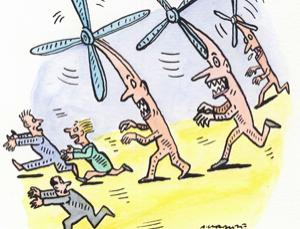
Hilltop turbines are being blamed for myriad maladies. What is the truth behind these outlandish claims? Simon Chapman debunks these claims in this article from the New Scientist.
NEW technology has long attracted “modern health worries”. Microwave ovens, television and computer screens and even early telephony all caused anxiety in their time. More recently, cellphones and towers, Wi-Fi and smart electricity meters have followed suit.
Another is gathering attention; the very modern malaise known as wind turbine syndrome. I set out to collect the conditions attributed to wind farm exposure. Within hours, I’d found 50 often florid assertions about different illnesses. Today my total sits at 198, with a range redolent of Old Testament plagues.
The list includes “deaths, yes, many deaths”, none of which have ever come to the attention of a coroner, cancers, congenital malformations, and every manner of psychiatric problem. But mostly, it includes common health problems found in all communities, with wind turbines or not. These include greying hair, energy loss, concentration lapses, weight gain and all the problems of ageing. Sleep problems are mentioned most, but insomnia is incredibly common. Animals get a look in. Chickens won’t lay; earthworms vanish; hundreds of cattle and goats die horrible deaths from “stray electricity”.
In a 35-year career in public health, I have never encountered anything quite so apocalyptic. I’ve visited wind farms and compared their gentle swoosh to the noises that all city dwellers live with daily. Quickly, this phenomenon began to tick psychogenic boxes.
There are several reasons to suspect that the unrecognised entity of wind turbine syndrome is psychogenic: a “communicated” disease spread by anti-wind interest groups, sometimes with connections to fossil fuel interests. People can worry themselves sick.
Firstly, there are the temporal problems. Wind farms appeared some 20 years ago in the US. There are now just shy of 200,000 turbines globally. But the first recorded claims that they caused disease came a decade later. Two rural doctors, one in the UK and the other in Australia, made claims repeated widely in newspapers but never published in any journal. Turbines have come to be blamed for chronic conditions like (amazingly) lung and skin cancer, diabetes, multiple sclerosis and stroke. But importantly also acute symptoms, that according to Australia’s high priestess of wind turbine syndrome, Sarah Laurie, an unregistered doctor, can commence within 20 minutes of exposure. If true, what happened in the early complaint-free years?
Then there’s the issue of clustering. The European wind industry sees the phenomenon as largely anglophone, and even then, only in particular regions and around certain farms. Many sites have run for years without complaint. Others, legendary for their vocal opponents even before start up, are hot beds of disease claims. So if turbines were inherently noxious, why do they cut such a selective path? Why do citizens of community-owned turbines in Germany and Denmark rarely complain? Why are complaints rare in western Australia, but rife in several eastern Australian communities?
Opponents readily concede that only a minority of those exposed report being ill but explain this via the analogy of motion sickness: it only happens to those who are susceptible. How then to explain that whole regions and indeed nations, have no susceptible people? The key factor seems to be the presence or absence of anti-wind activists, generally from outside the area.
It is clear the presence of these anti-wind “vectors” is required. Communities which have for years accepted the farms can erupt when activists arrive, spreading alarm and listing health problems. Prominent among these in Australia are wealthy conservative landowners appalled by the very visible presence of the tall green-energy totems, a constant reminder of bucolic decay and the “upstairs-downstairs” disdain they have for those needing income from their often hilly, poorer quality land.
The fact that money seems to be a magic antidote to these ailments further undermines the claims. Health complaints are as rare as rocking horse excrement among turbine hosts. Complaints are rare from those financially benefitting from communal ownership arrangements. It tends to be neighbours of those hosting turbines who make the link with illness. They see the turbines, dislike them and dwell on their misfortune. The perceived injustice can eat away at some, fomented by organised groups.
Wind companies also report residents approaching them with extensive renovation wish lists. One told me of a request for a house to be moved to a lake shore. In rural Australia, residential buy-outs by mining companies are common. Word spreads about shack owners who got lucky. So when a cashed-up company appears, it is understandable that some may see their ticket out via protracted complaints.
Opponents also claim that confidentiality clauses are used to gag hosts, so they can’t speak up about illnesses. I’ve seen several contracts and, predictably, none involve signing away common law rights to claims of negligence.
Finally, there are the apocryphal tales about many families having to abandon their homes. Mysteriously, address lists are never produced. Abandoning unsaleable properties is a sad part of rural decay, a fact which seems to escape fly-in, fly-out climate change denialists.
Previous modern health worries dissipated when the predicted health mayhem never emerged and the feared exotic agents became thoroughly familiar. Hysteria about cellphone towers had its heyday in the late 1990s, at least in Australia, but is rare today. With 17 reviews of the evidence on harm caused by wind farms consistent in their assessment of insignificant risk, how long can this one last?
Simon Chapman is professor in public health at the University of Sydney, Australia. Find the original article here.
by jboullion | Nov 2, 2012 | Uncategorized
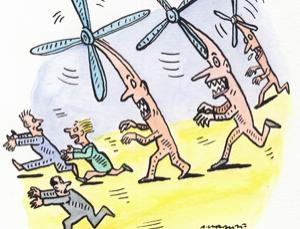
Hilltop turbines are being blamed for myriad maladies. What is the truth behind these outlandish claims? Simon Chapman debunks these claims in this article from the New Scientist.
NEW technology has long attracted “modern health worries”. Microwave ovens, television and computer screens and even early telephony all caused anxiety in their time. More recently, cellphones and towers, Wi-Fi and smart electricity meters have followed suit.
Another is gathering attention; the very modern malaise known as wind turbine syndrome. I set out to collect the conditions attributed to wind farm exposure. Within hours, I’d found 50 often florid assertions about different illnesses. Today my total sits at 198, with a range redolent of Old Testament plagues.
The list includes “deaths, yes, many deaths”, none of which have ever come to the attention of a coroner, cancers, congenital malformations, and every manner of psychiatric problem. But mostly, it includes common health problems found in all communities, with wind turbines or not. These include greying hair, energy loss, concentration lapses, weight gain and all the problems of ageing. Sleep problems are mentioned most, but insomnia is incredibly common. Animals get a look in. Chickens won’t lay; earthworms vanish; hundreds of cattle and goats die horrible deaths from “stray electricity”.
In a 35-year career in public health, I have never encountered anything quite so apocalyptic. I’ve visited wind farms and compared their gentle swoosh to the noises that all city dwellers live with daily. Quickly, this phenomenon began to tick psychogenic boxes.
There are several reasons to suspect that the unrecognised entity of wind turbine syndrome is psychogenic: a “communicated” disease spread by anti-wind interest groups, sometimes with connections to fossil fuel interests. People can worry themselves sick.
Firstly, there are the temporal problems. Wind farms appeared some 20 years ago in the US. There are now just shy of 200,000 turbines globally. But the first recorded claims that they caused disease came a decade later. Two rural doctors, one in the UK and the other in Australia, made claims repeated widely in newspapers but never published in any journal. Turbines have come to be blamed for chronic conditions like (amazingly) lung and skin cancer, diabetes, multiple sclerosis and stroke. But importantly also acute symptoms, that according to Australia’s high priestess of wind turbine syndrome, Sarah Laurie, an unregistered doctor, can commence within 20 minutes of exposure. If true, what happened in the early complaint-free years?
Then there’s the issue of clustering. The European wind industry sees the phenomenon as largely anglophone, and even then, only in particular regions and around certain farms. Many sites have run for years without complaint. Others, legendary for their vocal opponents even before start up, are hot beds of disease claims. So if turbines were inherently noxious, why do they cut such a selective path? Why do citizens of community-owned turbines in Germany and Denmark rarely complain? Why are complaints rare in western Australia, but rife in several eastern Australian communities?
Opponents readily concede that only a minority of those exposed report being ill but explain this via the analogy of motion sickness: it only happens to those who are susceptible. How then to explain that whole regions and indeed nations, have no susceptible people? The key factor seems to be the presence or absence of anti-wind activists, generally from outside the area.
It is clear the presence of these anti-wind “vectors” is required. Communities which have for years accepted the farms can erupt when activists arrive, spreading alarm and listing health problems. Prominent among these in Australia are wealthy conservative landowners appalled by the very visible presence of the tall green-energy totems, a constant reminder of bucolic decay and the “upstairs-downstairs” disdain they have for those needing income from their often hilly, poorer quality land.
The fact that money seems to be a magic antidote to these ailments further undermines the claims. Health complaints are as rare as rocking horse excrement among turbine hosts. Complaints are rare from those financially benefitting from communal ownership arrangements. It tends to be neighbours of those hosting turbines who make the link with illness. They see the turbines, dislike them and dwell on their misfortune. The perceived injustice can eat away at some, fomented by organised groups.
Wind companies also report residents approaching them with extensive renovation wish lists. One told me of a request for a house to be moved to a lake shore. In rural Australia, residential buy-outs by mining companies are common. Word spreads about shack owners who got lucky. So when a cashed-up company appears, it is understandable that some may see their ticket out via protracted complaints.
Opponents also claim that confidentiality clauses are used to gag hosts, so they can’t speak up about illnesses. I’ve seen several contracts and, predictably, none involve signing away common law rights to claims of negligence.
Finally, there are the apocryphal tales about many families having to abandon their homes. Mysteriously, address lists are never produced. Abandoning unsaleable properties is a sad part of rural decay, a fact which seems to escape fly-in, fly-out climate change denialists.
Previous modern health worries dissipated when the predicted health mayhem never emerged and the feared exotic agents became thoroughly familiar. Hysteria about cellphone towers had its heyday in the late 1990s, at least in Australia, but is rare today. With 17 reviews of the evidence on harm caused by wind farms consistent in their assessment of insignificant risk, how long can this one last?
Simon Chapman is professor in public health at the University of Sydney, Australia. Find the original article here.
by jboullion | Oct 31, 2012 | Uncategorized
Now is the time to make sure you know where your candidates stand on the day’s most important issues. Two important issues that will have a major impact on our state’s future are clean energy and energy efficiency.
Voters typically consider energy a national issue, but state-level politics often have as much or more impact on our energy future. In Wisconsin, state laws determine the how much of our electricity comes from renewable sources like wind and solar power. Additionally, programs like Focus on Energy, the statewide energy efficiency program, help homeowners and businesses save millions of dollars on energy bills.
Despite these laws and programs, we still send over $12 billion out of state each year to purchase dirty fossil fuels. Increasing our commitment to clean energy and energy efficiency could help Wisconsin become more energy independent, clean our air and water, and create thousands of jobs.
Unfortunately, legislators voted to significantly cut funding to Focus on Energy in the last legislative session, despite the program’s proven success; it saves homeowners and businesses $2.50 for every $1 invested in the program. Now is the time to move clean energy and energy efficiency policies forward, not backward.
A recent poll by the bipartisan research team of Public Opinion Strategies and Fairbank, Maslin, Metz and Associates found that Wisconsinites overwhelmingly support clean energy and energy efficiency. In fact, the poll found that 85 percent of Wisconsin voters support increasing the use of wind energy to meet our state’s future energy needs, and 89 percent support increasing the use of solar energy. Additionally, 84 percent said they would support policies requiring 30 percent of Wisconsin’s electricity to come from renewable sources. This is well above the current standard of 10 percent by 2015, which utilities have largely met.
By passing clean energy policies and increasing funding for money-saving programs like Focus on Energy in the next legislative session, legislators can help create Wisconsin jobs. Companies like Milwaukee’s Helios SolarWorks, a solar panel manufacturer, Manitowoc’s Orion Energy Systems, a leader in lighting efficiency, Prairie du Sac’s Tower Technologies, a renewable energy installer, and hundreds more can create more jobs if leaders work together to advance clean energy and energy efficiency policies.
In addition, such policies could attract new companies to Wisconsin and make our state a leader in the rapidly expanding clean energy economy. In April,
Ibisworld.com listed solar panel manufacturing (No. 2) and green and sustainable building construction (No. 9) among the nation’s top 10 fastest-growing industries. The poll found that more than two-thirds of voters believe clean energy and energy efficiency will create jobs and investing in these industries now can help ensure Wisconsin remains economically strong for decades.
At a time when our state and nation remain deeply divided on many issues, clean energy and energy efficiency unite people of all political stripes. With less than two weeks to the election, now is the time to ask your candidates where they stand on these important issues.
Keith Reopelle is the senior policy director at Clean Wisconsin. For more information, visit www.cleanwisconsin.org. Find the original article here.
by jboullion | Oct 31, 2012 | Uncategorized
Now is the time to make sure you know where your candidates stand on the day’s most important issues. Two important issues that will have a major impact on our state’s future are clean energy and energy efficiency.
Voters typically consider energy a national issue, but state-level politics often have as much or more impact on our energy future. In Wisconsin, state laws determine the how much of our electricity comes from renewable sources like wind and solar power. Additionally, programs like Focus on Energy, the statewide energy efficiency program, help homeowners and businesses save millions of dollars on energy bills.
Despite these laws and programs, we still send over $12 billion out of state each year to purchase dirty fossil fuels. Increasing our commitment to clean energy and energy efficiency could help Wisconsin become more energy independent, clean our air and water, and create thousands of jobs.
Unfortunately, legislators voted to significantly cut funding to Focus on Energy in the last legislative session, despite the program’s proven success; it saves homeowners and businesses $2.50 for every $1 invested in the program. Now is the time to move clean energy and energy efficiency policies forward, not backward.
A recent poll by the bipartisan research team of Public Opinion Strategies and Fairbank, Maslin, Metz and Associates found that Wisconsinites overwhelmingly support clean energy and energy efficiency. In fact, the poll found that 85 percent of Wisconsin voters support increasing the use of wind energy to meet our state’s future energy needs, and 89 percent support increasing the use of solar energy. Additionally, 84 percent said they would support policies requiring 30 percent of Wisconsin’s electricity to come from renewable sources. This is well above the current standard of 10 percent by 2015, which utilities have largely met.
By passing clean energy policies and increasing funding for money-saving programs like Focus on Energy in the next legislative session, legislators can help create Wisconsin jobs. Companies like Milwaukee’s Helios SolarWorks, a solar panel manufacturer, Manitowoc’s Orion Energy Systems, a leader in lighting efficiency, Prairie du Sac’s Tower Technologies, a renewable energy installer, and hundreds more can create more jobs if leaders work together to advance clean energy and energy efficiency policies.
In addition, such policies could attract new companies to Wisconsin and make our state a leader in the rapidly expanding clean energy economy. In April,
Ibisworld.com listed solar panel manufacturing (No. 2) and green and sustainable building construction (No. 9) among the nation’s top 10 fastest-growing industries. The poll found that more than two-thirds of voters believe clean energy and energy efficiency will create jobs and investing in these industries now can help ensure Wisconsin remains economically strong for decades.
At a time when our state and nation remain deeply divided on many issues, clean energy and energy efficiency unite people of all political stripes. With less than two weeks to the election, now is the time to ask your candidates where they stand on these important issues.
Keith Reopelle is the senior policy director at Clean Wisconsin. For more information, visit www.cleanwisconsin.org. Find the original article here.
by jboullion | Oct 31, 2012 | Uncategorized
Now is the time to make sure you know where your candidates stand on the day’s most important issues. Two important issues that will have a major impact on our state’s future are clean energy and energy efficiency.
Voters typically consider energy a national issue, but state-level politics often have as much or more impact on our energy future. In Wisconsin, state laws determine the how much of our electricity comes from renewable sources like wind and solar power. Additionally, programs like Focus on Energy, the statewide energy efficiency program, help homeowners and businesses save millions of dollars on energy bills.
Despite these laws and programs, we still send over $12 billion out of state each year to purchase dirty fossil fuels. Increasing our commitment to clean energy and energy efficiency could help Wisconsin become more energy independent, clean our air and water, and create thousands of jobs.
Unfortunately, legislators voted to significantly cut funding to Focus on Energy in the last legislative session, despite the program’s proven success; it saves homeowners and businesses $2.50 for every $1 invested in the program. Now is the time to move clean energy and energy efficiency policies forward, not backward.
A recent poll by the bipartisan research team of Public Opinion Strategies and Fairbank, Maslin, Metz and Associates found that Wisconsinites overwhelmingly support clean energy and energy efficiency. In fact, the poll found that 85 percent of Wisconsin voters support increasing the use of wind energy to meet our state’s future energy needs, and 89 percent support increasing the use of solar energy. Additionally, 84 percent said they would support policies requiring 30 percent of Wisconsin’s electricity to come from renewable sources. This is well above the current standard of 10 percent by 2015, which utilities have largely met.
By passing clean energy policies and increasing funding for money-saving programs like Focus on Energy in the next legislative session, legislators can help create Wisconsin jobs. Companies like Milwaukee’s Helios SolarWorks, a solar panel manufacturer, Manitowoc’s Orion Energy Systems, a leader in lighting efficiency, Prairie du Sac’s Tower Technologies, a renewable energy installer, and hundreds more can create more jobs if leaders work together to advance clean energy and energy efficiency policies.
In addition, such policies could attract new companies to Wisconsin and make our state a leader in the rapidly expanding clean energy economy. In April,
Ibisworld.com listed solar panel manufacturing (No. 2) and green and sustainable building construction (No. 9) among the nation’s top 10 fastest-growing industries. The poll found that more than two-thirds of voters believe clean energy and energy efficiency will create jobs and investing in these industries now can help ensure Wisconsin remains economically strong for decades.
At a time when our state and nation remain deeply divided on many issues, clean energy and energy efficiency unite people of all political stripes. With less than two weeks to the election, now is the time to ask your candidates where they stand on these important issues.
Keith Reopelle is the senior policy director at Clean Wisconsin. For more information, visit www.cleanwisconsin.org. Find the original article here.
by jboullion | Oct 31, 2012 | Uncategorized
Now is the time to make sure you know where your candidates stand on the day’s most important issues. Two important issues that will have a major impact on our state’s future are clean energy and energy efficiency.
Voters typically consider energy a national issue, but state-level politics often have as much or more impact on our energy future. In Wisconsin, state laws determine the how much of our electricity comes from renewable sources like wind and solar power. Additionally, programs like Focus on Energy, the statewide energy efficiency program, help homeowners and businesses save millions of dollars on energy bills.
Despite these laws and programs, we still send over $12 billion out of state each year to purchase dirty fossil fuels. Increasing our commitment to clean energy and energy efficiency could help Wisconsin become more energy independent, clean our air and water, and create thousands of jobs.
Unfortunately, legislators voted to significantly cut funding to Focus on Energy in the last legislative session, despite the program’s proven success; it saves homeowners and businesses $2.50 for every $1 invested in the program. Now is the time to move clean energy and energy efficiency policies forward, not backward.
A recent poll by the bipartisan research team of Public Opinion Strategies and Fairbank, Maslin, Metz and Associates found that Wisconsinites overwhelmingly support clean energy and energy efficiency. In fact, the poll found that 85 percent of Wisconsin voters support increasing the use of wind energy to meet our state’s future energy needs, and 89 percent support increasing the use of solar energy. Additionally, 84 percent said they would support policies requiring 30 percent of Wisconsin’s electricity to come from renewable sources. This is well above the current standard of 10 percent by 2015, which utilities have largely met.
By passing clean energy policies and increasing funding for money-saving programs like Focus on Energy in the next legislative session, legislators can help create Wisconsin jobs. Companies like Milwaukee’s Helios SolarWorks, a solar panel manufacturer, Manitowoc’s Orion Energy Systems, a leader in lighting efficiency, Prairie du Sac’s Tower Technologies, a renewable energy installer, and hundreds more can create more jobs if leaders work together to advance clean energy and energy efficiency policies.
In addition, such policies could attract new companies to Wisconsin and make our state a leader in the rapidly expanding clean energy economy. In April,
Ibisworld.com listed solar panel manufacturing (No. 2) and green and sustainable building construction (No. 9) among the nation’s top 10 fastest-growing industries. The poll found that more than two-thirds of voters believe clean energy and energy efficiency will create jobs and investing in these industries now can help ensure Wisconsin remains economically strong for decades.
At a time when our state and nation remain deeply divided on many issues, clean energy and energy efficiency unite people of all political stripes. With less than two weeks to the election, now is the time to ask your candidates where they stand on these important issues.
Keith Reopelle is the senior policy director at Clean Wisconsin. For more information, visit www.cleanwisconsin.org. Find the original article here.
by jboullion | Oct 31, 2012 | Uncategorized
Now is the time to make sure you know where your candidates stand on the day’s most important issues. Two important issues that will have a major impact on our state’s future are clean energy and energy efficiency.
Voters typically consider energy a national issue, but state-level politics often have as much or more impact on our energy future. In Wisconsin, state laws determine the how much of our electricity comes from renewable sources like wind and solar power. Additionally, programs like Focus on Energy, the statewide energy efficiency program, help homeowners and businesses save millions of dollars on energy bills.
Despite these laws and programs, we still send over $12 billion out of state each year to purchase dirty fossil fuels. Increasing our commitment to clean energy and energy efficiency could help Wisconsin become more energy independent, clean our air and water, and create thousands of jobs.
Unfortunately, legislators voted to significantly cut funding to Focus on Energy in the last legislative session, despite the program’s proven success; it saves homeowners and businesses $2.50 for every $1 invested in the program. Now is the time to move clean energy and energy efficiency policies forward, not backward.
A recent poll by the bipartisan research team of Public Opinion Strategies and Fairbank, Maslin, Metz and Associates found that Wisconsinites overwhelmingly support clean energy and energy efficiency. In fact, the poll found that 85 percent of Wisconsin voters support increasing the use of wind energy to meet our state’s future energy needs, and 89 percent support increasing the use of solar energy. Additionally, 84 percent said they would support policies requiring 30 percent of Wisconsin’s electricity to come from renewable sources. This is well above the current standard of 10 percent by 2015, which utilities have largely met.
By passing clean energy policies and increasing funding for money-saving programs like Focus on Energy in the next legislative session, legislators can help create Wisconsin jobs. Companies like Milwaukee’s Helios SolarWorks, a solar panel manufacturer, Manitowoc’s Orion Energy Systems, a leader in lighting efficiency, Prairie du Sac’s Tower Technologies, a renewable energy installer, and hundreds more can create more jobs if leaders work together to advance clean energy and energy efficiency policies.
In addition, such policies could attract new companies to Wisconsin and make our state a leader in the rapidly expanding clean energy economy. In April,
Ibisworld.com listed solar panel manufacturing (No. 2) and green and sustainable building construction (No. 9) among the nation’s top 10 fastest-growing industries. The poll found that more than two-thirds of voters believe clean energy and energy efficiency will create jobs and investing in these industries now can help ensure Wisconsin remains economically strong for decades.
At a time when our state and nation remain deeply divided on many issues, clean energy and energy efficiency unite people of all political stripes. With less than two weeks to the election, now is the time to ask your candidates where they stand on these important issues.
Keith Reopelle is the senior policy director at Clean Wisconsin. For more information, visit www.cleanwisconsin.org. Find the original article here.