by jboullion | Apr 9, 2010 | Uncategorized
From an article by Paul Snyder in The Daily Reporter:
A local dispute over a proposed $255 million biomass plant in Rothschild is morphing into a debate over whether the opposition can force a referendum on the project.
“Based on what our attorney’s said, I question the validity of any referendum they would offer,” said Rothschild Village President Neal Torney.
Yet Village Voice, a group organized in opposition to the We Energies project, still wants a special referendum. Paul Schwantes, a member of the group and owner of Wausau-based Sydney Development LLC, said if the village does not agree to a special referendum, he will force one during the November election.
“I need a petition with 330 signatures,” he said. “I can get that.”
We Energies has proposed building the plant on the site of the Domtar Corp. paper mill to produce 50 megawatts of electricity. Torney said the site is zoned for industrial use, so short of approving site plans such as storm water systems and the height of chimney stacks, Rothschild has little room to reject the project if the project complies with local zoning laws.
“I’m almost certain there would be a legal challenge if we did,” said Torney, who added the village is not spending money on the project.
But that does not prevent Village Voice from petitioning for a referendum, said Dale Thorpe, an attorney for Delavan-based Thorpe & Christian SC, which represents municipalities in the state. He said citizens have a right to petition for a referendum if they are unhappy with government expenditure.
Even though the village would not spend money on the project, Thorpe said, the law is broad enough to cover construction projects residents do not want.
“By the same logic,” he said, “it can be used on building, zoning or rezoning approvals or for residents that just want to see a project stopped.”
by jboullion | Apr 7, 2010 | Uncategorized
A commentary by Michael Vickerman, executive director of RENEW Wisconsin:
For Immediate Release
April 7, 2010
For More Information Contact
Michael Vickerman
608.255.4044
mvickerman@renewwisconsin.org
Costs of coal plants keep going up
In recent weeks, some groups have suggested that we maintain our current energy portfolio, continuing to rely heavily on coal-fired generation for a substantial amount of our electricity. These groups claim that gradually moving toward more reliance on local, in-state sources of energy will increase electricity costs. These claims have been thoroughly discredited by two economic studies concluding that electricity bills will decrease with the Clean Energy Jobs Act.
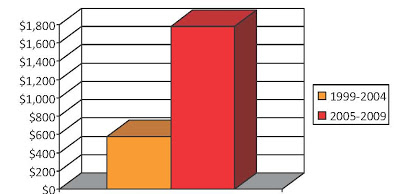
Further, these groups refuse to acknowledge the substantial, ongoing costs associated with coal plants. Since 1999, Wisconsin utilities have spent over $2 billion of customer money keeping old, inefficient coal plants running. For comparison purposes, this sum is nearly triple the utilities’ investment in windpower facilities during the same period. Customers have seen the real and substantial impact of these coal plant costs through rising electricity rates over the past several years. These costs are in addition to the more than $700 million (exclusive of transportation costs) we send out of state each year to pay for the coal to fuel these aging plants. Reliance on dirty, antiquated coal plants leaves Wisconsin in a vulnerable position, unable to predict or control energy costs.
Unlike coal, clean resources like biogas, wind and solar will produce energy throughout their productive lives without requiring costly pollution abatement measures. Going forward, the more renewable energy we add to Wisconsin’s energy resource mix, the less exposed we will be to these downstream liabilities. The avoidance of these regulatory risks is another compelling reason for passing the Clean Energy Jobs Act legislation in this session.
Coal Plant Retrofit Costs (1999-2009)
(in Millions of Dollars)
by jboullion | Apr 7, 2010 | Uncategorized
A commentary by Michael Vickerman, executive director of RENEW Wisconsin:
For Immediate Release
April 7, 2010
For More Information Contact
Michael Vickerman
608.255.4044
mvickerman@renewwisconsin.org
Costs of coal plants keep going up
In recent weeks, some groups have suggested that we maintain our current energy portfolio, continuing to rely heavily on coal-fired generation for a substantial amount of our electricity. These groups claim that gradually moving toward more reliance on local, in-state sources of energy will increase electricity costs. These claims have been thoroughly discredited by two economic studies concluding that electricity bills will decrease with the Clean Energy Jobs Act.
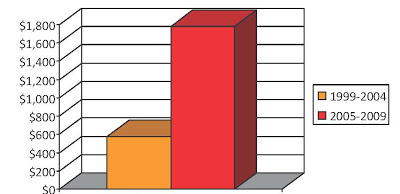
Further, these groups refuse to acknowledge the substantial, ongoing costs associated with coal plants. Since 1999, Wisconsin utilities have spent over $2 billion of customer money keeping old, inefficient coal plants running. For comparison purposes, this sum is nearly triple the utilities’ investment in windpower facilities during the same period. Customers have seen the real and substantial impact of these coal plant costs through rising electricity rates over the past several years. These costs are in addition to the more than $700 million (exclusive of transportation costs) we send out of state each year to pay for the coal to fuel these aging plants. Reliance on dirty, antiquated coal plants leaves Wisconsin in a vulnerable position, unable to predict or control energy costs.
Unlike coal, clean resources like biogas, wind and solar will produce energy throughout their productive lives without requiring costly pollution abatement measures. Going forward, the more renewable energy we add to Wisconsin’s energy resource mix, the less exposed we will be to these downstream liabilities. The avoidance of these regulatory risks is another compelling reason for passing the Clean Energy Jobs Act legislation in this session.
Coal Plant Retrofit Costs (1999-2009)
(in Millions of Dollars)
by jboullion | Apr 7, 2010 | Uncategorized
From an article by Steve Cahalan in the LaCrosse Tribune:
Want to take advantage of the state’s rebate program for energy-efficient appliances? Better buy no later than April 30, officials said.
About half of the money available in the State Energy Efficiency Appliance Rebate Program has been spent, officials said.
Focus on Energy officials also recommend appliance buyers have rebate applications postmarked by May 31 to better qualify.
The state rebate program started Jan. 1 with $5.4 million from the federal American Recovery and Reinvestment Act. It provides rebates for qualifying energy-efficient appliances, including $25 for a dishwasher, $50 for a freezer, $75 for a refrigerator, $100 for a clothes washer and up to $150 for a water heater.
Rebates are available as well for heating and cooling equipment, such as $200 for a furnace and $75 for a central air conditioner; and renewable energy rebates, such as $2,000 for a solar hot water system. Focus officials recommend consumers buy those items by May 15 and have their rebate application postmarked by June 15.
The date recommendations are based on current demand, but the rebate money could be exhausted sooner, said Bobbi Fey, Focus on Energy assistant director of residential programs.
“It’s really first-come, first-served,” Fey said.
by jboullion | Apr 7, 2010 | Uncategorized
For Immediate Release
April 7, 2010
For More Information Contact
Michael Vickerman
608.255.4044
mvickerman@renewwisconsin.org
Costs of coal plants keep going up
In recent weeks, some groups have suggested that we maintain our current energy portfolio, continuing to rely heavily on coal-fired generation for a substantial amount of our electricity. These groups claim that gradually moving toward more reliance on local, in-state sources of energy will increase electricity costs. These claims have been thoroughly discredited by two economic studies concluding that electricity bills will decrease with the Clean Energy Jobs Act.
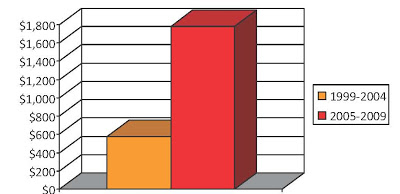
Further, these groups refuse to acknowledge the substantial, ongoing costs associated with coal plants. Since 1999, Wisconsin utilities have spent over $2 billion of customer money keeping old, inefficient coal plants running. For comparison purposes, this sum is nearly triple the utilities’ investment in windpower facilities during the same period. Customers have seen the real and substantial impact of these coal plant costs through rising electricity rates over the past several years. These costs are in addition to the more than $700 million (exclusive of transportation costs) we send out of state each year to pay for the coal to fuel these aging plants. Reliance on dirty, antiquated coal plants leaves Wisconsin in a vulnerable position, unable to predict or control energy costs.
Unlike coal, clean resources like biogas, wind and solar will produce energy throughout their productive lives without requiring costly pollution abatement measures. Going forward, the more renewable energy we add to Wisconsin’s energy resource mix, the less exposed we will be to these downstream liabilities. The avoidance of these regulatory risks is another compelling reason for passing the Clean Energy Jobs Act legislation in this session.
Coal Plant Retrofit Costs (1999-2009)
(in Millions of Dollars)
by jboullion | Apr 7, 2010 | Uncategorized
From an article by Jason Stein in the Milwaukee Journal Sentinel:
Madison – A sales tax of up to 0.5% could be levied in Milwaukee County to fund public transportation under a regional transit authority bill an Assembly committee endorsed Thursday.
By an 8-2 vote, the Assembly Transportation Committee supported the bill, which would allow creation of interim transit authorities in Milwaukee and other counties in southeastern Wisconsin that eventually could merge into the existing Southeastern Regional Transit Authority. But the measure still faces a steep climb to pass both chambers of the Legislature before lawmakers end their regular business on April 22.
Seven Democrats and one Republican on the committee approved a complex, 52-page amendment before recommending the bill. Assembly Speaker Mike Sheridan (D-Janesville) praised the bipartisan vote as a positive sign for the bill’s chances. The amended proposal would . . . allow local governments to create interim regional transit authorities in Milwaukee, Racine, Kenosha, Ozaukee, Walworth, Washington and Waukesha counties. Those authorities could raise money for their public bus systems, including the financially troubled Milwaukee County Transit System, through a sales tax or through membership fees charged to their local government members.