by jboullion | Jul 6, 2009 | Uncategorized
From an article by Tom Content in the Milwaukee Journal Sentinel:
State utility regulators are reviewing the extent of a steam-generator tube problem with the coal-fired power plant that opened last year near Wausau.
The power plant experienced unexpected shutdowns late last year and early this year, with more expected this year to address the problem, according to the state Public Service Commission.
Wisconsin Public Service Corp. opened the $773 million power plant, the first coal plant built in the state in a generation, in June 2008.
At issue is whether WPS is eligible to pass along the cost of power it had to purchase late last year when the coal plant wasn’t running.
Tim LeMonds, a spokesman for the Public Service Commission, said the steam generating tubes at the power plant have a tendency to clog, and the plant needs to take measures to keep the pipes clean to avoid future clogging.
Dennis Derricks, WPS director of electric regulatory policy, said the problem is a routine start-up issue that the company is addressing with the company that built the power plant, Babcock & Wilcox. According to Derricks, the power plant is still projected to operate 92% of the time, as the utility had projected when it proposed the plant.
The plant, one of two major coal plants built in the state, was recognized with industry awards including Plant of the Year by Power Magazine, an industry trade publication, and 2008 Best Coal-Fired Project by Power Engineering magazine.
Derricks said clogging isn’t the best way to describe the problem. The tubes have an exfoliation problem that is common across the industry and is expected to improve this year.
“The outages going forward are to manage the amount of material that flakes off,” he said. “The tubes are expected to season themselves and develop a coating over them” that helps address the problem, according to Derricks.
by jboullion | Jul 3, 2009 | Uncategorized
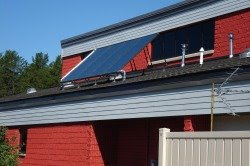
Like Stevens Point’s Fire Station No. 2 (above), all of Madison’s fire stations generate solar hot water, as described in “Solar hot water douses rising energy costs at Madison’s fire stations,” published by Focus on Energy:
. . .each of Madison’s 11 firehouses is equipped with a solar hot water system, serving anywhere from 45 percent to 60 percent of the buildings’ collective hot water loads and offsetting 205 tons of carbon dioxide (CO2) emissions each year.
by jboullion | Jul 3, 2009 | Uncategorized
From the City of Eau Claire’s Green Website:
How can I decrease my energy consumption?
1. Turn off lights. Did you know roughly 40% of our electricity use is from lighting our indoor spaces? By simply turning off lights when not present you can save serious greenbacks!
2. Use more daylight instead of artificial for indoor lighting. Research has shown daylight increases productivity and reduces absenteeism in the workplace. Natural light has a profound effect on the stimulation and regulation of the human body. For instance, the human eye turns daylight into electrical impulses, triggering the release of the chemical serotonin, which is essential for emotional well-being. Additionally, ultraviolet light from the sun creates Vitamin D through our skin producing calcium for healthier bones & teeth.
http://www.daylightsystems.com/daylightsystems/daylight/benefits.aspx
3. Unplug it! When not in use unplug chargers, non-essential power strips, etc. Turn off your computer and monitor before you go out. Decrease use of space heaters by having a sweater or cardigan handy when you get a little cold.
by jboullion | Jul 3, 2009 | Uncategorized
From a news release issued by Focus on Energy:
As temperatures creep higher, so do energy bills.
Fortunately, Focus on Energy, Wisconsin’s energy efficiency and renewable energy initiative, has a number of simple tips to get your home ready for summer — saving you energy and money. The following are Focus on Energy’s top five tips for keeping your cool this summer:
1. Install a Programmable Thermostat. These help save money and keep homes
comfortable by automatically adjusting temperature settings while the homeowner is asleep or away. A tip for getting savings is to set it five degrees higher in the summer when the house is unoccupied for eight hours or more. Homeowners can save about $100 a year by properly setting their programmable thermostats and maintaining those settings.
2. Replace an Outdated Cooling System. When replacing an air conditioner it’s important to look for the ENERGY STAR®, as these units can use up to 14 percent less energy than standard models. Also, consider a timer for window units. Set the timer for a half hour before you return home so it’s not running when no one is there.
3. Install a Ceiling Fan. Used in combination with your air conditioner, ceiling fans allow you to raise your thermostat setting by as much as four degrees without reducing your comfort. However, be sure to turn the fan off when you’re not in the room to save energy — ceiling fans cool people, not rooms.
4. Replace standard bulbs with CFLs. Turning off lights when you are not using them helps to keep a room cool, but another tip is to replace standard light bulbs with ENERGY STAR qualified bulbs — they produce about 75 percent less heat, which helps cut energy costs associated with home cooling. Additionally, replacing your five most used light bulbs with ENERGY STAR qualified bulbs can save at least $35 a year.
5. Install Window Treatments. Shut out the hot summer sun by closing windows and pulling shades or curtains on south- and west-facing windows. This helps to reduce the amount of solar heat coming through the windows.
by jboullion | Jul 3, 2009 | Uncategorized
From an editorial in the Milwaukee Journal Sentinel:
Wisconsin needs more wind-powered energy, and it should do what it can to encourage the growth of wind power. That should include the adoption of uniform statewide siting rules for large wind farms, as proposed in legislation sponsored by state Sen. Jeff Plale (D-South Milwaukee).
But municipalities such as Menomonee Falls are smart to move forward with their own rules governing the erection of a wind turbine in someone’s back yard to reduce energy costs. Local officials need to address the regulatory issue to give guidance to residents as interest in wind power grows.
In a Monday article, Journal Sentinel reporter Lisa Sink noted that Menomonee Falls village employees began researching the question after a local resident expressed interest in installing a small wind turbine in his yard. Staff could offer little guidance because the village does not have specific regulations on wind turbines.
Nor is Menomonee Falls alone. Staff found no ordinances in the Milwaukee area but reviewed about 10 from other parts of the state, mainly where major commercial wind farms have been built or are planned for construction.
Kelly Lang, marketing manager for Focus on Energy’s renewable energy program, told Sink that interest in smaller systems is growing. The program has assisted more than 50 small wind turbine installations across the state, with more than 15 to be added by the end of the year and others planned for 2010, she said. About 10 have been installed in southeastern Wisconsin, including two in Mequon.
So communities need to start thinking about what they want.
by jboullion | Jul 2, 2009 | Uncategorized
From Focus on Energy:
Whether you are a resident of an apartment or condominium, own apartment buildings, or are a condo owners’ association, Focus on Energy has energy saving programs for you. Choose the program that is best for you.
Programs for Apartment and Condo Residents
The Apartment & Condo Efficiency Services Program provides energy efficiency information for residents of apartments or condos. Whether you are looking for tips to keep your apartment comfortable and keep your energy bills low or need help finding ENERGY STAR® qualified products, we can help.
Programs for Apartment Owners
Focus on Energy’s Apartment & Condo Efficiency Services Program specializes in energy efficiency for new and existing multi-unit residential properties. Owners, developers and residents turn to us for the information, technical expertise and financial incentives to help them make their properties more energy efficient.