by jboullion | Jul 1, 2008 | Uncategorized
From an article in The Business Journal:
Ball Corp. said Monday it intends to reduce its greenhouse gas emissions by 16 percent in the next four years.
The Broomfield, Colo.-based manufacturer of beverage cans and bottles (NYSE: BLL) said the goal for cutting emissions is based on a 2002 baseline and will occur through improved energy efficiencies. The firm operates metal beverage and metal food packaging plants in Milwaukee.
Ball disclosed the goal for 2012 in a report titled “Toward a Sustainable Future,” which identifies areas where the company is trying to reduce its environmental impact.
Ball said its primary focus is to make lightweight, recyclable packaging when feasible. Using lighter cans means less material is needed, fewer greenhouse gases are produced and less energy is needed for shipping.
Ball said the weight of its products has been reduced substantially through the years. Aluminum cans are 40 percent lighter than they were in 1969, and the steel cans are 50 percent lighter than in 1970.
By turning more to recycled materials, Ball said it can cut 95 percent of the energy used to make aluminum cans from virgin material and 74 percent of the energy required to make steel cans.
The company also is working with the metal industry to determine the carbon footprint of its metal cans. . . .
The company’s Ball Metal Beverage Container has a contract with Miller Brewing Co. to serve as the sole supplier of cans for the Milwaukee brewer through 2015.
by jboullion | Jun 30, 2008 | Uncategorized
From a column in The Daily Reporter by Jennifer L. Guslick, marketing coordinator for Hunzinger Construction, Brookfield:
Four years ago the supplies and processes I used to do my job as a marketing professional were based on attributes like color, texture, cost, benefits, functionality, quality and necessity. Then my employer, Hunzinger Construction, shifted toward sustainability.
I began looking for ways to perform my job that would create the least environmental impact — from the supplies and tools I choose to the processes I use to perform my job.
One of the first things I looked at was paper. We switched to post-consumer-content recycled paper produced by wind mills and began utilizing Forest Stewardship Certified paper.
We also looked to The Marek Group for much of our printing needs. The Marek Group uses soy-based inks and is an FSC-certified printer.
“We went through the FSC certification process so we would be able to provide our clients with an environmentally sound option for their printed material,” said Marek Vice President Ben Rocco. “We feel it is all of our responsibility to do our part to manage our natural resources.”
by jboullion | Jun 27, 2008 | Uncategorized
Articles in the Renewable Renewable Quarterly, Spring 2008:
+ RENEW Battles Local Opposition to Wind
+ Starting a Renewable Energy Business
+ Renewable Profiles: Wes Slaymaker
+ Solar Hot Water from the Garden
+ Reviving a Classic Wind Machine
+ Calendar
Click here
by jboullion | Jun 27, 2008 | Uncategorized
From a media release issued by Fields Neighborhood:
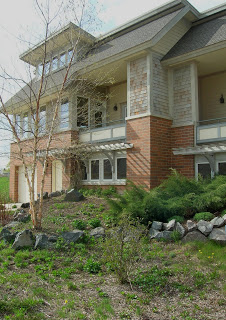
Interested in finding out what it would be like to life the green life you have imagined? Come experience living green at Fields Neighborhood’s Live a Green Life Day on Saturday, July 19, 11:00 a.m. -3:00 p.m.
All are welcome to tour Fields Neighborhood’s award-winning green built housing and other innovative environmental solutions while talking with the visionary founder and architects.
Come dwell in possibility as you walk the miles of nature preserve trails, enjoy the open expanse of land on a hayride or tour the farm at neighboring Michael Fields Agricultural Institute, where you can pick your own flowers or produce. Discover straw bale building as demonstrated by renowned straw bale expert Michael Morgan and learn about biodynamic gardening with veteran garden expert Janet Gamble.
Come to relax. Come to breathe. Located at the corner of South and West Streets, this vibrant farming community in East Troy, Wisconsin, is nestled in the rolling hills of Southeast Wisconsin 30 minutes from Milwaukee and 90 minutes from Chicago.
“When we saw the destructive nature of most suburban sprawl, we wanted to introduce people to a type of community and way of living that was in tune with nature. This community serves as a model and educational reference on sustainability with award-winning green built cluster housing, community gardens, natural tranquility and open spaces in permanent land trusts,” said Fields Neighborhood visionary Christopher Mann.
by jboullion | Jun 25, 2008 | Uncategorized
From an Associated Press story on Channel 7 WSAW:
MILWAUKEE (AP) — Amtrak says its passenger train service between Milwaukee and Chicago continues to set ridership records.
It says more than 64,000 passengers used the trains in May, another all-time monthly record.
For the first five months of the year, the seven daily Hiawatha Service round trips carried more than 281,000 passengers. Amtrak says that’s a 24 percent increase over last year.
by jboullion | Jun 24, 2008 | Uncategorized
A summary from Grist:
Home Depot announced Tuesday that it will collect compact fluorescent light bulbs and send them off to be recycled. The home-improvement behemoth hopes the new program will keep the bulbs, which contain a small amount of mercury, out of household trash and recycling bins. IKEA also collects CFLs for recycling but doesn’t have the market saturation of Home Depot; more than three-quarters of U.S. households are estimated to be within 10 miles of a Home Depot store. The company’s 1,973 U.S. stores will also switch to CFLs in light-fixture showrooms by the fall, a move expected to save it $16 million annually in energy costs.

.JPG)