RENEW Wisconsin Summit Panel: A Timely Conversation on Siting

RENEW Wisconsin Summit Panel: A Timely Conversation on Siting

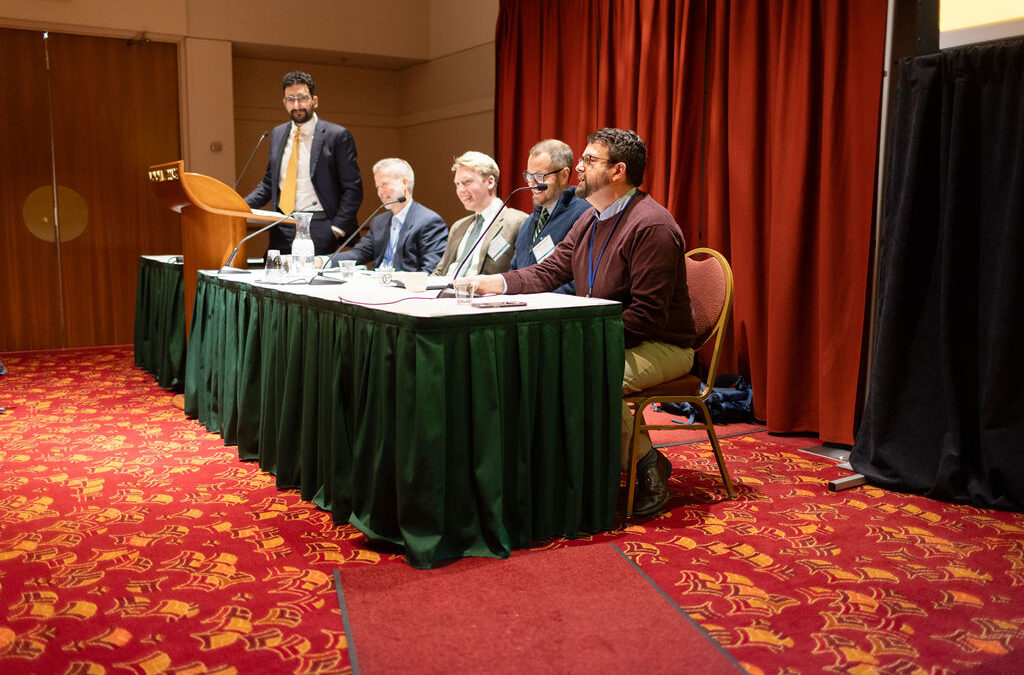
Communities across Wisconsin continue to grapple with how renewable energy projects get sited and permitted. At our 2026 RENEW Wisconsin Summit RENEW Wisconsin hosted a panel that brought together expert voices on state and local siting and permitting authority. The conversation is worth a revisit, as the industry continues to navigate this important topic.

Eric Callisto, a former Chair of the Public Service Commission of Wisconsin (PSC) and private-sector renewable energy attorney, made a clear case for why state-level oversight of large projects matters: projects that serve the regional grid are matters of statewide concern, and an independent expert agency is better positioned to evaluate energy projects than individual town boards. He was candid that without that independent oversight, the “NIMBY element” would prevent many worthy projects from being built.

Orrie Walsvik, an associate attorney at Michael Best, walked through what he called the “inverted pyramid” of clean energy regulation, from baseline zoning to the case-by-case requirements of § 66.0401 to the PSC’s comprehensive authority over 100+ Megawatt projects. His core point: local governments have been delegated administrative authority to help Wisconsin implement its renewable energy policy, not the legislative authority to decide whether that policy is welcome in their jurisdiction.

Isaac Uitenbroek, a zoning administrator with direct experience drafting and implementing solar regulations, provided an honest window into what local government staff navigate: constituent pressure, tight timelines, and the balancing act of building ordinances that meet legal requirements while giving elected officials a process they can use to address community concerns. He advised developers and applicants to communicate early, communicate often, and leave no information vacuum. His perspective reflected real experience with what happens when communities feel blindsided.

David Jakubiak, Senior Vice President of Aileron and expert on renewable energy communications, reinforced that community engagement is not a compliance checkbox but a prerequisite for project success. He pushed back on drone footage, cookie-cutter community meetings, and out-of-state project representatives and witnesses. David made the practical case for finding local champions and showing people what renewable energy actually looks like from the road, not from the sky.

The common thread of the panel discussion and audience question was a recognition that Wisconsin is navigating a genuine policy contest, one requiring developers, lawyers, and local governments to work together to find a workable path that recognizes community concerns and appreciates the local benefits of renewable energy development.
RENEW Wisconsin’s 2026 Clean Energy Honor Roll

RENEW Wisconsin’s 2026 Clean Energy Honor Roll

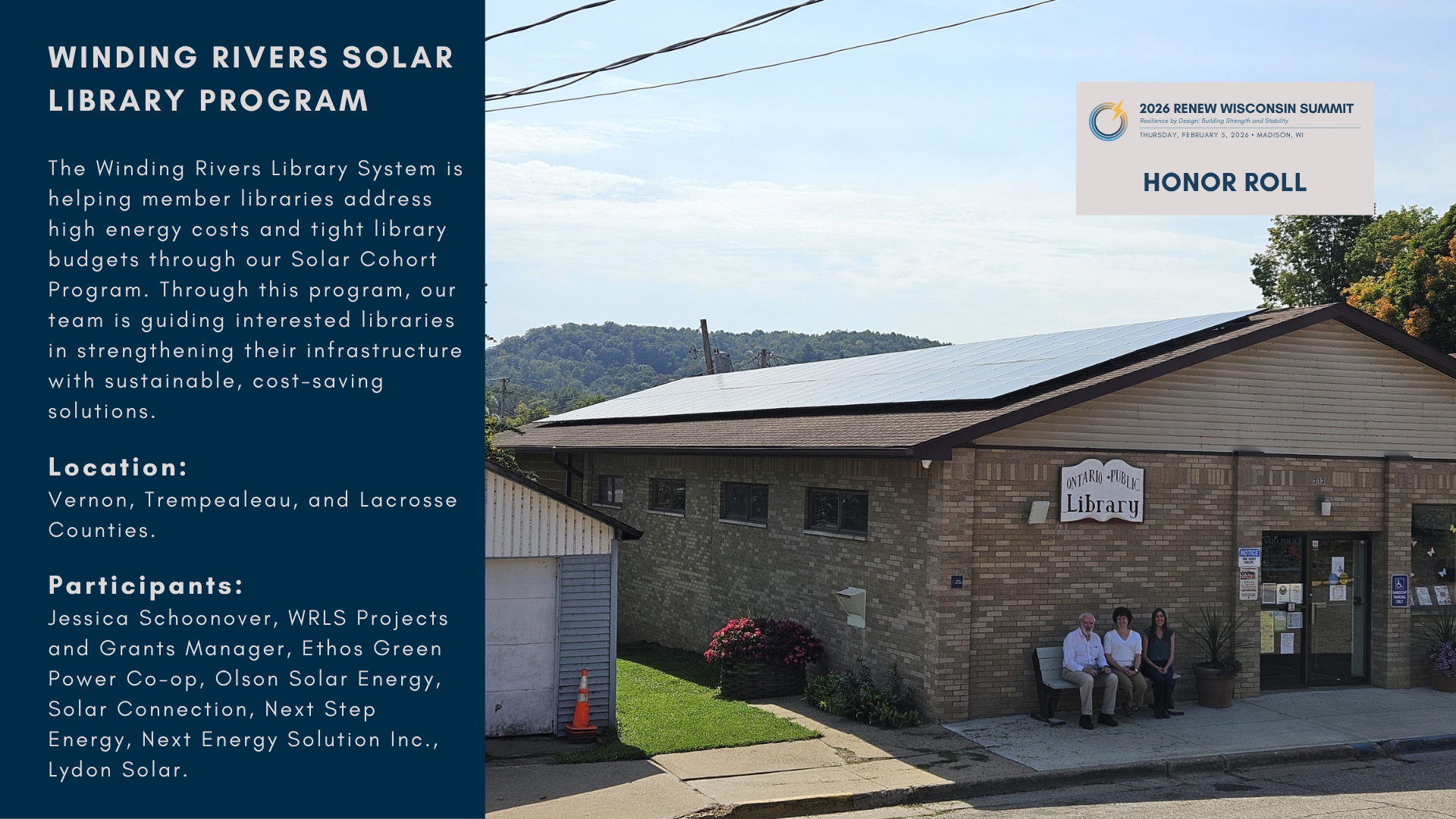
RENEW Wisconsin selected 5 projects for this year’s Honor Roll. These projects and the organizations involved in them demonstrate leadership, ambition, and climate awareness in their design and use of clean energy.

Winding Rivers Solar Library Program

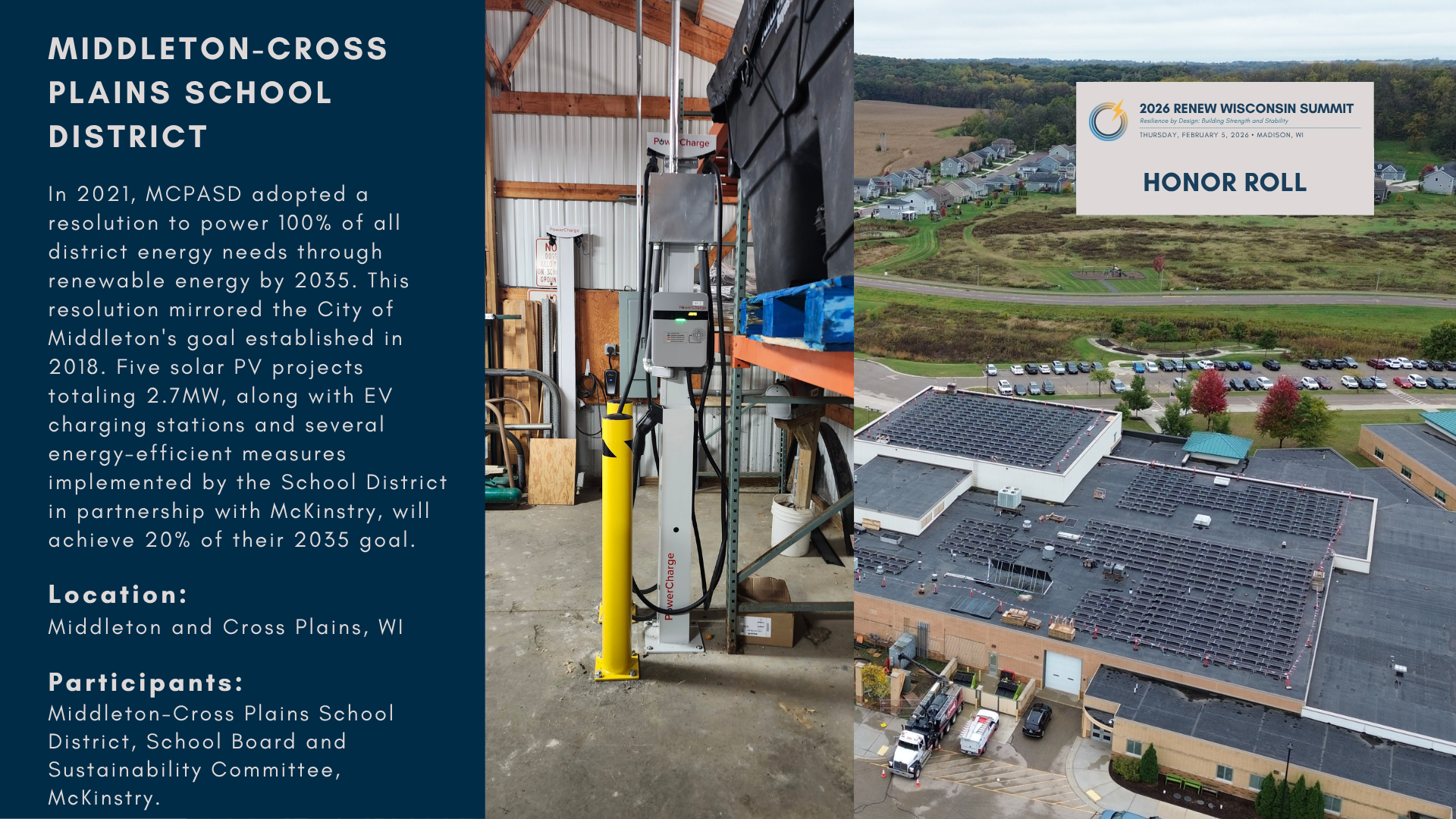
Middleton-Cross Plains School District

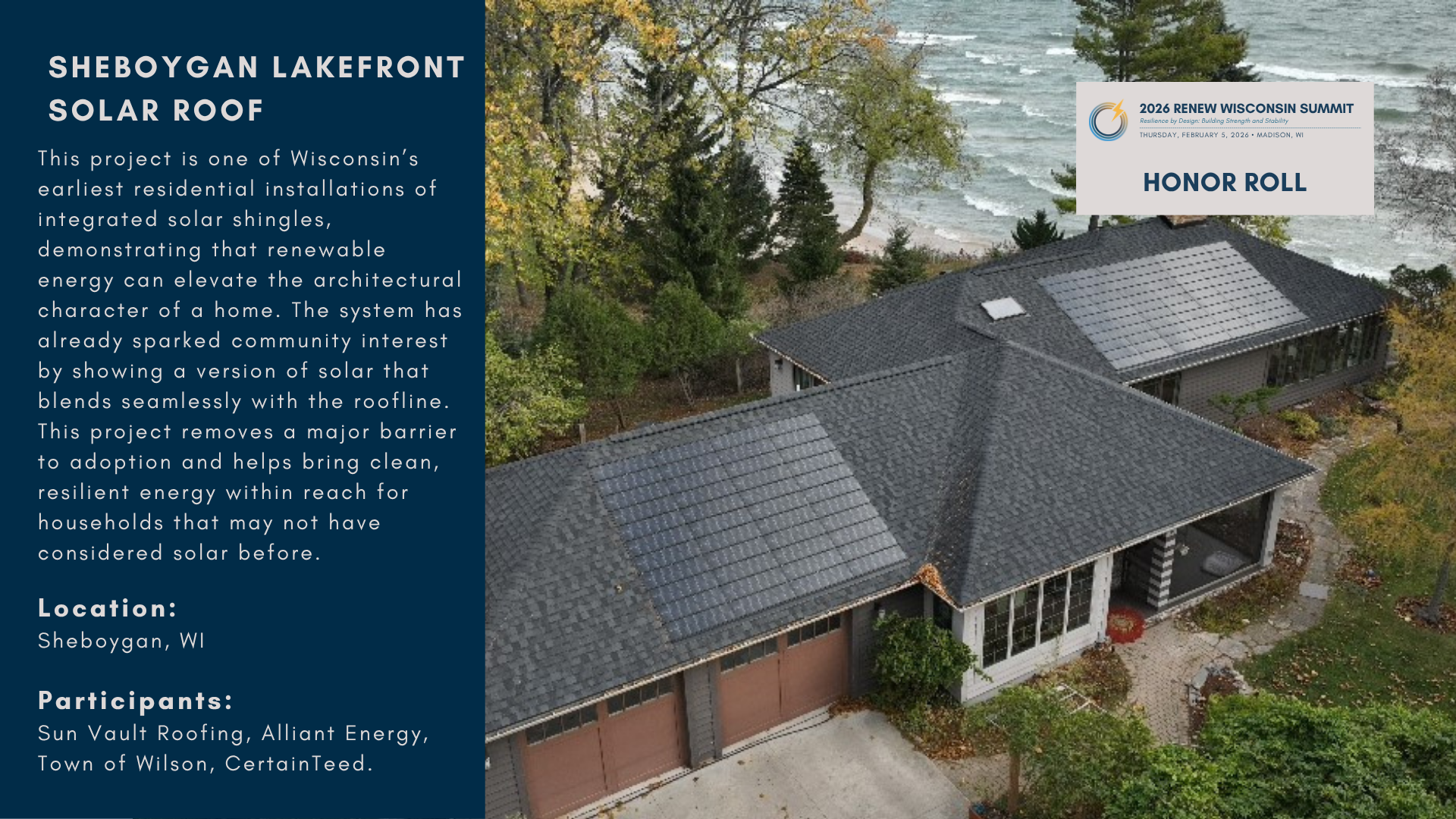
Sheboygan Lakefront Solar Roof

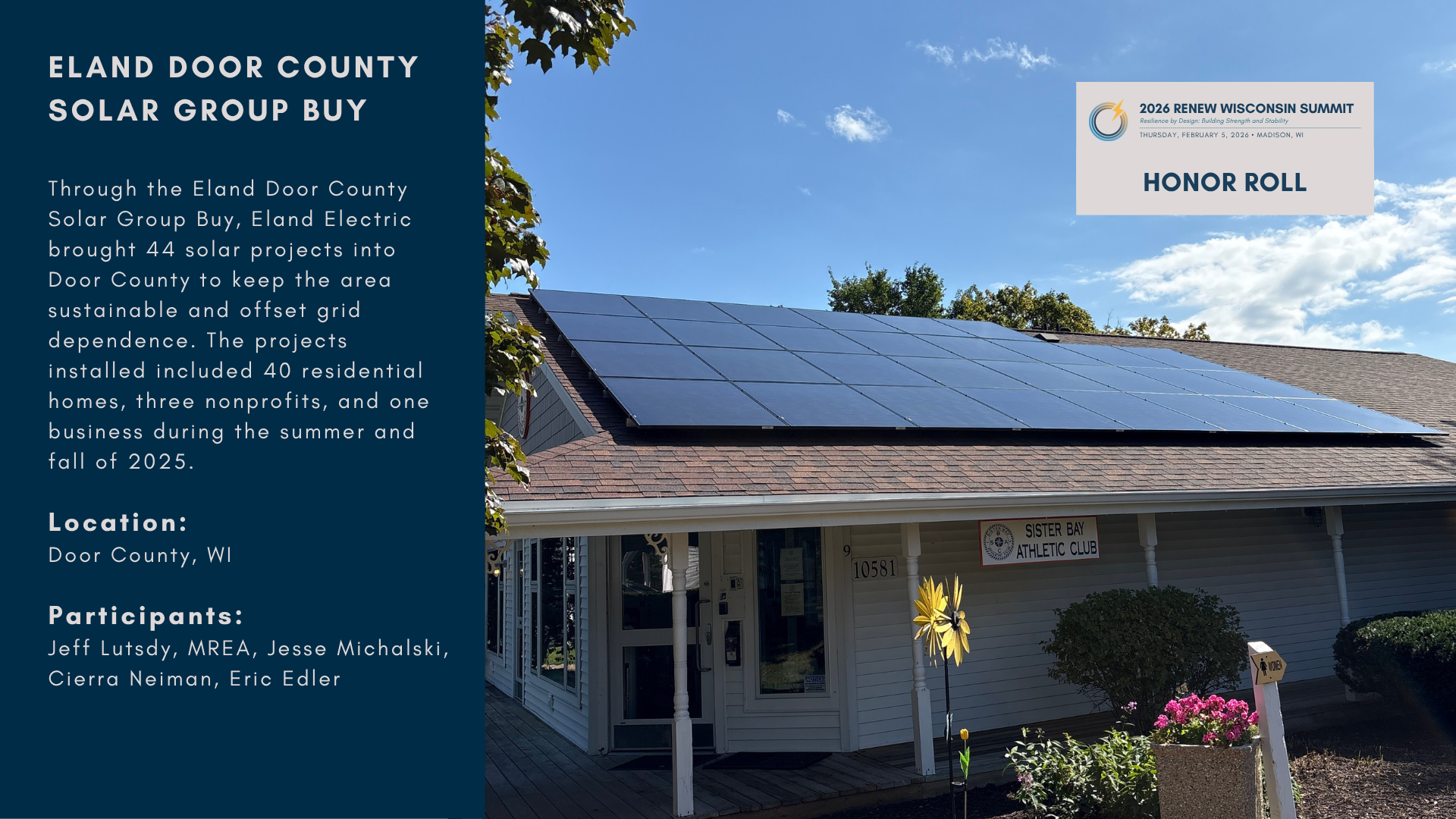
Eland Door County Solar Group Buy

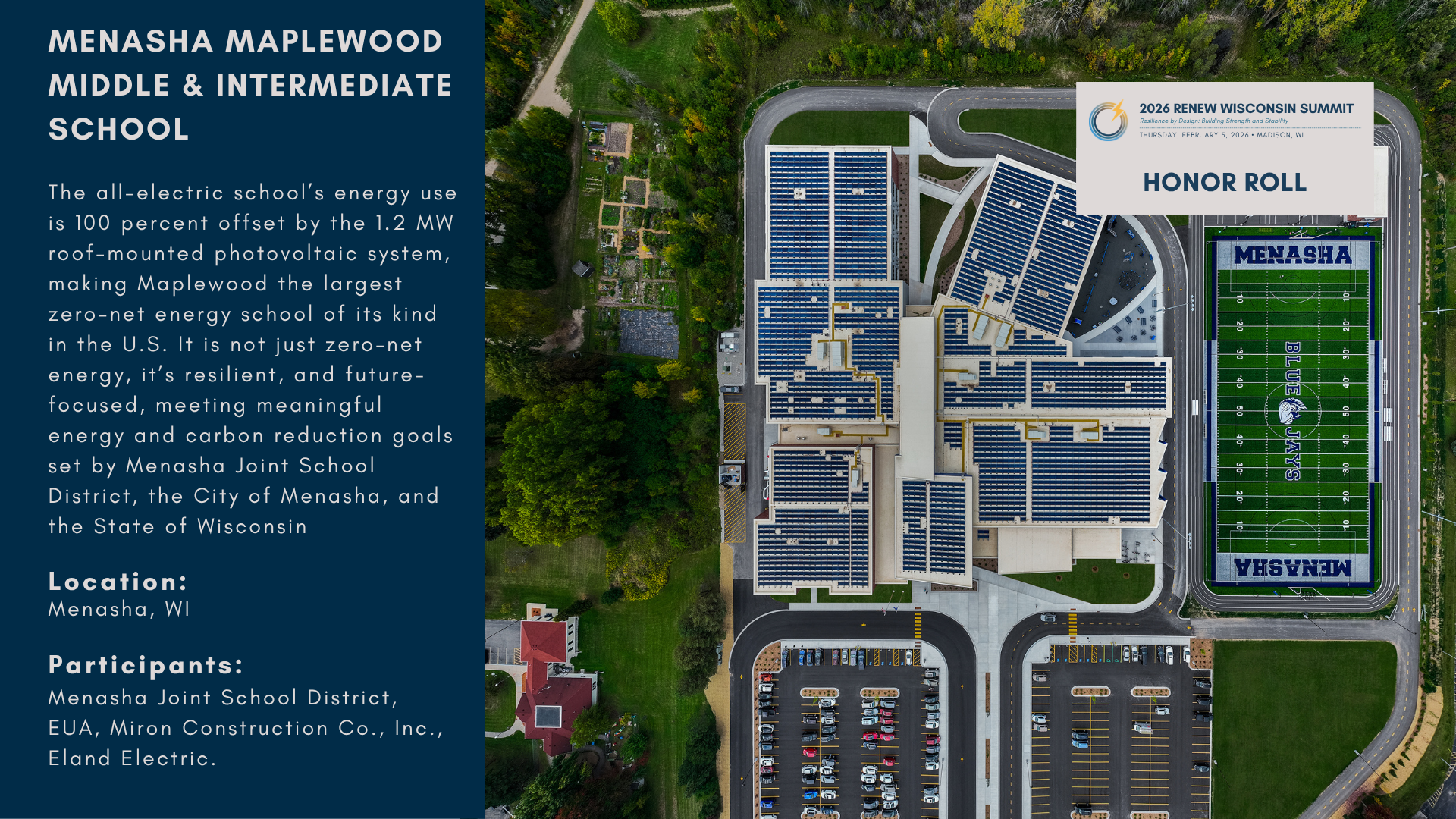
Menasha Maplewood Middle & Intermediate School

Action Alert: Submit Comments in Support of Dawn Break Solar

Action Alert: Submit Comments in Support of Dawn Break Solar

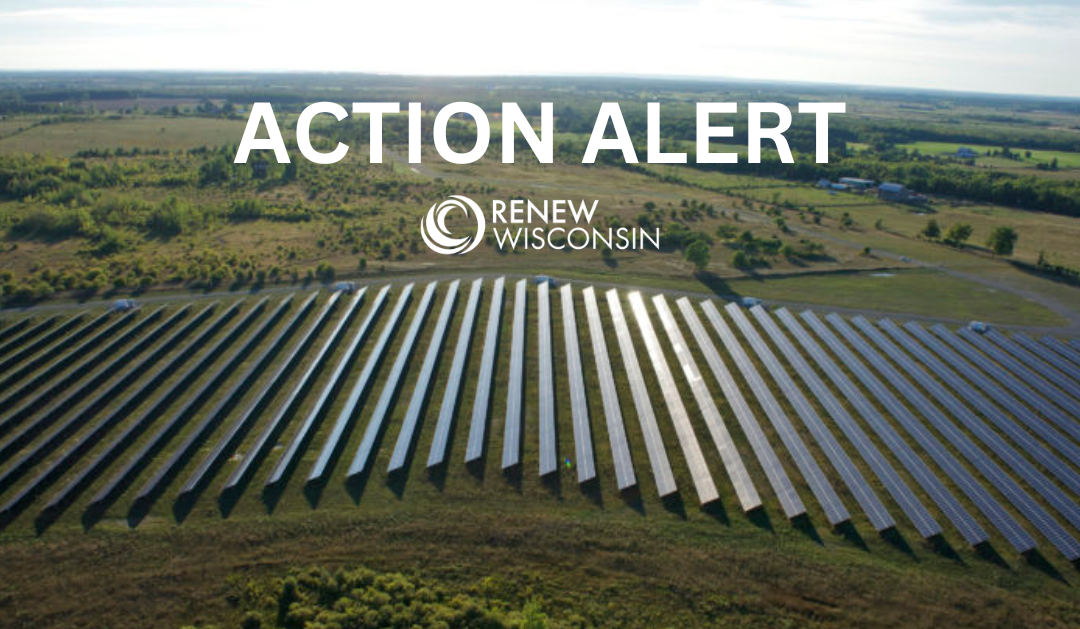
Public comments are open now through June 11 for Dawn Break Solar, a 180 Megawatt (MW) solar project paired with a 180 MW battery energy storage system. If approved, the solar project will be located in Waushara County and is planned for completion in 2029. Projects like this have a wide range of local and statewide benefits. Show your support for this project and tell the Public Service Commission of Wisconsin (PSC) why you support the approval of a vital solar project in Wisconsin!

You can use some of the listed benefits below to help you craft your message.

Dawn Break Solar isn’t just about the clean energy it will produce. The 180 MW facility in Waushara County has many benefits:

Economic Growth: Dawn Break Solar is expected to create construction jobs, as well as several long-term local jobs for operations and maintenance. Landowners will also benefit from consistent lease payments during the 35-year lifespan of the project.

Community Benefits: Once in service, Dawn Break Solar will contribute more than $31.5 million in utility-aid payments. Local governments will receive $900,000 annually, with $510,000 for Waushara County and $390,000 for the Towns of Oasis, Plainfield, Deerfield, and Hancock.

Emissions Reductions: Dawn Break Solar will reduce emissions from energy production by about 600 million pounds of CO2 in the first year of operations. In terms of greenhouse gas emissions, this is the equivalent of taking more than 59,100 vehicles off the road for a full year. Additionally, non-GHG emissions reductions will result in health, economic, and environmental benefits. Wisconsin can expect more than $1.3 million in economic benefits associated with public health improvements in Dawn Break Solar’s first year of operations alone.

Submit your comments today and tell the PSC you support the approval of Dawn Break Solar. Feel free to use some of the bullet points above to craft your own unique message.

Celebrating the Power of the Sun

Celebrating the Power of the Sun

All the Good We’re Doing, Together

In the nonprofit world, we spend a lot of our time planning how we will continue to fund our mission—similar to how many people spend much of their time planning how they will make ends meet.

In some cases, for those who can’t make ends meet on their own, there are nonprofits to help. They feed, house, educate, and even protect us. Through RENEW’s Solar for Good program, we have the unique opportunity to help other nonprofits, as well as schools and houses of worship.

The formula is fairly simple—we make it easier for these organizations to access solar power, reducing their energy bills and, in turn, their operating budgets. The hope is that this help allows each and every one of them to spend more of their money and time where it matters: their mission.

Ultimately, every panel that goes up on a food pantry or affordable housing development means one more person who gets to reap the benefits of renewable energy.

Hunger Task Force

In 2025, Hunger Task Force completed a 465-panel array on their new headquarters in Milwaukee. Solar for Good helped the project come to fruition with a $48,237 grant, which covered about 13% of the project cost. Thanks to a wide mix of grants, donations, and government funding, Hunger Task Force covered most of the costs of this project.

Based on projected energy savings of $29,160 per year, Hunger Task Force will pay back its out-of-pocket expenses through avoided energy costs. Each year after that, another nearly $30,000 can go toward providing healthy food to those in need in and around Milwaukee. For every dollar spent on this project, Hunger Task Force will see $1.79 come back to it over the expected life of a typical solar array.

The dollars and cents are a huge motivating factor, but for a nonprofit focused on healthy meals and stewardship, we see additional benefits that are well aligned with the core mission of Hunger Task Force. By reducing emissions, this array helps lower air pollution and mitigate the effects of climate change, both of which lead to better health outcomes for our communities.

Learn more about Hunger Task Force’s Mission to end hunger in Milwaukee and Wisconsin.

West Central Wisconsin Community Action Agency

In 2023, the West Central Wisconsin Community Action Agency (West CAP) completed a 29-kilowatt solar array at one of their low-income housing projects to reduce energy bills for families. Solar for Good provided 27 panels through our grant program, about a third of the panels needed for the array. At the time of its completion, it was projected that the array would fully meet the energy needs of the families who would live in the low-income housing project.

Since 1965, West Cap has worked to promote the self-sufficiency of low-income families in the rural communities of west central Wisconsin. Solar panel technology has become a relatively new tool in efforts like this, as it can be used to completely or nearly eliminate energy bills for families that need a hand making life more affordable.

As Peter H. Kilde, former West CAP Executive Director, put it, “Through our poverty-fighting programs, we want to help prepare families for a world less dependent on fossil-fueled energy. This funding will not only allow us to reduce carbon emissions and help our planet, but it will also ease the energy burden for low-income families so they can afford their housing for the long term.”

Learn more about West CAP’s mission to take action against poverty.

Sauk Prairie School District

In 2025, the Sauk Prairie School District completed its second of two solar arrays for a total of 350-kilowatts of power. Their goal was to reduce their energy costs and, therefore, their overall operating budget. The savings will be placed in a fund to replace the roofs of each building across the district, as well as the solar panels. Solar for Schools, now part of Solar for Good, donated 179 panels, just over 20% of the total project.

It’s expected that the array at the elementary school will produce half of the building’s energy needs. As of July 2025, the smaller installation at the high school had already saved the district $15,000 in energy bills, just 10 months into operation.

The project serves as an educational tool for students and the community, with real-time data on energy generation and savings available online.

Learn more about the Sauk Prairie School District’s arrays.

Looking Ahead

As we see electricity bills rise and fossil fuel resources impacted by global conflict, the power of a solar array is becoming greater each day. And though this work has already touched so many, there are even more organizations out there that have yet to realize the benefits of this energy source.

To keep this work moving forward, we need people like you to support this effort. Together, we can help the nonprofits and schools of Wisconsin manage their energy bills so that they can focus their resources and time on what matters most: helping our communities.