by jboullion | Oct 15, 2008 | Uncategorized
From a story by Kelly Schlicht on WEAU News:
There’s a lot of buzz about converting old light fixtures and other appliances to new, energy efficient ones, and if the City Council approves a measure at Tuesday’s meeting [Sept. 23], the city of Eau Claire could be joining that trend.
18 different stoplights around the city have yet to be changed over to more efficient LED light bulbs, which will save the city money and help save the environment.
But changing a light bulb is just the beginning of the proposed upgrades.
Change is also in the air for this old ventilation system at the Eau Claire city garage, as the city looks to replace it with a new, more efficient model.
“We can run the system intermittently, instead of consistently, which reduces our energy costs, says Eau Claire Public Works Director Brian Amundson.
by jboullion | Oct 15, 2008 | Uncategorized
From a media release issued by Better Environmental Solutions:
Platteville–Southwest Badger Resource Conservation and Development (RC&D) Council, Inc, the Driftless Area Initiative (DAI) and Alliant Energy highlighted six prairie restorations where farmers are planting switchgrass and prairie plants to determine the best management practices to maximize switchgrass yields in Southwest Wisconsin. The biomass field day toured two test plots planted this spring on the Jim and Terry Schaefer farm and the Dan Schaefer farm.
“Planting switchgrass is a great crop for our highly erodible fields,” said Jim Schaefer. “We are looking to develop ways to grow and create more markets for grass and other biomass crops for energy and fuels.”
Grant County has more than 300,000 acres of highly erodible land, but only 33,000 acre are enrolled in the Conservation Reserve Program (CRP) to protect it. These test plots allow farmers and researchers to try various strategies to restore native prairie and switchgrass.
“With all the interest in switchgrass and biomass, we wanted to start some test plots to see what we could do to provide fuel for proposed projects in the area,” said Steve Bertjens, coordinator with Southwest Badger RC&D.
“Grant County and southwest Wisconsin are the buckle of the biomass belt and have the best biomass reserves in the state with more than 6.8 tons of potential fuel nearby,” said Brett Hulsey, president of Better Environmental Solutions, an environment and energy consulting firm.
“Restoring switchgrass and native prairie is one of the most effective ways to reduce global warming, provide homes for birds and wildlife, reduce flooding, and clean up our streams.”
by jboullion | Oct 15, 2008 | Uncategorized
From a media release posted on marketwatch.com:
TORONTO, Oct 15, 2008 /PRNewswire via COMTEX/ — Mondial Energy Inc. of Toronto, Canada and Hot Water Products of Milwaukee, Wisconsin are pleased to announce that their partnership was selected as one of two renewable energy providers for solar thermal energy services to State of Wisconsin facilities. The state facilities which could potentially purchase solar thermal services from this contract include the 26 campuses of the University of Wisconsin, Department of Correctional institutions, and other State owned buildings.
by jboullion | Oct 14, 2008 | Uncategorized
A letter by Kristin Charipar to the editor of the Milwaukee Journal Sentinel:
The Oct. 5 article “Strict mercury rules likely to take effect” did not mention a key element: According to the Energy Information Administration, two-thirds of Wisconsin’s electricity comes from coal-fired generation. If Wisconsin used more sustainable and less polluting forms for electricity, this mercury rule would not be so controversial.
Wisconsin needs to move toward sustainable energy policies. I fully support the proposed mercury rule because it will give electric companies an additional incentive to stop proposing coal power plants (which not only release mercury but also lots of greenhouse gas emissions) and invest in renewable energy instead. This is rule is taking a step in the right direction by focusing on humanity (our environment and health) rather than a monthly bill.
I applaud the Department of Natural Resources for its work on the mercury rule and hope the government will continue to move toward policies that will make Wisconsin a clean and green place to live.
by jboullion | Oct 13, 2008 | Uncategorized
From an article on Living Lake Country:
The Wisconsin Department of Administration’s (DOA) Division of Energy Services and the Public Service Commission of Wisconsin (PSC) urge energy customers to contact their local utility if their heat is currently disconnected. The agencies also encourage residents to take advantage of energy-efficiency programs and the state’s low-income bill payment assistance programs to reduce the burden of their utility bills this winter.
Wisconsin law states that consumers cannot be disconnected during the heating moratorium period from Nov. 1 through April 15, if they are connected at the start of the moratorium. Customers who are currently disconnected must make arrangements with their local utility to pay outstanding bills to have their service restored. If a consumer has not made arrangements to pay an outstanding bill, the utility is not required to reconnect the service until payment arrangements have been made.
Payment agreements
Consumers who need to set up a payment agreement should call We Energies at (800) 842-4565. If customers cannot reach an agreement with their utility, they may contact the PSC at (608) 266-2001 or (800) 225-7729.
Energy assistance
There is financial assistance available for eligible households who cannot pay their gas or electric bills this winter. The Wisconsin Home Energy Assistance Program (WHEAP) administers low-income and energy assistance programs for the state. WHEAP is part of the state’s comprehensive Home Energy Plus program which also provides assistance with emergency energy needs, emergency furnace repairs, and weatherization and conservation services.
Eligibility is based on income and family size. For example, a family of four which earns $7,743.75 or less in the three months prior to applying for assistance is potentially eligible. For a two-person family the earnings must be $5,133.75 or less. Benefits are based on income levels and energy bills. Consumers do not have to be behind in their energy bill payments to qualify.
For information about WHEAP, including contact information for local energy assistance offices, call 1(866) 432-8947) or visit www.homeenergyplus.wi.gov.
by jboullion | Oct 13, 2008 | Uncategorized
From an article on Living Lake Country:
The Wisconsin Department of Administration’s (DOA) Division of Energy Services and the Public Service Commission of Wisconsin (PSC) urge energy customers to contact their local utility if their heat is currently disconnected. The agencies also encourage residents to take advantage of energy-efficiency programs and the state’s low-income bill payment assistance programs to reduce the burden of their utility bills this winter.
Wisconsin law states that consumers cannot be disconnected during the heating moratorium period from Nov. 1 through April 15, if they are connected at the start of the moratorium. Customers who are currently disconnected must make arrangements with their local utility to pay outstanding bills to have their service restored. If a consumer has not made arrangements to pay an outstanding bill, the utility is not required to reconnect the service until payment arrangements have been made.
Payment agreements
Consumers who need to set up a payment agreement should call We Energies at (800) 842-4565. If customers cannot reach an agreement with their utility, they may contact the PSC at (608) 266-2001 or (800) 225-7729.
Energy assistance
There is financial assistance available for eligible households who cannot pay their gas or electric bills this winter. The Wisconsin Home Energy Assistance Program (WHEAP) administers low-income and energy assistance programs for the state. WHEAP is part of the state’s comprehensive Home Energy Plus program which also provides assistance with emergency energy needs, emergency furnace repairs, and weatherization and conservation services.
Eligibility is based on income and family size. For example, a family of four which earns $7,743.75 or less in the three months prior to applying for assistance is potentially eligible. For a two-person family the earnings must be $5,133.75 or less. Benefits are based on income levels and energy bills. Consumers do not have to be behind in their energy bill payments to qualify.
For information about WHEAP, including contact information for local energy assistance offices, call 1(866) 432-8947) or visit www.homeenergyplus.wi.gov.
by jboullion | Oct 13, 2008 | Uncategorized
From an article on Living Lake Country:
The Wisconsin Department of Administration’s (DOA) Division of Energy Services and the Public Service Commission of Wisconsin (PSC) urge energy customers to contact their local utility if their heat is currently disconnected. The agencies also encourage residents to take advantage of energy-efficiency programs and the state’s low-income bill payment assistance programs to reduce the burden of their utility bills this winter.
Wisconsin law states that consumers cannot be disconnected during the heating moratorium period from Nov. 1 through April 15, if they are connected at the start of the moratorium. Customers who are currently disconnected must make arrangements with their local utility to pay outstanding bills to have their service restored. If a consumer has not made arrangements to pay an outstanding bill, the utility is not required to reconnect the service until payment arrangements have been made.
Payment agreements
Consumers who need to set up a payment agreement should call We Energies at (800) 842-4565. If customers cannot reach an agreement with their utility, they may contact the PSC at (608) 266-2001 or (800) 225-7729.
Energy assistance
There is financial assistance available for eligible households who cannot pay their gas or electric bills this winter. The Wisconsin Home Energy Assistance Program (WHEAP) administers low-income and energy assistance programs for the state. WHEAP is part of the state’s comprehensive Home Energy Plus program which also provides assistance with emergency energy needs, emergency furnace repairs, and weatherization and conservation services.
Eligibility is based on income and family size. For example, a family of four which earns $7,743.75 or less in the three months prior to applying for assistance is potentially eligible. For a two-person family the earnings must be $5,133.75 or less. Benefits are based on income levels and energy bills. Consumers do not have to be behind in their energy bill payments to qualify.
For information about WHEAP, including contact information for local energy assistance offices, call 1(866) 432-8947) or visit www.homeenergyplus.wi.gov.
by jboullion | Oct 13, 2008 | Uncategorized
2008
11.13.08 Public Service Commission takes a stand against coal, Isthmus (Madison, WI)
by jboullion | Oct 10, 2008 | Uncategorized
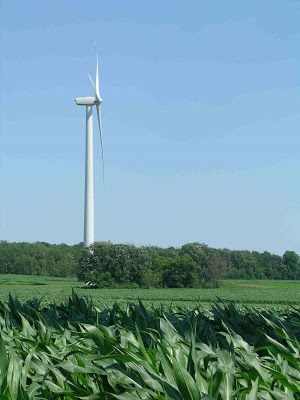
Invenergy, the wind project developer, invites the public to attend the Forward Energy Center Open House.
When: October 22, 2008
Open House: 1-6 PM
Tours start on the half hour from 1:00 to 5:30 PM
Brownsville Community Club
871 Main St., Brownsville (on Hwy 49)
Come learn more about the Forward Energy Center and how wind power benefits Wisconsin.
Forward began operations in February 2008, becoming one of the first large-scale wind energy projects in Wisconsin. Forward is owned and operated by Chicago-based Invenergy, which is implementing one of the largest programs of wind development in the United States, Canada and Europe, and is committed to building strong relationships with landowners, communities and utility customers.
Please wear appropriate shoes for walking on uneven surfaces. Reservations are not required.
For more information, contact Susan Dennison at sdennnison@invenergyllc.com
by jboullion | Oct 10, 2008 | Uncategorized
From a media release posted on BusinessNorth.com:
Duluth, Minn – Caravans of specially-built trucks, accompanied by escort vehicles and state patrol cars have been heading out of the Port of Duluth most every morning since June, loaded with wind turbine components destined for wind energy farms across the Midwest. The pace of that movement is about to pick up as one wind energy leader, in particular, ramps up delivery schedules.
Not surprising, as the demand for wind energy has expanded so, too, has heavy truck traffic. Often those vehicles face road restrictions due to over-weight/over-dimensional (OW/OD) loads and must be rerouted along some circuitous routes to avoid bridges, tight turns, and road construction. As such, motorists along city streets and rural roadways have had to wait patiently while an increasing number of oversized vehicles pass by loaded with huge, white towers, blades, nacelles, hubs and spinners. Freight handlers indicate that those traffic patterns may intensify during the next month as final shipments of wind components head west and south before the snow flies.
Some of these units, the nacelles, weigh 180,000+ pounds. Top tower sections alone are over 100 feet long, with blades measuring up to 150 feet. Permits to haul the majority of OW/OD loads require at least one escort vehicle and a state trooper. For one manufacturer alone, Siemens, there have been four (4) permitted, escorted loads leaving Duluth almost daily this summer carrying nacelles and tower sections, plus an additional six “smaller” trucks loaded with hubs and spinners.