by jboullion | Apr 7, 2010 | Uncategorized
From an article by Steve Cahalan in the LaCrosse Tribune:
Want to take advantage of the state’s rebate program for energy-efficient appliances? Better buy no later than April 30, officials said.
About half of the money available in the State Energy Efficiency Appliance Rebate Program has been spent, officials said.
Focus on Energy officials also recommend appliance buyers have rebate applications postmarked by May 31 to better qualify.
The state rebate program started Jan. 1 with $5.4 million from the federal American Recovery and Reinvestment Act. It provides rebates for qualifying energy-efficient appliances, including $25 for a dishwasher, $50 for a freezer, $75 for a refrigerator, $100 for a clothes washer and up to $150 for a water heater.
Rebates are available as well for heating and cooling equipment, such as $200 for a furnace and $75 for a central air conditioner; and renewable energy rebates, such as $2,000 for a solar hot water system. Focus officials recommend consumers buy those items by May 15 and have their rebate application postmarked by June 15.
The date recommendations are based on current demand, but the rebate money could be exhausted sooner, said Bobbi Fey, Focus on Energy assistant director of residential programs.
“It’s really first-come, first-served,” Fey said.
by jboullion | Apr 7, 2010 | Uncategorized
For Immediate Release
April 7, 2010
For More Information Contact
Michael Vickerman
608.255.4044
mvickerman@renewwisconsin.org
Costs of coal plants keep going up
In recent weeks, some groups have suggested that we maintain our current energy portfolio, continuing to rely heavily on coal-fired generation for a substantial amount of our electricity. These groups claim that gradually moving toward more reliance on local, in-state sources of energy will increase electricity costs. These claims have been thoroughly discredited by two economic studies concluding that electricity bills will decrease with the Clean Energy Jobs Act.
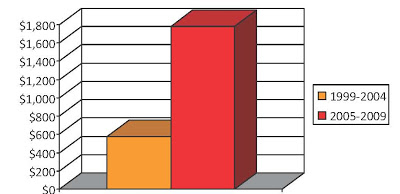
Further, these groups refuse to acknowledge the substantial, ongoing costs associated with coal plants. Since 1999, Wisconsin utilities have spent over $2 billion of customer money keeping old, inefficient coal plants running. For comparison purposes, this sum is nearly triple the utilities’ investment in windpower facilities during the same period. Customers have seen the real and substantial impact of these coal plant costs through rising electricity rates over the past several years. These costs are in addition to the more than $700 million (exclusive of transportation costs) we send out of state each year to pay for the coal to fuel these aging plants. Reliance on dirty, antiquated coal plants leaves Wisconsin in a vulnerable position, unable to predict or control energy costs.
Unlike coal, clean resources like biogas, wind and solar will produce energy throughout their productive lives without requiring costly pollution abatement measures. Going forward, the more renewable energy we add to Wisconsin’s energy resource mix, the less exposed we will be to these downstream liabilities. The avoidance of these regulatory risks is another compelling reason for passing the Clean Energy Jobs Act legislation in this session.
Coal Plant Retrofit Costs (1999-2009)
(in Millions of Dollars)
by jboullion | Apr 7, 2010 | Uncategorized
From an article by Jason Stein in the Milwaukee Journal Sentinel:
Madison – A sales tax of up to 0.5% could be levied in Milwaukee County to fund public transportation under a regional transit authority bill an Assembly committee endorsed Thursday.
By an 8-2 vote, the Assembly Transportation Committee supported the bill, which would allow creation of interim transit authorities in Milwaukee and other counties in southeastern Wisconsin that eventually could merge into the existing Southeastern Regional Transit Authority. But the measure still faces a steep climb to pass both chambers of the Legislature before lawmakers end their regular business on April 22.
Seven Democrats and one Republican on the committee approved a complex, 52-page amendment before recommending the bill. Assembly Speaker Mike Sheridan (D-Janesville) praised the bipartisan vote as a positive sign for the bill’s chances. The amended proposal would . . . allow local governments to create interim regional transit authorities in Milwaukee, Racine, Kenosha, Ozaukee, Walworth, Washington and Waukesha counties. Those authorities could raise money for their public bus systems, including the financially troubled Milwaukee County Transit System, through a sales tax or through membership fees charged to their local government members.
by jboullion | Apr 6, 2010 | Uncategorized
A news release issued by Advocates for Renewable Energy, a coalition which includes RENEW Wisconsin:
For Immediate Release
April 6, 2010
For More Information Contact:
Shaina Kilcoyne: (608) 310-3338
As the article below chronicles, Wave Wind LLC, a Dane County-based wind services company, is ready to build a six-turbine, 10-megawatt project in western Dane County and sell the electricity to the local utility, Madison Gas & Electric (MGE). All the necessary permits have been issued and the turbines are set to be delivered in June.
Unfortunately, Wave Wind cannot find a buyer for the project’s output. MGE contends that it does not need new supplies of renewable electricity until after 2020. Moreover, wholesale power prices are at historic lows, and the standard buyback rate available to third-party power producers like Wave Wind is not sufficient to make the project economically viable. As Wave Wind president Tim Laughlin put it, the standard rate “won’t even allow us to put a shovel in the ground.”
The upshot? Wave Wind will likely install those turbines in another state. Should that happen, most, if not all, of the jobs and business opportunities created by the construction and operation of this facility will follow the turbines to the state in which they are installed. Wisconsin’s loss will be a gain for Iowa or New Mexico.
This is not an isolated phenomenon, nor is it limited to wind energy. Dairy operations and food processors looking to recover energy from their organic wastes also find it difficult to justify investments in biodigesters, even with Focus on Energy incentives. A policy solution is clearly needed to bridge the difference between the production costs of small-scale renewable energy systems and the cost of operating 40-year-old coal plants that have been fully amortized. Neighboring Minnesota now has nearly 500 megawatts of community wind due to a statute that encourages it. Such projects have a very minor impact on overall electric rates. Within the Clean Energy Jobs Act, Wisconsin has the opportunity to promote small-scale renewable energy projects as well.
Two provisions in the Clean Energy Jobs Act are tailored to help producers of locally available renewable energy overcome the economic barriers cited above:
+ A 10% in-state renewable energy set-aside by 2025. This provision would more than double the output from existing renewable generating units in Wisconsin.
+ Incentives and other provisions targeted for smaller renewable generating facilities. These provisions would encourage small-scale, community-based renewable projects throughout the state.
Developing a truly sustainable platform to support Wisconsin’s economic future requires a commitment to local energy sources like wind, organic wastes, wood, solar, and small-scale hydro. Passing the Clean Energy Jobs Act will make it easier to attract and retain the private sector enterprises that drive job growth as well as strengthen rural economies.
by jboullion | Apr 6, 2010 | Uncategorized
From an article by Keith Uhlig in the Marshfield News-Herald:
Greg Stark gets a charge out of sunny days with a brisk wind. Literally.
When conditions are perfect, the sun soaks into the solar panels he has installed on his house and in his yard, and the wind spins the prop of a wind turbine located on a tower about 140 feet in the air. If all components are running at maximum, they can generate about 25,000 watts of power per hour.
Stark is the first to admit that it’s a rare day that the systems churn at full capacity. But it’s also a rare day that he needs to use power produced by Wisconsin Public Service.
Since he had the wind turbine installed in December 2002 at his home southwest of Edgar on Highway M, he has never written a check to Wisconsin Public Service. Instead, he sells the surplus power he produces back to the power company, and he receives checks that range from $25 to $250 per month.
Stark has invested more than $100,000 in the power systems, so it’ll take years for them to turn a profit for him. When he installed the wind turbine, he thought it would pay for itself in about 20 years, he said. But with the rising cost of electricity, he expects that to be cut in half.
He’s happy to share the costs and benefits and estimated payback time with anyone who asks. But for him, installing the green power systems is more about self-reliance, efficiency and for “the next generation,” Stark said. “It maybe sounds funny, but people need to look at the future. … Earth is a small planet.”
by jboullion | Apr 6, 2010 | Uncategorized
From a report by Chuck Quirmbach on Wisconsin Public Radio:
(STATE CAPITOL) A key lawmaker says some compromises have been reached in the global warming bill now in the State Legislature. But he says more deal-making is ahead.
During the last couple of weeks, legislators have been working behind closed doors trying to agree on changes to the Clean Energy Jobs Act. At an energy forum in Milwaukee, Senate author Mark Miller said some agreements have been reached. The Madison-area Democrat says there are deals on idling of trucks, reducing carbon in transportation fuels, tariffs for utilities purchasing power from renewable sources, and whether to link Wisconsin car fuel efficiency standards to California’s. He says the golden state plan is gone.
Miller says the plan to reduce carbon in fuels ran into a lot of opposition, and wasn’t a major part of the bill. The changes are good news to the Democrats leading candidate for governor, Milwaukee Mayor Tom Barrett. Barrett says any new carbon in fuels standard would also have hurt the state.
Sen. Miller says lawmakers are also trying to accelerate job creation goals in the Clean Energy Jobs Act. He says he’s hoping to announce final compromises next week.
by jboullion | Apr 6, 2010 | Uncategorized
From a letter to the editor of the Racine Journal Times by Mark M. Giese, Racine:
Energy efficiency a great idea here
I applaud the City of Racine for recognizing that energy efficiency is a win-win-win situation (“Stimulus funds used for new energy-saving loan program,” March 13).
Homeowners will “win” when the program reduces their energy bills.
Simple improvements, such as increasing insulation or replacing old, inefficient appliances, really have an impact. On average, each dollar invested in efficiency saves three dollars in avoided energy costs.
Our local economy will “win” in two ways. The program will increase the demand for appliances, weatherizing and other efficiency upgrades, which means greater sales for businesses. These jobs can’t be outsourced, since they involve work on local homes.
The other economic “win” comes when homeowners start seeing smaller heating and electricity bills. That will leave them more money to spend in local restaurants and shops.
The third “win” is for the environment. Way too much of Wisconsin’s electricity still comes from dirty coal plants and the coal from environment-destroying mountaintop removal. Less electricity used means less coal burned and more mountain areas unharmed, which means cleaner air and water.
by jboullion | Apr 5, 2010 | Uncategorized
A news release issued by Advocates for Renewable Energy:
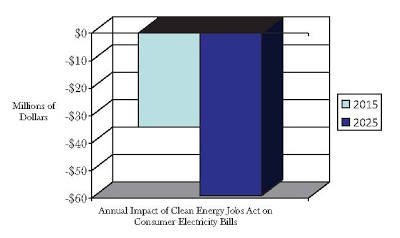
The Union of Concerned Scientists has released a study on the 25% Renewable Portfolio Standard and Energy Efficiency provisions within the Clean Energy Jobs Act (CEJA), confirming the findings of the Public Service Commission that CEJA will result in lower electricity bills than under a business as usual approach.
With a 25% Renewable Portfolio Standard, consumer electricity bills will be $34 million lower in 2015 and $59 million lower in 2025, compared with a business as usual approach. CEJA will result in cumulative cost savings to electricity ratepayers of $140 million by 2025. The report concludes that the Clean Energy Jobs Act will protect consumers from rising energy prices by investing in local sources of energy with stable and predictable long-term costs.
by jboullion | Apr 5, 2010 | Uncategorized
From an announcement made by the Government Institute of Wisconsin:
Energy Independence Workshop
April 7, 2010
Chippewa Valley Technical College
RCU Room, Business Education Center
Eau Claire, WI
We invite you to attend a meeting on April 7 in Eau Claire to learn more about energy independence and local government issues. The meeting will focus on a discussion on funding for retrofits for municipalities interested in energy independence, and will feature many informative speakers.
Attendees will also engage in valuable discussion with communities engaged in the energy independence planning process as part of the 2010 25×25 Energy Independent Communities planning process through the Wisconsin Office of Energy Independence.
This will be an valuable workshop for communities interested in energy independence issues to attend. Morning coffee refreshments will be provided beginning before 9:00 am and a lunch will also be provided beginning at 12:00 noon. Please refer to the LGI website at http://www.localgovinstitute.org for more information regarding this meeting, future meetings, and other local government issues. Information and registration are provided below. The registration fee is $70 for the day-long meeting.
Program
9:00-9:30 Introductions and Welcome
+ Eau Claire County Chair, Gregg Moore
+ City Manager of Eau Claire, Mike Huggins
+ Office Of Energy Independence Director, Judy Ziewacz (invited)
+ 2010 EI Pilot Communities (11 EI Team Leaders)
+ 2009 EI Pilot Communities (EI Team Leaders)
9:30-10:45 Local Financing Opportunities for Retrofits – PACE, On-bill, other
+ Chris Lohman, US DOE, Financial Market Development Team, Washington D.C.
+ Merrian Fuller – US DOE, Lawerence Berkley Labs
+ Mike Noreen, River Falls Municipal Utility, “Save Some Green”
+ Brian O’Connell, City of Racine, Racine Energy Efficiency Program (REEP)
Steve Frenkel – Director, Midwest Region Renewable Funding, LLC
+ Q & A — discussion about US DOE nationally competitive grant opportunity
10:45-11:15 BREAK
11:15-12:00 25×25 Plan — ECW Data Tool & US EPA Portfolio Manager — update/questions
+ Sean Weitner, Energy Center of Wisconsin
12:00-1:00 LUNCH
1:00-3:00 Community-to-Community Discussion – 2010 EI Pilot Communities
+ Facilitated by Brian Driscoll, Office of Energy Independence
by jboullion | Apr 5, 2010 | Uncategorized
From an entry by Tom Still on Milwaukee Biz Blog:
The Marquette interchange in Milwaukee cost more than $800 million to rebuild between 2004 and 2008, and few people seriously questioned whether that “subsidy” of Wisconsin’s highway transportation system would pay for itself many times over.
Milwaukee’s Zoo interchange, the mix-master for I-94, I-894 and Highway 45, could cost $2.3 billion to rebuild once work begins in 2012. Again, most people familiar with the volume of statewide commerce passing through that intersection can agree reconstruction is a much-needed investment.
But suggest a relatively tiny $7.5 million per year subsidy for a high-speed rail line that could redefine Wisconsin’s connections to Chicago and the Twin Cities, and the same folks who barely blink at billion-dollar concrete projects turn into raging fiscal hawks.
That penny-wise, pound-foolish approach should be questioned. Wisconsin has a chance to build a high-speed rail line, with hard-to-get federal money, that will change the economic destiny of its largest cities and many of its smallest communities. Yet this promising track for economic development is being opposed by those who claim a small state subsidy will somehow break the bank.
Before the political debate gets too overwrought, let’s examine the economic reasons why Wisconsin should embrace building a Milwaukee-to-Madison rail line and improving the existing Milwaukee-to-Chicago connection.