by jboullion | Aug 8, 2017 | Uncategorized
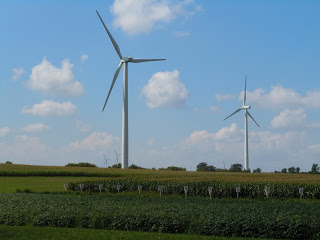
Last week WPPI Energy announced it will purchase the output
from a large 132 megawatt wind project in Illinois. With this planned addition of a new source of
wind energy to its generation portfolio, WPPI Energy will strengthen its
position as a low-cost provider of clean energy to its 51 member municipal
utilities, 41 of which are located in Wisconsin.
Along with its
previously
announced solar addition in Manitowoc County, WPPI Energy will be
providing over 20% renewable energy to its customers when these projects are
completed.
RENEW Wisconsin’s Executive Director Tyler Huebner released
the following statement:
“We commend WPPI Energy for partnering with Invenergy to
expand its supplies of clean, affordable wind energy.
Wind energy is the lowest-cost way to produce
wholesale power here in the Midwest.
We
encourage other Wisconsin electricity providers to follow WPPI Energy’s example
of adding wind and solar to their generation mix.”
Situated in Henry County southeast of Rock Island, Illinois, the new wind project
will supply WPPI Energy with about 450 million kilowatt-hours of electricity a
year when it is placed in service next year. The 66-turbine, 132-megawatt
project will be owned by Invenergy, a Chicago-based wind developer, which also
owns the 86-turbine, 129-megawatt Forward Energy Center south of Fond du Lac.
by jboullion | Aug 1, 2017 | Uncategorized
Michael Vickerman, RENEW Wisconsin • July 31, 2017
The writer Jonathan Swift wrote in 1710: “Falsehood flies, and the Truth comes limping after it.” Considering how far and fast misinformation can travel in this era of digital mass communication, Swift’s observation has grown even more prescient.
Earlier this month, a New York Times article declared that prospects for the U.S. rooftop solar market were dimming rapidly, a result of a utility-led campaign to roll back solar incentives at the state level. According to the article, the “explosive” growth experienced by the solar market in the last two years “has come to a shuddering stop,” going from an increase of 900 percent to a decline of 2 percent.
A few days later, a Chicago Sun-Times editorial cited these same statistics to paint its own grim portrait of a market seizing up due to the utilities’ pressure campaign.
With numbers like these, this characterization can’t help but conjure up images of installations interrupted in mid-construction, with stacks of panels and racking teetering in abandoned job sites ringed by forlorn chain-link fences. But there’s a serious problem with this picture, which is that it is utterly imaginary, without any grounding in the solar marketplace observable today.
In assessing the vitality of the solar energy marketplace, the reporter compared annual rates of growth from one year to the next. The problem with using that particular yardstick is that rates of growth will inevitably level off as the market matures and approaches saturation. Had the New York Times reporter simply compared numbers of systems installed or numbers of megawatts added from one year to the next, he would have arrived at a far truer picture of the situation.
According to reports prepared by GTM Research and Solar Energy Industries Association, 2016 was indeed a record-breaking year for solar energy, in which the capacity added nearly doubled 2015’s results. And though capacity additions this year will fall short of last year’s totals, it will surpass 2015’s additions by about 75 percent.
Yes, there will be a modest slowdown in 2017 relative to the year before. But in what universe can that trend line be characterized as a “shuddering stop”?
It’s worth noting that the GTM Research expects solar generating capacity to triple in the next five years, a milestone that can be accomplished with only a 25 percent annual growth rate.
In addition to the mishandling of the statistical measures, there are serious flaws with the article’s narrative. One of them is the assumption that the rooftop solar market is just for residences. But that view ignores the increasing popularity of larger solar systems on commercial and institutional rooftops.
Recent installations in Wisconsin, my home state, include a clinic in Onalaska (314 kW), a high school in Minocqua (280 kW), a convent in Fond du Lac (246 kW), a cold storage warehouse in Plymouth (560 kW), and two Target stores in the Madison area (540 kW combined).
And what are the factors driving solar energy’s growing with this market segment? Four causes stand out: (1) a sustained decline in the installed cost of solar energy; (2) rapid expansion of financing options and structures; (3) the extension of the investment tax credit for solar energy at 30 percent through 2019; and (4) greater sophistication in sizing PV systems and regulating their output relative to the customer’s load.
The articles also convey the implication that utilities are prevailing in their war against rooftop solar. While they have won a few battles here and there, including Indiana, they have lost in most other jurisdictions, and, in some cases, badly.
Nowhere has this war been waged with greater intensity than in Nevada. After state regulators issued an order in 2015 that devalued customer solar generation and sent the solar industry there fleeing to other states, state lawmakers sought to correct this injustice. This June, the legislature passed and the governor signed a law that restores fair credit to solar-generated electricity exported to the grid.
Indeed, if there is one state where the “reversal of fortune” meme is particularly apt, it is Nevada, though history will affirm that it was the antisolar camp that suffered this fate, not the solar industry.
Shifting eastward, a bid by New Hampshire utilities to have net metering scuttled boomeranged into a net loss for them. While Granite State regulators did approve temporary rates that will reduce incrementally the export value of solar-generated electricity, they also lifted the cap on net metering that would have otherwise triggered a slowdown in the marketplace. In the short run at least, this compromise will create stable market conditions and lead to an acceleration of solar installation activity there.
As noted in a recent guest column in Utility Dive, in states like Nevada and New Hampshire, the truth did finally catch up to the false narrative spun by utility lobbyists and their enablers. The result will be an expansion, not a contraction, of on-site solar generation, driven by fair pricing and customer demand. These outcomes can happen in other states as well, including my own, but it would certainly help if reporters would recognize and incorporate these important policy victories when they chronicle the trials and tribulations of the solar energy marketplace.
Michael Vickerman is program and policy director of RENEW Wisconsin, a renewable energy advocacy organization.

by Guest Blog | Jul 26, 2017 | Local Government, Local Initiatives, Uncategorized
On March 21, 2017 Madison’s city council signed a resolution committing the city to power 100 percent of its operations with clean energy.
The resolution was especially notable since the utility serving Madison gets almost half of its power from coal, and several years ago was among Wisconsin utilities making national headlines for policies seen as hostile to distributed solar energy.
But now the utility, Madison Gas & Electric (MGE), city officials and clean energy leaders are negotiating a Memorandum of Understanding that lays out plans for the expansion of solar, the spread of electric vehicles and other clean energy improvements. And the utility has pledged its support for the city’s clean energy goal.
Advocates describe the MOU and the city’s recent choice of consultants to develop clean energy plans as important progress.
Michael Vickerman is the program and policy director of RENEW Wisconsin and a member of the city’s Sustainable Madison Committee. Speaking in his role as a committee member, he called the MOU historic.
“It will enable the utility and one of its customers to jointly plan clean energy projects,” he said. “This generally doesn’t happen with utilities. You may think of the city as this governmental powerhouse, but in the eyes of the utility it’s just another customer. In order to commit city resources and staff time to joint endeavors and also for the utility to commit its own personnel and resources, both the city and MGE believe the scope of work should be spelled out in some kind of agreement.”
But some controversy over the MOU also shows how challenging it can be to bring together multiple parties with different responsibilities and interests in pursuit of a target as ambitious as 100 percent clean energy.
In 2016 the city adopted an energy work plan that included a promise to sign an agreement with MGE regarding collaboration on topics including electric vehicles, solar and grid modernization.
In June a resolution was introduced to the council that would give the city attorney and Mayor Paul Soglin authority to execute the MOU. The group Repower Madisonand several council members were concerned that this measure meant the council and the public would not actually have formal say over the contents of the MOU. And, they were unhappy that a May draft of the MOU did not mention the city’s 100 percent clean energy goal or anything about coal-fired power.
Council member David Ahrens said the proposed MOU was not given to council members to review when the resolution about it was first introduced, “creating a level of suspicion and unease about the process.” When the early draft of the proposed MOU “inadvertently” was made public, as Ahrens described it, he was disappointed that the 100 percent clean energy goal was not mentioned.
An improved draft
An amended draft MOU dated July 11 does note the city’s goal of 100 percent clean energy.
MGE spokesperson Dana Brueck said, “MGE supported the resolution for 100 percent clean energy at every stage as well as the Energy Work Plan. We believe we can accomplish more [toward the clean energy goal] by working collaboratively.”
A supporting document with the MOU proposes ways the utility and city could collaborate, including on a shared solar project, increased outdoor solar lighting, electrified public transit, electric vehicle group buys and boosting participation in the city’s voluntary energy efficiency benchmarking program.
Vickerman applauded these ideas and said he is especially hopeful about a solar program that MGE is developing with Madison, wherein the city or other entities could buy solar power directly from solar arrays that are not on their own sites.
“The city doesn’t need the MOU to build renewable generation on its own premises — that has been happening already,” Vickerman said. “But the memorandum of understanding will enable the city to talk to MGE about their [city] plans to enter into contracts with other generators or maybe with MGE to build larger clean energy projects.”
Vickerman also said the MOU would help the city’s ongoing efforts to electrify its buses and other vehicles, adding new charging stations.
“It’s going to be rather difficult for cities in general to have an influence over where these charging stations go, unless they negotiate and plan directly with the utility,” he said. “That’s an area spelled out for collaboration.”
Repower Madison organizer Mitch Brey said the group is pleased with the focus on electric vehicles and other priorities cited in the MOU, and with the recent inclusion of the clean energy goal in the text. But he is still concerned that the MOU does not mention shifting away from coal, or address electric rates and fixed charges on bills. Repower Madison was formed in 2014 in response to MGE’s proposals to greatly increase fixed charges and other measures seen as hostile to distributed solar.
“It appears that MGE isn’t interested in talking about coal with the city,” said Brey. “If the utility is going to have discussions with the city, it should be about reaching the 100 percent clean energy goal. It appears a lot of the language used in this document is ‘identify, pursue, investigate, explore, develop, pilot.’ Pursue is fine, but these are a lot of verbs that indicate a lot of talking. There is a real big worry that this will amount to little more than greenwashing, and make MGE look like they’re a good partner but lack on deliverables.”
Vickerman countered that the city can’t control MGE’s energy mix as a whole, and that the goal is to spark enough solar and other renewables that Madison’s own city operations can be powered entirely by clean energy. With its Energy 2030 Framework, MGE has committed to provide 30 percent of its energy from renewables by 2030.
“The city has no authority over MGE’s generation – that is in the purview of the Public Service Commission of Wisconsin,” Brueck said. “Our Energy 2030 framework sets clean energy goals and a number of objectives for the benefit of all of our customers. One of those goals includes transitioning away from coal, which we continue to do. Our ongoing transition is a priority independent of our collaboration with the city. Any further changes to our existing fleet would be sought in the interests of all of our customers and would be subject to approval by the Public Service Commission, which has sole authority over MGE’s generation.”
The resolution authorizing the mayor to sign the MOU was slated to be voted on in a city council committee on July 17, but that vote was delayed until August 21 — which Brey noted is the day of the solar eclipse.
Mutual support
The proposed MOU says that the city will support MGE in regulatory matters before the state Public Service Commission or other bodies, “that are, in the City’s judgment, consistent with the cooperative intent of this MOU.” Likewise, it says MGE will support matters before city council that are in the spirit of the MOU.
Ahrens expressed reservations about the promise to support MGE on issues before the Public Service Commission, since the MOU “doesn’t define what those issues might be.” He pointed to MGE’s previous requests to the commission for drastic fixed rate charge increases, saying “that was a blunder of huge proportions for them.”
In 2017 MGE increased its overall electric and gas rates, but kept a promise not to seek further increased fixed charges.
“Our collaborative efforts with the city have nothing to do with rate cases,” said Brueck. “The city has no authority over or oversight of MGE rate cases.”
The proposed MOU would create a steering committee with five members from the utility and five from the city or the Sustainable Madison Committee, including Vickerman and committee chair Raj Shukla, who is executive director of the River Alliance of Wisconsin.
Brey said Repower Madison wants to see an elected representative on the steering committee, they want the meetings to be public and they want the steering committee to issue periodic public reports.
Brey thinks that Madison and MGE should look for inspiration in Minnesota, where utility Xcel and the city of Minneapolis in 2014 signed an MOU. That MOU formed a board of representatives from the city, Xcel and Centerpoint Energy, who meet at least quarterly and come up with specific deliverables that will help Minneapolis fulfill its Climate Action Plan, including a commitment to reduce greenhouse gas emissions by 80 percent by 2050 (from 2006 levels).
“We need to work toward agreement like that or it’s not really worth having,” said Brey.
But Vickerman feels confident about the latest draft of the MOU, and the clean energy goal more broadly.
“We would consider this particular agreement to be absolutely essential for the city to achieve its goal,” Vickerman said.
by jboullion | Jul 13, 2017 | Uncategorized
by Michael Vickerman, Program and Policy Director
At a rally in Cedar Rapids in June,
President Trump said: “I don’t want to
just hope the wind blows to light up your homes and your factories … as the
birds fall to the ground.” Trump drew a lot of flak for that statement, which reflected
his personal belief that wind generation and high-end golf resorts can’t
co-exist in Scotland and other locations where the Trump Organization has a
presence.
Shortly after this presidential
put-down of wind power, the Heartland Institute, an industry-funded mercenary
outfit that promotes maximal use of fossil fuels, let loose with a predictably
canned harangue echoing and amplifying Trump’s complaint. Following a familiar
pattern, Heartland’s commentary, which was published in the Des
Moines Register, traffics in hyperbole that is
utterly disconnected to the reality of wind power development experienced by
ordinary Iowans.
On that score, Jon Kallen, a former
employee at MidAmerican Energy and a self-described Republican, weighed in with
a guest column documenting that reality and the many positive
impacts flowing from the Hawkeye State’s embrace of wind energy. Kallen’s
editorial does an outstanding job of cataloging how broadly distributed these
benefits are, and, in doing so, methodically exposing the dishonesty that lies
at the core of Heartland’s editorial.
In the final sentence of his editorial,
Jon Kallen wrote: “Maybe our neighbors to the east will catch up someday.” He
had Illinois in mind, but there’s no reason why it couldn’t be applied to
Wisconsin as well.
by jboullion | Jun 27, 2017 | Uncategorized
by Michael Vickerman, Program and Policy Director
A proposal from Madison Gas & Electric to establish a renewable
electricity service for larger customers has garnered strong support from RENEW
Wisconsin as well as from the Wisconsin Industrial Energy Group and individual
companies such as Target and Airgas. After introducing the Renewable Energy
Rider in its 2016 rate case, MGE submitted a revised version to the Public
Service Commission this year, which triggered comments from various
stakeholders.
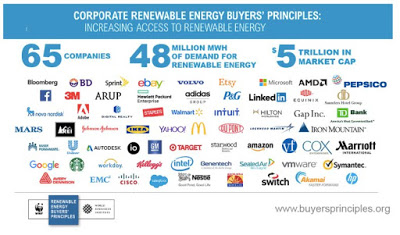
In our comments, RENEW highlighted the growing number of companies
who desire a robust renewable energy service from utilities that serve their
facilities. Sixty-five of these companies adopted a set of principles to maximize the value of these purchases, both in terms of achieving their internal sustainability goals
and locking in future cost savings.
As stated in our comments, “these
companies are increasingly deciding
where to locate their facilities based on whether the utility is willing and
able to provide them with significant levels of renewable energy. We believe
these tariffs offer an economic development opportunity in the service
territories where they exist, and we want Wisconsin to be a place where these
corporations prefer to locate.”
The Public Service
Commission will issue a final ruling on MGE’s Renewable Energy Rider in the
coming weeks.
by jboullion | Jun 21, 2017 | Uncategorized
by Michael Vickerman, Program and Policy Director
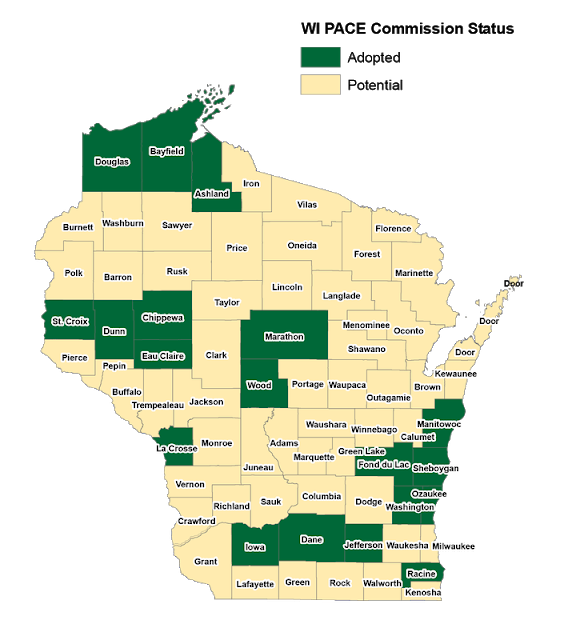
Since 2016, Wisconsin counties have begun opting into an innovative program called PACE (Property Assessed Clean Energy), which enables property owners to obtain low-cost, long-term loans for energy efficiency, renewable energy, and water conservation improvements. At its most recent meeting on June 16, the Dane County Board of Supervisors approved a resolution authorizing the County to join the program. In so doing, Dane joined 18 other Wisconsin counties that offer this special financing tool to leverage clean energy investments on commercial and industrial properties.
Projects financed using PACE can generate positive cash flow upon completion with no up-front, out-of-pocket cost to property owners—eliminating the financial barriers that typically prevent investment in revitalizing aging properties. The term of a PACE Financing may extend up to the useful life of the improvement, which may be as high as 20 years or more, and can result in cost savings that exceed the amount of the PACE Financing. The result is improved business profitability, an increase in property value, and enhanced sustainability.
PACE Financing is sourced from an open lending market and secured through a voluntary PACE Special Charge, repaid directly to the lender. Like property taxes, PACE Financings may be transferred to the next property owner if the property is sold. The remaining balance of the PACE Financing is repaid by the subsequent owner, who continues to receive the benefits of the improvements from the project. Eligible commercial properties include multifamily buildings of five units or more, as well as industrial, private nonprofit, agriculture, and hospitality properties.
A voluntary initiative, PACE Wisconsin began taking shape last year when three state organizations–Green Tier Legacy Communities, the Counties Association and League of Municipalities– joined forces to launch a Joint Powers Commission and to recruit counties to enter into the program. Member counties agree to adopt a Model PACE Ordinance when they join the Commission, which authorizes the county to impose a PACE special charge, collect payments for the special charge in installments, place those installments in the tax roll at its discretion, and delegate that authority to the PACE Commission.
For more information on Wisconsin’s PACE program, including an up-to- date map of participating counties, visit www.pacewi.org.

by jboullion | May 26, 2017 | Uncategorized
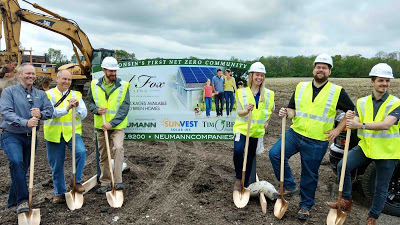
For the first time ever in Wisconsin, prospective home buyers have the option of purchasing a brand-new house with a solar array sized to offset 100% of household electricity use. A trio of Wisconsin companies broke ground this week on a residential development in New Berlin that will integrate rooftop solar arrays into all 34 residences built there.
|
Representatives from Neumann Companies, SunVest Solar, and
Tim O’Brien Homes break ground on May 23, 2017 at Wisconsin’s
first net-zero planned community. |
Developed by Pewaukee-based Neumann Companies, the home sites at Red Fox Crossing, located on the southwest corner of S. Sunny Slope Road and W. Grange Ave., will be oriented to fully capture the solar energy available. Madison-based Tim O’Brien Homes will design and construct the solar-ready houses, and Pewaukee-based SunVest Solar will design and install each solar system, ranging from six to eight kilowatts.
Households that purchase a new house in Red Fox Crossing will finance the solar array through a 30-year mortgage with a 4% interest rate. As the tables below show, the power of long-term financing enables home buyers to reap substantial savings with the first monthly payment. Indeed, the return on investment for these solar arrays will range between 10% and 20% for the duration of the mortgage.
When fully built out, Red Fox Crossing will have between 200 and 260 kilowatts of behind-the-meter solar capacity in operation. It is on a path to become Wisconsin’s first net zero (electricity) community.
 |
| Members of the SunVest Solar team at the groundbreaking. |
“It has always been our dream to offer an energy independent community,” said Matt Neumann, principal of Neumann Companies. “We are excited to have all three companies involved in creating Wisconsin’s first net zero community.”
|
PRICING FOR A 7 KILOWATT SOLAR PV
SYSTEM
|
|
System Price
|
$21,000
|
|
Focus on Energy Rebate
|
$2,000
|
|
Federal Tax Credit (30%)
|
$6,000
|
|
Out-of-Pocket Cost*
|
$13,000
|
* after tax credits and rebate
|
$13,000 FINANCED INTO 30-YEAR
MORTGAGE AT 4%
|
|
Monthly Payments
|
$62/month
|
|
Solar Production Value
|
$98/month*
|
|
Monthly Savings
|
$36/month
|
* calculations based on We Energies current residential rates
According to a WTMJ-TV report, the Neumann team expects individual lots to be ready for permitting and construction sometime this fall, and the first home to be completed and generating electricity by next spring.
“Red Fox Crossing has the potential to be the turning point in building a more sustainable community and neighborhood in Wisconsin, versus focusing on only one home at a time,” said Tim O’Brien, president of Tim O’Brien Homes.
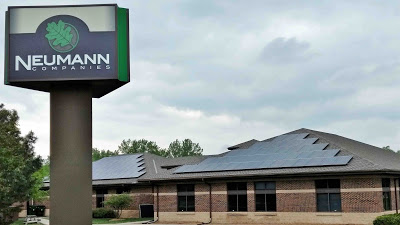 |
| Neumann Companies’ new office in Pewaukee, which also features solar panels on the roof. |

by jboullion | May 11, 2017 | Uncategorized
|
Co-Chairs of the Wisconsin Legislature’s Joint Finance
Committee, Sen. Alberta Darling and Rep. John Nygren. |
Positive steps were taken today on two issues of importance for clean energy and Wisconsin power customers!
The State Legislature’s Joint Finance Committee met to set the budget of the Public Service Commission for 2017-2019, which includes both Focus on Energy and intervenor compensation funds.
Both of the wins described below gained 16-0 bipartisan votes by the Committee, which is made up of 12 Republicans and 4 Democrats.
First, the budget for intervenor compensation was partially restored after a 66% cut two years ago. The budget going forward will double to $742,500 annually. These funds enable nonprofit and citizen-based organizations to bring technical and legal expertise to proceedings at the Public Service Commission. RENEW Wisconsin has historically used this fund to support our advocacy in utility rate cases, power plant proposals, and numerous other proceedings at the PSC that impact renewable energy.
In addition, the Citizens Utility Board frequently uses this fund to bring expertise to cases in order to keep utility rates as low as possible for residential and small business customers across Wisconsin. Governor Walker had proposed this restoration of funds in his budget, and the Committee adopted it. This is great news, and we applaud Governor Walker and members of the Joint Finance Committee for adopting this provision.
Secondly, Focus on Energy’s budget will remain unchanged, allowing for the most cost-effective energy efficiency and renewables projects to be funded. The Governor has proposed to eliminate the ability for school districts to borrow above their revenue limit to fund energy efficiency and renewable energy improvements (commonly called “Act 32” projects). To backfill that change, the Governor proposed allocating an additional $10 million from Focus on Energy’s budget for schools above what they spent last year, which would have earmarked nearly $15 million out of the total $93 million for schools alone.
 |
Solar PV installation on Lakeland Union High School in Minocqua,
part of an energy improvement project funded under the “Act 32” school district
revenue exemption. See the full case study from SunPeak. |
|
Concerns had been raised that schools would not be able to use that much Focus on Energy funding. The proposed earmark could have siphoned funding away from private business installations in energy efficiency upgrades, leading to unspent dollars in the Focus on Energy program and a less cost-effective set of investments.
The Committee voted 16-0 against the Governor’s proposal, leaving the Focus on Energy budgets unchanged. This is very good news since the program returns over $3.50 for every dollar invested, and schools will still have ready access to incentives through existing programs.
This sets up an important vote later in the Joint Finance Committee schedule regarding the Governor’s proposal to repeal the Act 32 school district revenue exemption.
RENEW Wisconsin was supportive of both of these successful measures through our participation in the Customers First Coalition.
The biennial budget needs the approval of both the Assembly and the Senate before being signed by the Governor. Typically, the budget process lasts through June.
For more information on these topics and the state budget, please see RENEW’s Clean Energy Summary of Governor Walker’s Budget, and our recap of the 2015-17 state budget.
Finally, please support our work: become a member of RENEW Wisconsin today!
by jboullion | May 10, 2017 | Uncategorized
For Immediate Release
More Information:
Katie Crawley, Mayor’s Office
Katherine
Klausing, RENEW Wisconsin
614-406-1105
|
A team from Full Spectrum Solar installs a solar array
for a 2016 Group Buy Participant |
May 9, 2017 –
Madison. The Cities of Madison and Middleton have selected the winning offer
from contractors who competed to serve the MadiSUN Solar Group Buy program, which
helps residents easily and affordably invest in solar electric systems on their
homes. The cities have selected a collaborative bid from Full Spectrum Solar and Midwest
Solar Power, two solar installation companies based in Madison.
The MadiSUN Solar
Group Buy program allows Madison and Middleton residents to “go solar”
together. MadiSUN used a competitive Request for Proposals process to
seek offers from solar companies across the region, and dozens of
companies were invited to bid. For the first time, the program selected a
collaborative bid from two companies, who will offer the same price and
services.
 |
| The 2017 MadiSUN solar program launched on April 24, 2017 |
Katherine Klausing, MadiSUN Program Manager, said “we were really pleased with the
competitive offers we received.” The program evaluated bids based on pricing,
work quality, customer service and the company’s qualifications. “This is going to be a great deal for
families who are interested in going solar this year. Our participants say that
they feel better knowing there’s a trusted company that has been vetted by our
program. By going with the group buy and benefitting from the low price we
negotiate, families can save an extra 10 percent compared to what they would
pay to go solar alone.”
Alarik Rosenlund,
Co-Owner of Midwest Solar Power, says his company is happy to partner with
the program to bring more solar energy to local residents. “This year may
be a real sweet spot for anyone looking at installing solar, especially with
the tax credits and rebates available,” Rosenlund said. But it’s not just
about the economics. “This is a great way for people to take action on
something really important.”
The cost of installing solar has never been lower, and households
can receive a Federal Tax Credit for 30 percent of the system cost, while
Wisconsin’s Focus on Energy program offers up to $2,000 in additional rebates.
New solar education
events were also announced, aimed at helping residents learn more about
solar energy and the options available for installing solar. All events are
free and open to the public. The dates, times, and locations information
sessions are available at
www.madisunsolar.com/upcoming-events
and enclosed below.
 |
Madison Mayor Paul Soglin
accepted a SolSmart Gold award |
Madison earned a
“gold” designation from SolSmart, the highest level of
recognition from a national program under the
U.S. Department of
Energy’s SunShot Initiative. The “gold” designation recognizes the city’s
efforts to accelerate solar development, from improving permitting and zoning
for solar, to investing in financing and solar workforce training programs. The
announcement took place at on Monday at the National Planning Conference in New
York City.
“Madison’s commitment to continued utilization of solar
energy is genuine,” said Madison Mayor
Paul Soglin in a statement. “We have our Green Power Program in
which we train new workers to install solar, our goal of producing one Megawatt
of Solar by 2020 and incredible partnerships like SolSmart and others. We
are on our way!”
As a
SolSmart Gold designee, Madison received national recognition for adopting
programs and practices that make it faster, easier, and cheaper to go solar. A
SolSmart designation is a signal that the community is “open for solar
business,” helping to attract solar industry investment and generate economic
development and local jobs. Madison recently became the first community
in Wisconsin to commit to a goal of 100 percent renewable energy.
About
SolSmart
SolSmart
is a national designation and technical assistance program that recognizes
leading solar communities and empowers additional communities to expand their
local solar markets. Funded by the U.S. Department of Energy SunShot
Initiative, SolSmart strives to cut red tape, drive greater solar deployment,
and make it possible for even more American homes and businesses to access
solar energy to meet their electricity needs. Learn more at SolSmart.org.
About MadiSUN Solar
Group Buy
MadiSUN
works to expand solar energy adoption through a comprehensive, community-wide
approach. This group purchase program
is operated by RENEW Wisconsin Inc., a nonprofit organization, on behalf of the City of Madison, with support from the
City of Middleton. The goal of the program is to increase solar education and adoption in
the Madison and Middleton areas through a group purchase and competitive
bidding process. In conjunction with this program, RENEW Wisconsin and the City
of Madison will partner with Summit Credit Union to provide a special solar
loan program for Madison residents. This
summer, participants can learn more and sign up at madisunsolar.com.
Solar Information
Sessions
1. Madison
College, Truax Campus
Tuesday May 16th at 6pm
Protective Services Building, Room 215,
1701 Wright St, Madison
2. Goodman
Community Center
Tuesday June 6th at 6pm
Merrill Lynch Room, 149 Waubesa St, Madison
3. Good Shepherd
Lutheran Church
Tuesday June 13th at 7pm
Peterson Hall, 5701 Raymond Rd, Madison
4. Middleton
Public Library
Wednesday June 28th at 6:30 p.m.
7425 Hubbard Ave, Middleton
5. Catholic
Multicultural Center
Thursday July 6th at 7pm
1862 Beld St, Madison
6. Capital
Brewery & Bier Garten
Monday July 17th at 5:30pm
7734 Terrace Ave, Middleton
7. First
Unitarian Society
Sunday July 30th at 12:30 p.m.
900 University Bay Dr, Madison
###
by jboullion | Apr 24, 2017 | Uncategorized
More Information:
Katie Crawley, Mayor’s Office
Katherine
Klausing, RENEW Wisconsin
614-406-1105
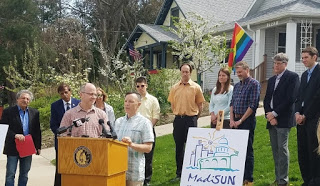
April 24, 2017 – Madison. Today the Cities of Madison and Middleton
announced the launch of the MadiSUN Solar Group Buy program, a collaborative
program that helps residents easily and affordably invest in solar electric
systems on their homes. The announcement continues the steady stream of
renewable energy commitments and solar projects announced in Wisconsin, and
follows 2016’s successful solar group buy program—the largest in Wisconsin to
date.
|
Jay Edgar and Josh Feyen participated in the
2016 MadiSUN Group Buy. |
The MadiSUN Solar
Group Buy program will enable Madison and Middleton residents to “go solar”
together. Through the group buy program, a team of community members
requests offers from solar companies across the region. The program then
pre-qualifies a price and service provider to make it as easy as possible for
people to join the program. The City’s investment in marketing and
competitive bidding will drive down the cost for each participant. The cost of
installing solar has never been lower, and households can receive a Federal Tax
Credit for 30 percent of the system cost, while Wisconsin’s Focus on Energy
program offers up to $2,000 in additional rebates.
The program, through its contractor RENEW Wisconsin, has begun recruiting
interested households to participate. This summer, citizens can learn more and
sign up at madisunsolar.com.
Madison Mayor Paul Soglin lauded the
group buy program. “These programs are proven vehicles for making rooftop
solar more accessible and affordable for homeowners in the community, and
that’s why we thank MadiSUN,” he said.
The City will partner
Summit
Credit Union to offer a special
Solar
Energy Loan Program where residents can finance 100 percent of a solar
electric system with no fees or collateral. “Summit Credit Union is thrilled to
continue partnering with the City of Madison bringing solar technology to the
area,” they said in a statement. Details on the MadiSUN loan program can
be found on the website
summitcreditunion.com or by calling
800-236-0985.
Six educational
events were also announced as part of the program, aimed at helping
residents learn more about solar energy and the options available for
installing solar. All events are free and open to the public. The dates, times,
and locations information sessions are available at
www.madisunsolar.com/upcoming-events.
 |
Madison Mayor Paul Soglin accepts
SolSmart’s “Gold” designation. |
Madison earned a
“gold” designation from SolSmart, the highest level of
recognition from a national program under the U.S. Department of
Energy’s SunShot Initiative. The “gold” designation recognizes the city’s
efforts to accelerate solar development, from improving permitting and zoning
for solar, to investing in financing and solar workforce training
programs. Madison recently became the
first community in Wisconsin to commit to a goal of 100 percent renewable
energy. The City is already progressing toward that goal, including initiatives
like a citywide solar apprenticeship program whose trainees will install
another 100 kilowatts of solar on city facilities.
Middleton Mayor
Gurdip Brar pointed to the city’s many solar developments in recent months,
such as the 100kW atop the Middleton Police Station. “We at the City of
Middleton are proud to work with our neighbors to bring the benefits of solar
energy to all of our communities here,” he said. “Going forward, Middleton and
Madison are going to be cooperating a lot more,” he said.
“2017 is going to be a great year for solar, and we
encourage Middleton families to take advantage of this opportunity,” Brar said.
“This is a great day for our communities.”
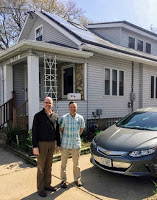 |
Jay Edgar and Josh Feyen use their solar panels
to power their hybrid-electric car. |
Homeowners Josh Feyen and Jay Edgar
hosted the event outside their home, where they installed 6 kW of solar panels
in 2016 as part of that year’s MadiSUN Group Buy program. The array also powers their new car, a
hybrid-electric Chevrolet Volt. Feyen
estimates that the system will pay for itself through energy cost savings in about
10 years “and then we’re going to be getting about 20 years of free
electricity, including charging our car three times per week. So if you think
about it, we’re saving a lot of money from the energy we’re creating and the
gasoline we’re not putting in our car,” said Feyen. They were also able to take
advantage of the federal tax credit and rebates from the Focus on Energy program.
Feyen and Edgar have also been talking to family and friends
about the benefits of the MadiSUN program. “We’ve kind of been Johnny
Appleseed,” Edgar says.
 |
Katherine Klausing, MadiSUN Program Manager,
gives concluding remarks at the 2017 launch. |
MadiSUN Program
Manager Katherine Klausing concluded by saying, “We’ve built a lot of
momentum leading to this event. As successful as the past year has been, we
believe 2017 is going to be even better.”
**END**

 “We commend WPPI Energy for partnering with Invenergy to


