by Michael Vickerman | Jun 16, 2020 | Public Service Commission, Renewables, Utility Scale, Wind
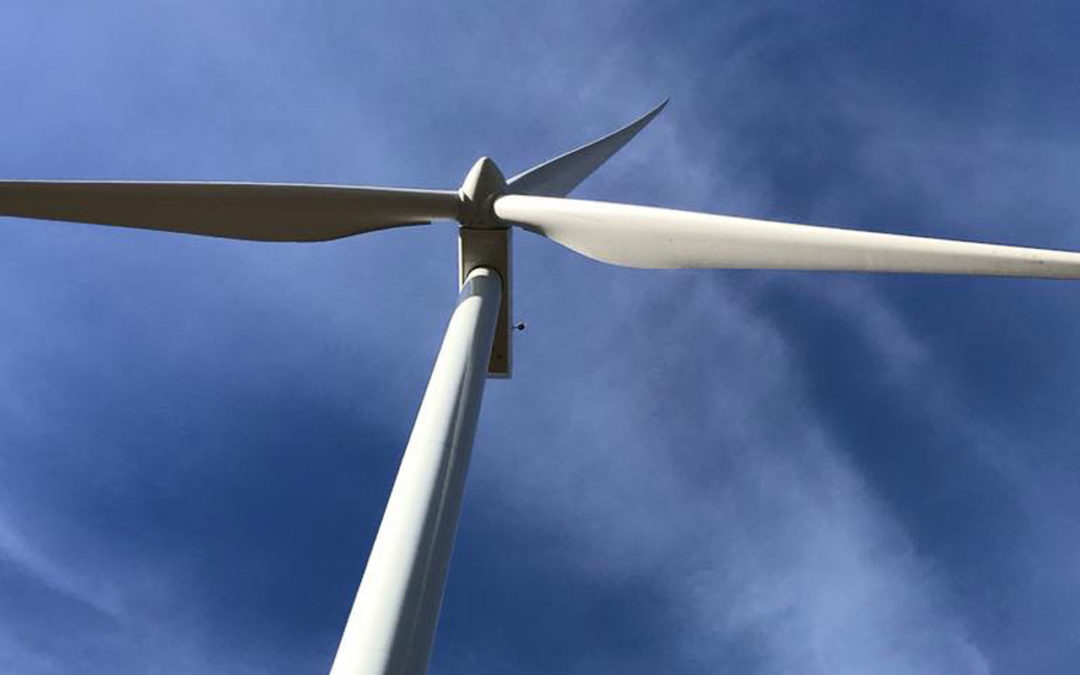
In the first-ever test of the appeal process set forth in Wisconsin’s Wind Siting Rule (PSC 128), the Public Service Commission (PSC) reviewed and upheld Green County’s approval last fall of a 24-turbine, 65-megawatt (MW) wind project slated for development there. Following the county’s original decision, local wind farm opponents petitioned the PSC to invalidate the project’s permit, contending that the developer’s application was incomplete.
On June 11, the PSC denied the petition on a 3-0 vote, and in so doing removed the last remaining legal obstacle from the project’s path. As it stands today, the Sugar River wind farm is fully compliant with the standards set forth in the statewide rule relating to public health and safety, and may now proceed to construction.
Advanced by EDF Renewables, a nationally prominent renewable energy producer, Sugar River is capable of generating enough electricity to equal the consumption of 20,000 Wisconsin households. When operational, Sugar River will also yield about $260,000 in annual revenues, with nearly $152,000 going to Green County and more than $108,000 to the Town of Jefferson. Before ground can be broken, however, EDF will need to either sign a power purchase agreement with an off-taker or agree to sell the wind farm to an electric provider when construction is complete.
Sugar River was one of the first two wind energy proposals in 2019 to go through the local government review process specified in PSC 128. The other proposed wind farm, the 99 MW Red Barn project in Grant County, secured a conditional use permit in July 2019. No appeal of Grant County’s decision was filed. Like Sugar River, Red Barn is expecting to begin operation in the second half of 2021, assuming a partnership has been forged with an electric provider.
Sugar River provided the first significant test of PSC 128 after the rule narrowly survived a repeal vote during the 2011-2012 legislative session. The rule establishes a mechanism whereby a citizen group or a development company may challenge a local government decision on a proposed wind farm. Under this appeal process, the PSC’s role is to ascertain whether the local government adhered to all the standards and procedures in rendering a decision on a wind farm proposal.
In the case of Sugar River, the PSC agreed to take up the appeal filed by No Green County Wind in October 2019. Before rendering its decision, the PSC invited interested parties to submit comments on the matter. In its comments, RENEW expressed its support for the Sugar River project, as well as the regulatory framework that allowed the project to be given a fair hearing at every step of its permitting journey. The PSC plans to issue a written decision in July.
The approvals of Sugar River and Red Barn signal the end of a protracted lull in wind development activity lasting from 2011 to 2017. Between an adverse political environment and a glut of generating capacity, wind energy development stalled in Wisconsin. During the dry spell here, developers flocked to greener pastures in neighboring states. The door reopened slightly when Dairyland Power Cooperative agreed to purchase electricity generated from Quilt Block Wind Farm, which started operating in November 2017.
Though local opposition to wind development remains very much alive today, the experience with Sugar River attests to the strength and durability of Wisconsin’s Wind Siting Rule, which foretokens brighter days for the wind power industry here.
To learn more about the Sugar River Wind Farm, visit these previous blog posts.
PSC affirms local approval of Sugar River Wind Farm
Local Residents Discuss Wind Energy in Wisconsin
A Scientific Look into Wind Power and Human Health
by Michael Vickerman | May 28, 2020 | Local Government, Public Service Commission, Renewables, Solar, Utilities
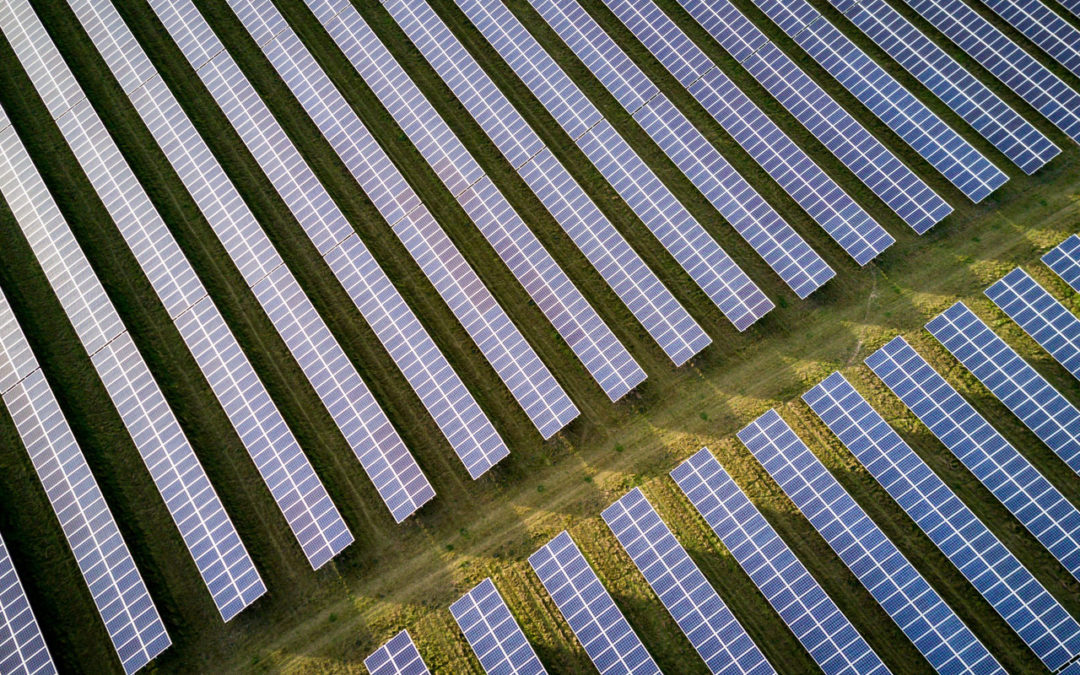
The volume of solar generation slated to supply power to Wisconsin electricity customers would nearly double if state regulators approve Madison-based Alliant Energy’s ambitious plan to acquire six Wisconsin solar farms for its generation portfolio. Alliant’s application will be filed shortly.
Spanning the state from Grant County in the west to Sheboygan County in the east, the six farms will provide 675 megawatts (MW) of capacity, nearly matching the combined solar commitments made by other Wisconsin utilities thus far.
ALLIANT ENERGY’S PLANNED SOLAR ACQUISITIONS
The projected output from this massive investment in solar generation equates to the average usage of 175,000 Wisconsin households. If approved, Alliant would become the largest provider of solar power in Wisconsin by a large margin (see Table 1).
TABLE 1: RATE-BASING WISCONSIN SOLAR FARMS
This is an astonishing jump from the two megawatts of solar power supplying electricity to Alliant’s Wisconsin customers today. Though Wisconsin has about 150 MW of operating solar capacity right now, by year’s end that number should surpass 300 MW, when the 150 MW Two Creeks plant in Manitowoc County is placed in service. And by the end of 2021, solar capacity in Wisconsin should be within striking distance of a gigawatt (1,000 MW).
This fleet of solar farms will fill the capacity hole that will materialize in late 2022 when Alliant shuts down its 35-year-old Edgewater 5 power station in Sheboygan for good. Earlier this month, Alliant announced plans to retire the 385 MW coal-fired plant in the next two years. Like many other coal plants in Wisconsin and elsewhere, Edgewater 5 has become an increasingly marginal power source, displaced by lower-cost gas-fired and renewable generating capacity.
Though the shutdown of Edgewater 5 can proceed without approval from Wisconsin’s Public Service Commission, the addition of the six solar farms to Alliant’s rate base automatically triggers a PSCW review process. To obtain regulatory approval, Alliant must demonstrate that these six solar farms will reduce its operating costs and provide other tangible benefits to customers without sacrificing reliability.
Alliant’s investment in this tranche of solar capacity should amount to about $900 million and will take the utility two-thirds of the way towards its goal of adding a gigawatt of solar generation by the end of 2024.
As with the first crop of solar farms approved in 2019 and earlier this year, the development work is being undertaken by independent power producers (see Table 2). Two of the projects–Savion Energy’s 49.9 MW Richland County solar farm and Geronimo Energy’s 50 MW North Rock solar farm–have already been approved for construction, but the remaining four require siting permits. The PSCW has jurisdiction over the three largest solar farms, and will issue decisions in late 2020 and early 2021. Jefferson County will review the 75 MW Ranger Power project later this year. Assuming the PSCW green-light’s Alliant’s application to acquire the projects, all six solar farms should be operating before the close of 2023.
TABLE 2: ALLIANT ENERGY’S PLANNED SOLAR ACQUISITIONS
In each year of operation, these projects will pump a combined $2.7 million into the coffers of host counties and townships. Over 30 years, revenues to local governments will top $80 million. Participating landowners will also reap economic dividends in the form of rental income.
One can access Alliant’s application and supporting documents from the PSCW under Docket No. 6680-CE-182. In all likelihood, the PSCW will make its decision on Alliant’s application in early 2021. To learn more about solar farms in Wisconsin visit RENEW’s frequently asked questions page.
Alliant’s application represents a major milestone in the development and provision of renewable energy in Wisconsin. Whether undertaken by utilities, local governments, businesses or residents, each new investment in solar and wind power generation strengthens Wisconsin’s economy and builds cleaner, healthier, and more resilient communities.
by Michael Vickerman | Apr 30, 2020 | Local Government, Programs, Public Service Commission, Renewables, Solar, Utilities
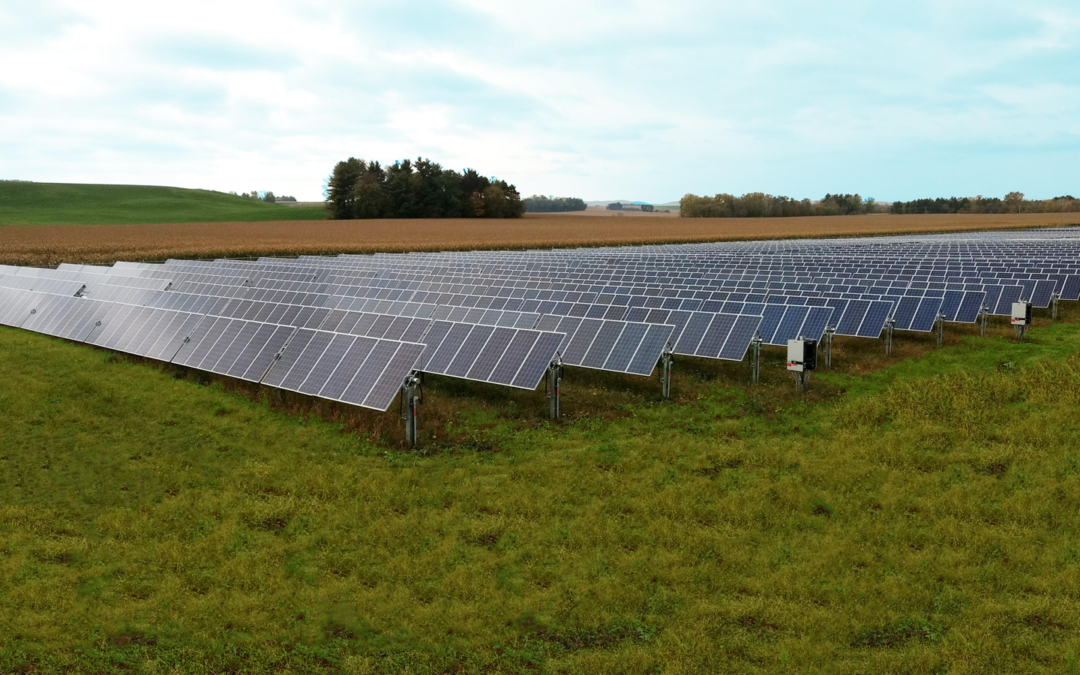
The Public Service Commission this week signed off on the newest solar farm slated for construction this year in Dane County. This solar power plant will cover 58 acres at the northern end of Dane County Regional Airport, and will involve more than 31,000 panels mounted on single-axis tracking systems. Madison Gas & Electric (MGE) will own and operate the solar plant, and expects to complete construction in the fourth quarter of 2020.
MGE’s solar field is noteworthy in that it will produce clean electricity for only one customer: Dane County. This will be the first example in Wisconsin of an offsite solar project dedicated to a single customer, albeit one with multiple facilities in MGE territory.
Through a long-term contract with MGE, Dane County will purchase the project’s output to offset its own purchases of grid-supplied electricity over the course of the facility’s 30-year-plus life. At nine megawatts (MW), the facility should produce on average 18 million kilowatt-hours a year. All told, the solar farm’s output should equate to about 40% of the electricity consumed at county-owned facilities served by MGE.
The PSC decision contained two separate approvals. First, the agency approved the power purchase agreement between MGE and Dane County, which is provided through the utility’s Renewable Energy Rider service. Under the contract, Dane County will pay 5.8 cents/kWh for electricity generated in the first year of operation, which will result in immediate savings. That price will escalate 2% per year over the contract’s term, which should track closely with anticipated increases in utility energy costs. After 30 years, Dane County will have paid off MGE’s entire investment.
The PSC also authorized the expenditure of $16 million to permit, build, and operate the solar field at the airport. The installed cost of the project equates to $1.78/watt, in line with other, smaller utility-owned projects such as MGE’s 5 MW facility now under construction at Middleton’s Morey Field.
Dane County is the third MGE customer to take service from an offsite solar array built under the Renewable Energy Rider service, following in the footsteps of the City of Middleton and the Middleton-Cross Plains Area School district. Those two customers have committed to purchase the output from a combined 1.5 MW share of the Morey Field solar array, which should commence operations in June 2020.
Notwithstanding its voluntary nature, MGE’s Renewable Energy Rider program has proven to be an attractive option for local governments that have adopted aggressive clean energy goals but are limited in their capacity to host solar systems on all their facilities. Later this year, MGE will file an application to build a 7 MW solar farm to serve the City of Madison and the Madison Metropolitan School District (MMSD). As with Dane County, MGE is the electric provider for many facilities owned by the City and MMSD. The solar array will be located near the Dane County Landfill in southeast Madison.
by Heather Allen | Apr 1, 2020 | Advocacy, Public Service Commission, Solar, Utility Scale
Amid our current health and economic challenges, the solar industry is committed to investing in local communities, creating jobs, and increasing tax revenues with clean, homegrown energy. Large scale solar projects are currently being built in Wisconsin and new projects are on the horizon, ready to contribute to Wisconsin’s energy mix! In order to ensure success, we need you to help a critical project win approval at the Public Service Commission.
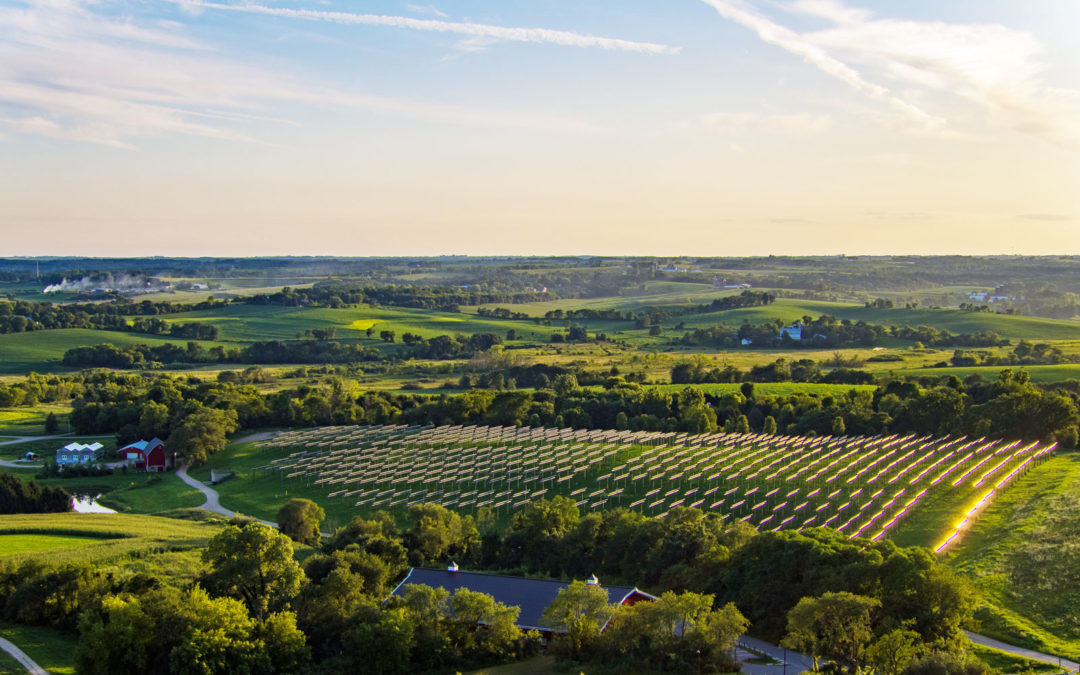
The Paris Solar Energy Center is a 200 megawatt project proposed in Kenosha County, Wisconsin. The project will supply homegrown, affordable, emission-free electricity to 55,000 homes. If approved, the Paris Solar Energy Center would more than double the solar generating capacity we have operating in Wisconsin today. Paris Solar would begin producing clean power by 2022. Want to learn more? Check out the application here.
Help us demonstrate Wisconsin’s enthusiastic support for this project and renewable energy.
RENEW Wisconsin will share the list of supporters with the Public Service Commission during the official comment period for this project.
Please add your name to our petition!
by Tyler Huebner | Mar 16, 2020 | Public Service Commission, RENEW Wisconsin
Dear RENEW Wisconsin Members and Supporters,
First and foremost, I wish you, your families, and everyone well during this unprecedented time regarding the novel coronavirus and COVID-19. I urge you to continue following the ever-changing guidelines coming from the Center for Disease Control and your elected officials at all levels to help keep each other safe.
With that said, last week Governor Tony Evers appointed me to be the next Commissioner at the Public Service Commission of Wisconsin.
With this change, I will be leaving RENEW Wisconsin, and my last day is today. I started with RENEW in June of 2013, and I want to thank you all for your support of the organization, and of me, since then.
It has been extremely rewarding to be the Executive Director of this organization, and I feel very proud of the organization’s growth and successes during my period here.
Heather Allen will be the organization’s Interim Executive Director starting immediately. Heather has been with the organization for nearly two years, and she will do an excellent job advancing its mission and priorities going forward. You can reach her at heather@renewwisconsin.org or 608-255-4044 extension 1.
In addition to Heather, the rest of the RENEW staff is here to support you however they can.
Thank you, again, for the opportunity to serve this organization and all of you in this role. It has been a distinct pleasure!
Sincerely,
Tyler Huebner
by Heather Allen | Mar 10, 2020 | Advocacy, Community, Local Government, Local Initiatives, Policy, Programs, Public Service Commission, RENEW Wisconsin, Renewables
RENEW Wisconsin, Wisconsin Conservation Voters, and Sierra Club have released the Wisconsin Clean Energy Toolkit: Developing a Clean Energy Plan for Your Community.
Towns, villages, cities, and counties in Wisconsin are building the renewable energy economy. The Wisconsin Clean Energy Toolkit recognizes this leadership in Wisconsin communities and the opportunities to expand these efforts across the state.
As part of its statewide launch, clean energy leaders, including Wisconsin State Treasurer Sarah Godlewski, addressed members of the media and the public across the state on March 10th, 2020 to announce the release.
“The Wisconsin Clean Energy Toolkit will help communities develop clean energy plans, which are good for the environment and also can be good for a community’s bottom line,” said State Treasurer Sarah Godlewski. “I’ve seen this firsthand as the Chair of a $1.2 billion trust fund, how we’ve helped local governments finance projects such as solar panels that saved taxpayers’ money. I hope communities across the state see us as a partner in their projects to address climate change and lower energy costs.”
Local communities across Wisconsin are eager to develop and implement clean energy plans. Often, they struggle with how to begin from a technical perspective and how to engage their communities.
“Smaller communities often lack the staff to conduct clean energy assessments and make recommendations,” said Jennifer Giegerich, Government Affairs Director for Wisconsin Conservation Voters. “This toolkit is a comprehensive resource for those considering a commitment to clean energy.”
The Wisconsin Clean Energy Toolkit is a comprehensive guide to energy policy options in Wisconsin. The toolkit is a resource designed to help guide communities of varying sizes and with differing resources as they consider, craft, and implement clean energy policies, and how to ensure the greatest return on potential clean energy investments.
“Local governments have heard from their residents; they want to shift to clean, renewable energy,” said Heather Allen, Program Director for RENEW Wisconsin. “But they need resources and technical support to make the transition. This toolkit offers practical strategies to help communities access affordable clean energy.”
“The Public Service Commission’s Office of Energy Innovation is committed to delivering programs that have a measurable impact on our state, this is why we’ve supported the Energy Independent Communities and will continue to support (with grants and technical assistance like this guide) communities and Tribal Nations on the road to our clean energy future,” Megan Levy, Local Energy Programs Manager & Energy Assurance Coordinator, Office of Energy Innovation, Public Service Commission of Wisconsin.
The Clean Energy Toolkit provides information to help local communities including:
- How to understand current state policies and regulations that impact energy use in Wisconsin
- Guidance on how to commit to clean energy
- How to build support in the community for clean energy policies
- How to establish a baseline of current energy use in the community, and how to set benchmarks to track progress toward long-range goals
- Defines equitable carbon reduction strategies that protect vulnerable communities when making the transition to clean energy, and how to ensure all impacted constituencies have a voice at the decision-making table
- Provides an overview of various financing options available to local governments to pursue clean energy
“As Wisconsinites demand action on climate change, local communities are answering those calls,” said Elizabeth Ward, Director for Sierra Club Wisconsin. “We’re glad to provide a resource for those communities as they demonstrate the leadership we’re missing at the federal level.”
The toolkit is available to download at www.wicleanenergytoolkit.com. For additional information, questions, or to request a paper copy of the toolkit, please contact Heather Allen (heather@renewwisconsin.org)
Visit www.wicleanenergytoolkit.com to learn more.